 Contact
 Help
Help







Gold Purity: The Complete Guide
 Gold & Silver 101



Gold purity is the proportion of pure gold in a piece of gold, measured in karats (K) or as a fineness stamp out of 1,000. A gold bar stamped 999.9 is 99.99% pure. A ring stamped 750 is 18 karat, or 75% gold. Everything else in the piece is made up of other metals, usually copper, silver or zinc.
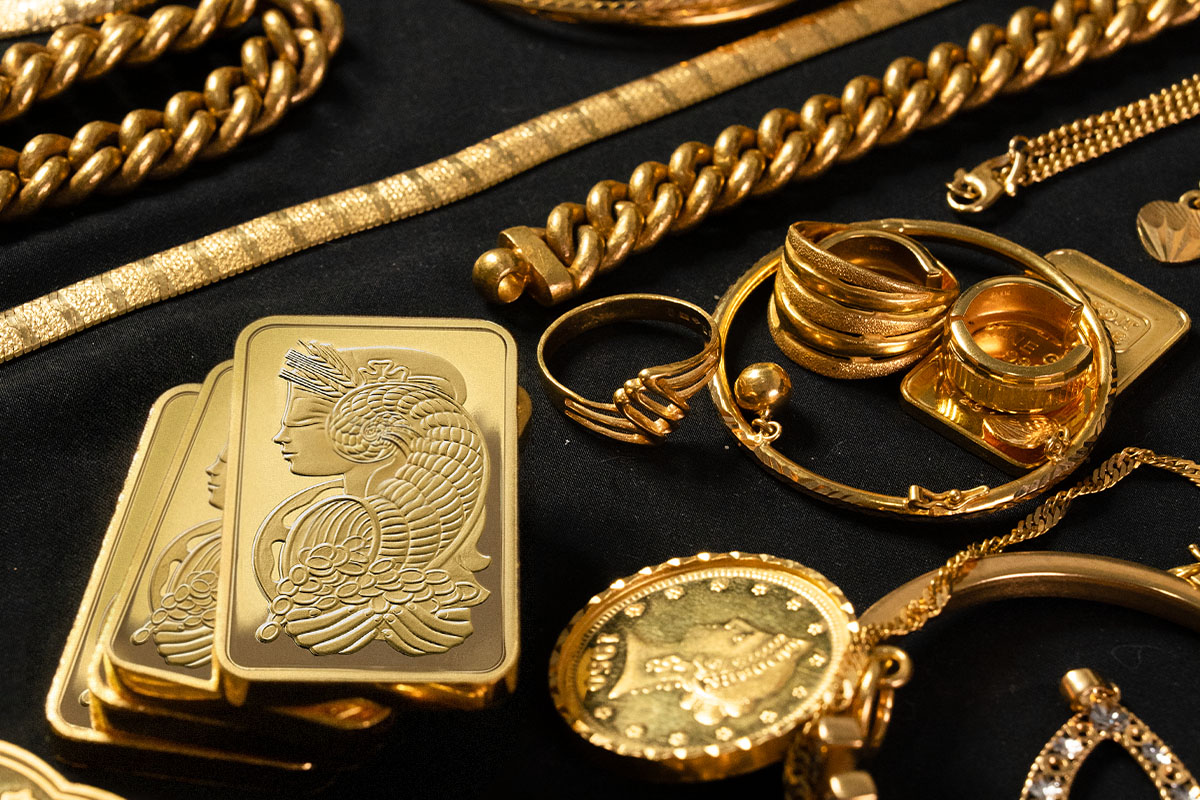
Not all gold is the same. The gold bars and gold coins bought by investors are generally pure gold, while most gold jewellery is an alloy, mixed with harder metals so it can stand up to everyday wear. That difference affects how much a piece is worth, how it looks, how long it lasts, and in Singapore, whether it can be bought free of GST.
This guide explains how gold purity is measured and compares every common grade in a single chart, from 24K down to 8K. It also covers how to read the stamps found on gold and how to check purity, then helps you decide which purity suits what you’re buying. For a closer look at any single purity, each grade links to its own guide.
What Is Gold Purity?
Gold purity describes how much of a piece is pure gold and how much is other metals. Two systems are used to measure it: karats, which are most familiar to jewellery buyers, and millesimal fineness, the number stamped on most bars, coins and hallmarked jewellery. They measure the same thing on different scales, and you can convert one to the other with simple maths.
The Karat System
The karat system divides gold into 24 parts. Karat gold is described by how many of those 24 parts are pure gold:
- 24K gold is all 24 parts gold, or pure gold.
- 18K gold is 18 parts gold and 6 parts other metals, or 75% gold.
- 9K gold is 9 parts gold and 15 parts other metals, or 37.5% gold.
To turn any gold karat into a percentage, divide it by 24. So 22 ÷ 24 = 0.9167, or 91.67% gold. In the UK and Commonwealth countries the same unit is often spelt “carat", as in “22 carat gold". Both spellings mean the same measure of gold purity.
Millesimal Fineness
Millesimal fineness expresses purity in parts per thousand. A fineness of 750 means 750 parts out of 1,000 are gold, or 75%. This is the system used by refiners, mints and assay offices, which is why the stamps on gold are numbers like 999, 750 and 375 rather than karats.
Fineness is more precise than karats, especially at the top of the scale. Both 999 (99.9% gold) and 999.9 (99.99% gold) are classed as 24 karat, but the extra “nine" matters to some investors and is clearly marked on gold bars and coins. Gold of 999 fineness or higher is often called fine gold.
Why Gold Is Mixed With Other Metals
Pure gold is very soft. It scratches, dents and bends easily, which is fine for a bar sitting in a vault but impractical for a ring worn every day. Mixing gold with harder metals makes it more durable, and the choice of metals also changes the colour:
- Yellow gold blends gold with copper and silver.
- Rose gold uses a higher share of copper.
- White gold uses palladium or nickel, usually finished with a rhodium plating.
The lower the karat, the harder and cheaper the alloy, but the less gold it contains. The same trade-off between purity and durability applies to silver, covered in our guide to silver purity.
Gold Purity Chart (All Grades Compared)
The chart below compares every common gold purity, from investment-grade 24K bullion down to 8K jewellery gold. For each grade it gives the karat, the fineness stamp you’ll see on the metal, the exact share of pure gold, and where that purity is most often used. Click a linked karat in the table to read our full guide to that grade.
| Karat | Fineness stamp | Gold content | Common name | Typical use |
|---|---|---|---|---|
| 24K | 999.9 | 99.99% | Four nines, fine gold | Investment bars and bullion coins |
| 24K | 999 | 99.9% | Three nines, pure gold | Bars, coins and 24K jewellery |
| 24K* | 995 | 99.5% | Good Delivery gold | Large bars traded between banks and vaults |
| 24K* | 990 | 99.0% | Chuk kam (足金) | Gold jewellery in Hong Kong and China |
| 23K | 958 | 95.83% | 23 karat | Uncommon, some Asian jewellery |
| 22K | 916 | 91.67% | 22 karat | Bullion coins and Asian jewellery |
| 21K | 875 | 87.5% | 21 karat | Middle Eastern jewellery |
| 20K | 833 | 83.33% | 20 karat | Uncommon, some Asian jewellery |
| 18K | 750 | 75% | 18 karat | Fine jewellery and luxury watches |
| 15K | 625 | 62.5% | 15 karat | Antique British jewellery |
| 14K | 585 | 58.33% | 14 karat | Everyday jewellery in the US and Europe |
| 10K | 417 | 41.67% | 10 karat | Budget jewellery, the US legal minimum |
| 9K | 375 | 37.5% | 9 karat | Budget jewellery in the UK and Australia |
| 8K | 333 | 33.33% | 8 karat | Low-cost jewellery, mainly in Germany |
*995 and 990 work out at 23.88K and 23.76K respectively, but both are generally sold and described as 24K gold.
A few points the chart doesn’t show at a glance:
- Gold content is exact maths; the stamp is the hallmarking standard. For most grades the two match, but 22K works out at 91.67% while the standard stamp is 916, and 14K works out at 58.33% while the stamp is 585. The stamps are fixed standards, with 585 set slightly above the exact figure as a legal minimum.
- 995 is the key threshold for investors. It is the minimum purity for London Good Delivery bars, and in Singapore 99.5% is also the minimum purity for gold to qualify as Investment Precious Metal (IPM), free of GST, as long as it’s in qualifying bar or coin form. Gold jewellery, and anything below 99.5% including 22K, is taxed.
- Lower karats are not “fake" gold. A 9K ring contains real gold. There’s just much less of it, and its value depends more on craftsmanship than on the metal.
Purity Percentages by Karat
To work out the purity percentage of any karat, divide the karat by 24 and multiply by 100. Here are the answers for the most commonly searched grades.
22 Karat Gold Purity Percentage
22 karat (or 22 carat) gold is 91.67% pure gold: 22 parts gold out of 24. The other 8.33% is usually copper, which gives 22K its slightly warmer, reddish tone. It is normally stamped 916. See our full guide to 22K gold.
18 Karat Gold Purity Percentage
18 karat (or 18 carat) gold is 75% pure gold: 18 parts gold out of 24, stamped 750. The other 25% is a mix of metals such as silver, copper or palladium, which also decides whether the gold is yellow, rose or white. See our full guide to 18K gold.
14 Karat Gold Purity Percentage
14 karat gold is 58.33% pure gold: 14 parts gold out of 24. It is stamped 585, a hallmarking standard set just above the exact figure. See our full guide to 14K gold.
9 Karat Gold Purity Percentage
9 karat gold is 37.5% pure gold: 9 parts gold out of 24, stamped 375. That means less than half of a 9K piece is gold, which is why it is the most affordable karat in common use. See our full guide to 9K gold.
Other Karats at a Glance
| Karat | Calculation | Purity |
|---|---|---|
| 24K | 24 ÷ 24 | 99.9%+ (in practice) |
| 21K | 21 ÷ 24 | 87.5% |
| 10K | 10 ÷ 24 | 41.67% |
Because pure gold is never quite 100%, 24K is taken to mean 99.9% or higher in practice. Every other karat is a straightforward fraction of 24, so you can work out the purity of any gold from its karat alone.
Reading Gold Markings: What the Numbers Mean
Most gold carries a small stamp showing its purity. On jewellery it is usually inside a ring band, on a clasp or on a tag near the clasp. On bars and coins it is struck prominently on the face. The stamp is either a fineness number (such as 750) or a karat mark (such as 18K), and both tell you the same thing: how much of the metal is pure gold.
Fineness Numbers and Karat Marks
| Stamp | Karat equivalent | What it means |
|---|---|---|
| 999.9 / 999 | 24K | Pure or fine gold, used for bullion |
| 916 | 22K | 91.67% gold |
| 875 | 21K | 87.5% gold |
| 750 | 18K | 75% gold |
| 585 | 14K | 58.33% gold |
| 417 | 10K | 41.67% gold |
| 375 | 9K | 37.5% gold |
Which style you see depends largely on where the gold was made:
- Asia mostly uses fineness numbers. 916 is the standard mark for jewellery in Singapore, Malaysia and India, while Hong Kong and China use 990 and 999.
- Europe uses fineness numbers too, with 750 and 585 the most common jewellery marks.
- The United States typically uses karat marks, such as 14K or 10K.
- The UK uses both. A full UK hallmark shows the fineness number alongside the assay office mark, and jewellers often add a karat mark such as “9ct" or “18ct".
Regional Names for Gold Purity
Some markets have their own names for local standards, which you’ll often see in shops or on receipts:
- Chuk kam (足金): Hong Kong and southern China’s name for 990 gold, traditional for wedding jewellery.
- 千足金 and 万足金: Chinese terms for 999 and 999.9 gold respectively.
- Thai gold: jewellery and small bars at 96.5% purity, the national standard in Thailand.
- 916 gold: the everyday name for 22K jewellery across Singapore, Malaysia and India.
- 21K (875): the dominant jewellery purity in the Gulf states.
Stamps on Gold Bars and Coins
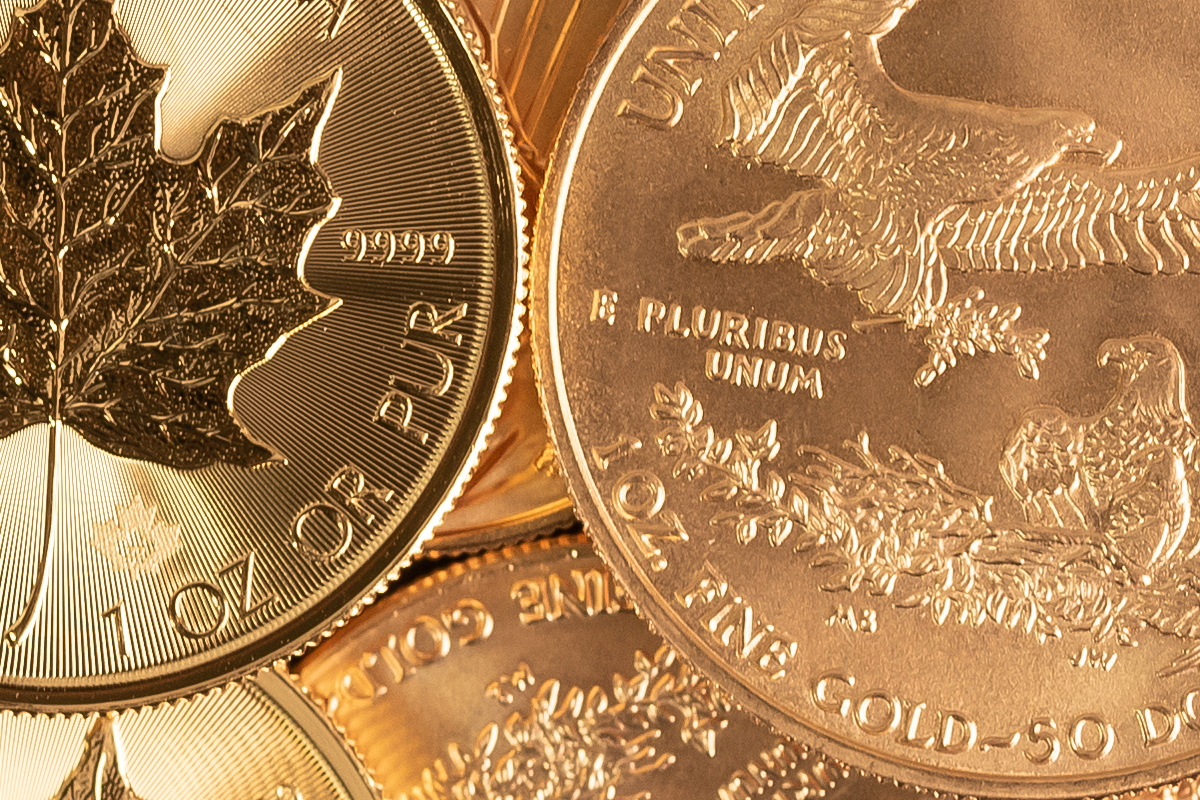
Investment gold carries more information than jewellery. A typical gold bar shows the refiner’s name or logo, the weight, the fineness (for example 999.9), and usually a unique serial number. Bullion coins show the fineness and weight as part of the design, for example “1 OZ 999.9 FINE GOLD". These marks, together with the refiner’s reputation, are what let bullion be bought and sold around the world without retesting.
Stamps That Mean Plated, Not Solid Gold
Not every gold stamp means solid gold. These marks show that a piece is only coated in gold over a base metal:
- GP: gold plated
- GEP: gold electroplated
- HGE: heavy gold electroplate
- GF: gold filled
- RGP: rolled gold plate
A stamp such as “18K GP" means a thin layer of 18K gold over another metal, not an 18K piece. Plated items have almost no gold value.
Stamps can also be forged, so a mark alone isn’t proof of purity. The next section covers how to check gold purity for yourself.
How to Check Gold Purity
A stamp is a good first clue, but stamps can be faked, so it’s worth knowing how purity is actually tested. The main methods, from simplest to most accurate:
- Check the stamp. Look for a fineness number or karat mark, and check that it matches the piece. Plating marks such as GP or GF mean it isn’t solid gold.
- Magnet test. Gold isn’t magnetic. If a piece is strongly attracted to a magnet, it contains a magnetic metal under the surface. Passing the test doesn’t prove purity, though, as many non-gold metals aren’t magnetic either.
- Density test. Pure gold is very dense, at 19.3 grams per cubic centimetre, and each karat has a known density range. Weighing a piece in air and then in water shows whether it is heavy enough for its stated purity.
- Acid test. The piece is rubbed on a testing stone and the streak is treated with acids of different strengths. How the streak reacts indicates the karat. It’s quick and cheap, but it marks the piece slightly, so it’s mainly used for jewellery.
- XRF analysis. An X-ray fluorescence (XRF) scanner reads the exact metal content in seconds without damaging the piece. This is how most dealers check the gold they buy. It reads the surface, though, so it’s often paired with a density or ultrasonic check on bars.
- Fire assay. The most accurate method of all, used by refiners and assay offices. It melts a sample, so it is only used where precision matters more than keeping the item intact.
For a step-by-step guide to each method, see our guide on how to test gold.
For investors, the simplest protection is to buy bars and coins from established refiners and mints through a reputable dealer. Bullion from recognised refiners carries a well-known stamp and serial number, and it can be resold worldwide without question.
Which Gold Purity Should You Buy?
The right purity depends on what you’re buying gold for. Here’s how the main options compare:
| If you’re buying for… | Best purity | Why |
|---|---|---|
| Investment | 24K (999.9 or 999) | The most gold for your money, easy to value and resell, and GST-free in Singapore |
| Collectable bullion coins | 22K | Used by some of the world’s most famous coins |
| Wearable wealth (Asian tradition) | 24K, 22K or 21K | High gold content, sold and resold by weight |
| Fine jewellery | 18K | The best balance of gold content, colour and durability |
| Everyday jewellery | 14K | Hard-wearing and more affordable |
| Budget jewellery | 9K or 10K | The lowest cost, but little gold value |
For Investment: 24 Karat Gold
For investors, 24 karat gold is the clear choice. Bars and coins at 999.9 or 999 fineness contain almost nothing but gold, so their value tracks the gold price directly, without adjusting for alloy content. They are also the most widely traded form of gold in the world.
In Singapore, there’s a further advantage. Gold of 99.5% purity or higher in qualifying bar or coin form counts as Investment Precious Metal (IPM) and is exempt from GST. Lower purities, including 22K, are not.
22 Karat Gold Coins
22 karat gold is the purity of several famous bullion coins, including the British Sovereign, the South African Krugerrand and the American Gold Eagle. A one-ounce 22K coin still contains a full troy ounce of pure gold. The extra copper simply makes it heavier and more durable. These coins are highly liquid worldwide, but because they fall below the IPM purity threshold, GST applies to them in Singapore. BullionStar sells them under the Gross Margin Scheme, so GST is charged only on the margin.
For Jewellery: 22K, 18K, 14K or 9K
For jewellery, the choice is a trade-off between gold content and durability:
- 22K and 24K are favoured across Asia, where gold jewellery is valued as a store of wealth and bought and sold by weight. They are softer, so they are best for necklaces, bangles and pieces worn with care.
- 18K is the standard for fine jewellery, engagement rings and luxury watches, with a rich colour and good durability.
- 14K is the everyday choice in the US and Europe, hard enough for rings worn daily.
- 9K and 10K are the most affordable, but contain well under half their weight in gold.
The lower the karat, the more of a piece’s price goes on design and craftsmanship rather than gold. That matters if you ever plan to sell. A 22K bangle can be sold for close to its gold value, while a 9K ring will fetch far less than its retail price.
Frequently Asked Questions
What is the purest form of gold?
The purest gold widely traded is 999.9 fine, or 99.99% pure, sometimes called “four nines" gold. Refiners can reach 99.999% (five nines), as in some special-issue Canadian Maple Leaf coins, but absolute 100% purity is technically impossible. Both 999 and 999.9 gold are classed as 24 karat.
What do the numbers stamped on gold mean?
The numbers show the gold content in parts per thousand, known as millesimal fineness. A stamp of 750 means 750 parts out of 1,000 are gold, or 75%, which is 18 karat. Common stamps include 999 (24K), 750 (18K) and 375 (9K). Some countries use karat marks such as “14K" instead.
Is 24K gold better than 22K?
It depends on the purpose. 24K gold contains more gold and is the standard for investment bars and coins, which in Singapore are also GST-free. 22K gold is harder and more durable, which is why it’s used for some famous bullion coins and much of Asia’s jewellery. For pure investment value, 24K is the better choice.
What purity is investment gold?
Investment gold is almost always 24 karat, at 999.9 or 999 fineness. Large bars traded between banks must be at least 995 fine, the London Good Delivery minimum. In Singapore, gold bars and qualifying coins of at least 99.5% purity count as Investment Precious Metal and are exempt from GST.
Is 995 gold 24K?
995 gold is 99.5% pure, which works out at 23.88 karat. In practice it is generally treated as 24K gold. It is the minimum purity for London Good Delivery bars and for Singapore’s Investment Precious Metal GST exemption, so it is common on large investment bars.
Does gold purity affect resale value?
Yes. High-purity bullion bars and coins can be sold for close to the gold spot price, because their gold content is easy to confirm. Lower-karat jewellery is valued only on the gold it contains, so a 9K or 14K piece sells for far less than its retail price, which also covers design and craftsmanship.
Buying Gold by Purity
Gold purity comes down to one trade-off: gold content against durability. 24K gold gives you the most gold for your money and is the global standard for investment. Lower karats give up some of that gold content in exchange for strength and colour, which is why they suit jewellery rather than bullion.
If you’re buying gold as an investment, look for 999.9 or 999 fineness from a recognised refiner or mint. BullionStar stocks a wide range of 24K gold bars and gold coins from the world’s leading refiners and mints. Our 24K bullion bars and coins qualify as Investment Precious Metal and are free of GST in Singapore. They can be delivered, stored in our vaults, or collected from our Bullion Center at 45 New Bridge Road.
If you’re buying gold jewellery, choose the karat that suits how the piece will be worn. Our guides to 24K, 22K, 18K and 14K gold cover each purity in detail. And if you already own gold of any purity, BullionStar can buy it back at a price based on its gold content.
Popular Blog Posts by Gold & Silver 101
 An Introduction to Gold & Silver Investing
 Should I Invest in Gold, Silver, or Platinum Bullion?
 Gold Coins vs Gold Bars: Which Is Better?
 How Is Gold Taxed in Singapore? The IPM GST Exemption Explained
 Storing Precious Metals, Gold, and Silver Bullion
 Gold & Silver Bullion Investing FAQs
 Gold Purity: The Complete Guide
 How Much Gold Is There in the World?
 Junk Silver: What It Is and What It’s Worth
 999 Fine Silver: Investment-Grade Silver Explained