 Contact
 Help
Help







22K Gold: Purity, Properties & Buyers Guide
 Gold & Silver 101



22K gold is a high-purity gold alloy, containing 91.67% pure gold — also known as 916 gold in reference to its millesimal fineness. It is the purity used in some of the world’s most recognised investment coins, including the British Sovereign, South African Krugerrand, and American Gold Eagle, and remains a popular choice for high-purity jewelry across Asia and the Middle East.
For investors, 22K gold offers a meaningful combination of gold content and durability. It is worth noting, however, that in Singapore, 22K gold does not qualify for the Investment Precious Metal (IPM) GST exemption, which requires a minimum purity of 99.5%. Buyers should factor this into their cost of ownership.
Beyond investment, 22K gold carries strong cultural significance, particularly in India, the Gulf, and across Southeast Asia, where it has been the traditional choice for gold jewelry for generations. At BullionStar, we stock a range of 22K gold coins and jewelry for customers who value the higher durability and warmer tones this purity offers.
In this guide, we cover everything you need to know about 22K gold: what the purity means, how it compares to other karats, what investors need to consider, and its role in jewelry markets worldwide.
What Is 22K Gold? Purity and Composition
22K gold, also written as 22 carat gold in the UK and Commonwealth countries, is a high-purity gold alloy. The “K" stands for karat, a traditional system that measures gold purity in parts of 24. 22K gold contains 22 of those 24 parts as gold, giving it a purity of 91.67%, with the remaining 8.33% made up of other metals, typically copper.
Alongside the karat system, gold purity is also expressed using millesimal fineness, a scale running from 0 to 1000 that describes the proportion of pure gold in an alloy. The two systems are used interchangeably across the bullion and jewelry industry. 22K gold has a fineness of 916.7, which is why it is commonly referred to as 916 gold, particularly in Singapore and across Asia. Hallmarked 22K items will carry a 916 stamp as the standard mark of this purity.
22K vs Other Karats
Pure gold is too soft for most practical uses — it bends, scratches, and marks easily under everyday handling. Gold alloys exist to address this, mixing gold with other metals (typically copper, silver, or palladium) to increase hardness while preserving as much gold content as possible. The karat indicates how much of the alloy is gold.
22K gold sits near the top of this scale. It is high enough in purity to retain significant investment value, but with enough alloy content to offer meaningfully better durability than pure 24K gold. This balance is what made it the traditional choice for circulating gold coins, and what keeps it relevant for both investors and jewelry buyers today.
| Karat | Purity | Uses | Colour | Durability |
|---|---|---|---|---|
| 24K Gold | 99.9%+ | Investment bullion | Rich yellow | Low |
| 22K Gold | 91.67% | Bullion & investment coins | Yellow/reddish gold | Medium |
| 18K Gold | 75% | Fine & high-quality jewelry | Yellow/rose/white | High |
| 14K Gold | 58.3% | Everyday jewelry | Yellow/rose/white | Very High |
| 9K Gold | 37.5% | Budget jewelry | Yellow/rose/white | Very High |
22K vs 24K Gold
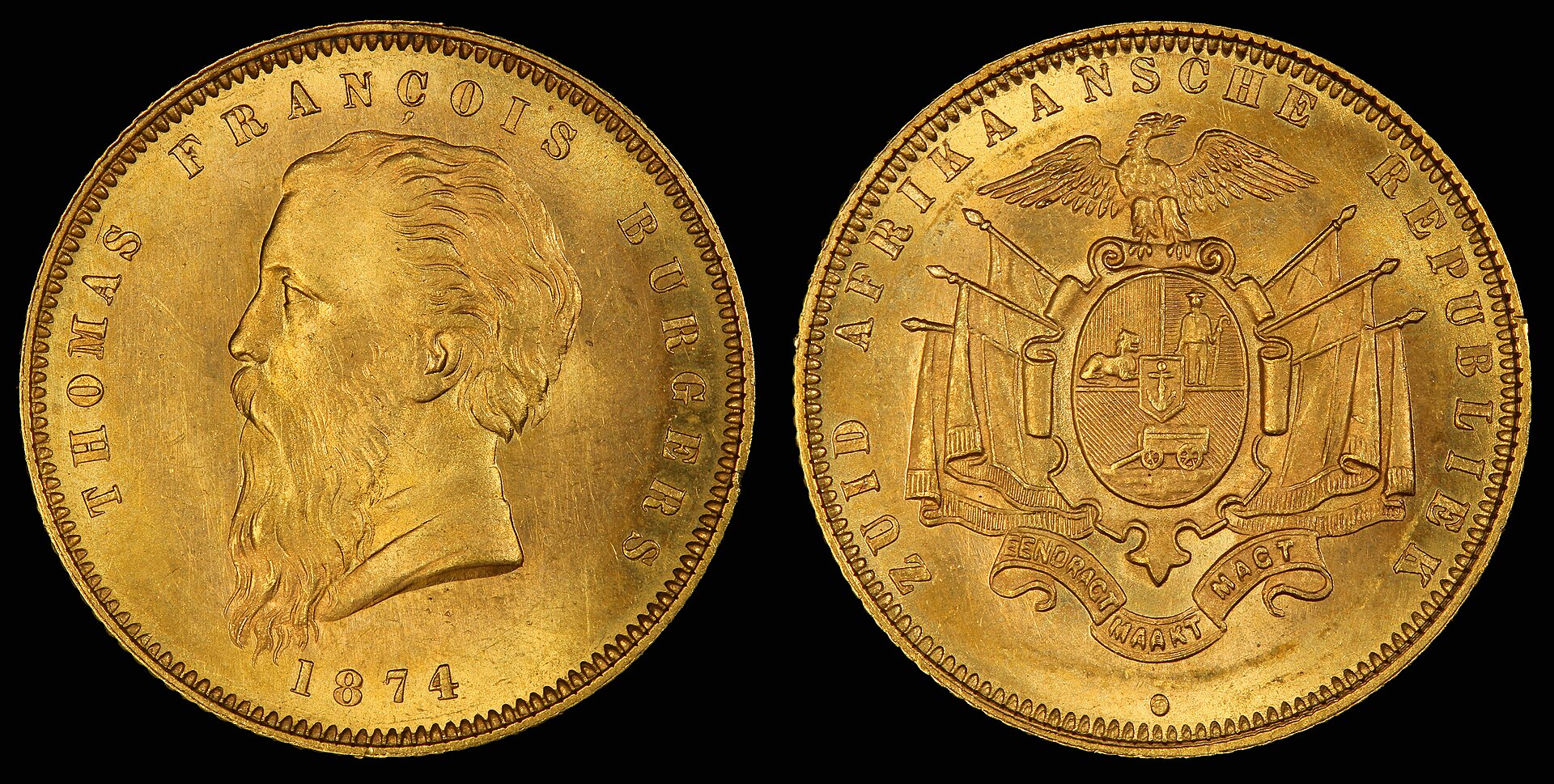
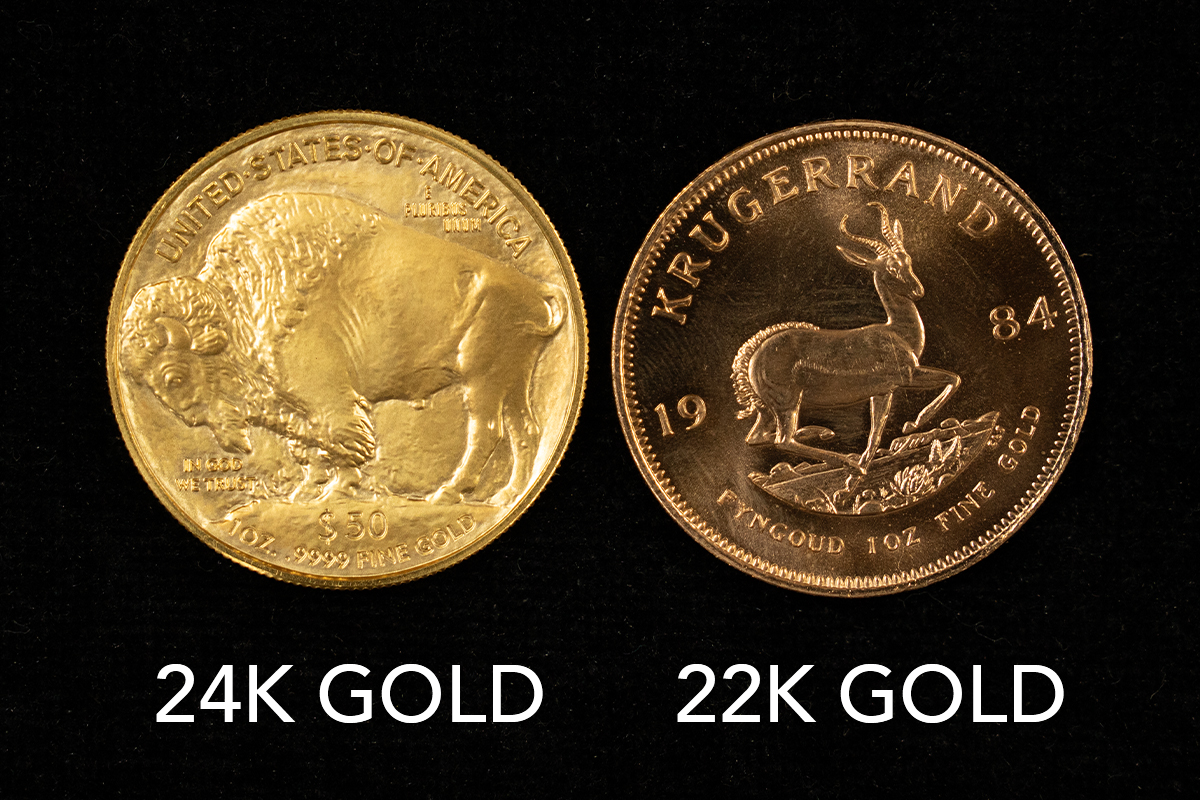
The key difference between 22K and 24K gold is durability. By adding 8.33% copper, resistance to knocks and scratches increases considerably without significantly reducing gold content. This made 22K the traditional choice for circulating gold coins, where daily handling demanded a harder metal. The British Sovereign is the most prominent example, having carried 22K purity throughout its history. South Africa followed the same standard with its own circulating gold coins, the pre-decimal Pond and the post-1961 Rand coins, both minted at 916.7 fineness by the Rand Refinery.
The copper content also gives 22K gold a subtle reddish warmth — less pronounced than rose gold, but noticeably different from the deeper yellow of 24K. For investors, the practical consideration is that 24K gold qualifies for Singapore’s GST exemption as an Investment Precious Metal, while 22K does not.
22K vs 18K Gold
18K gold is 75% pure, with 25% made up of other metals. The higher alloy content makes it significantly more durable than 22K, and opens up a much wider range of colours: adding copper produces rose gold, while silver, nickel, or palladium produces white gold. This versatility makes 18K the standard choice for fine jewelry: engagement rings, high-end watches, and pieces designed for daily wear.
Against 18K, 22K’s advantage is gold content. At 91.67% pure, it holds considerably more gold by weight, which matters for buyers prioritising investment value or cultural tradition over design flexibility. In markets like India and the Middle East, jewelry serves not only as adornment but as a form of gift-giving and a store of value — and thus 22K’s higher purity is preferred.
22K vs 14K Gold
14K gold contains 58.3% pure gold, with the remaining 41.7% composed of alloy metals such as copper, silver, or zinc, and is stamped as 585 in the millesimal fineness system. It is particularly popular in the United States, where it is the most widely sold karat for everyday jewelry, offering strong durability at a lower price per piece than higher-purity alloys.
Compared to 22K gold, however, 14K contains significantly less gold by weight, little more than half the gold content of an equivalent 22K item. This makes it unsuitable for investment purposes, and its value is tied more to craftsmanship than metal content. For buyers primarily concerned with gold content and long-term value, 22K is the stronger choice.
22K vs 9K Gold
9K gold is the lowest karat widely used in jewelry, containing just 37.5% gold and stamped as 375 in the millesimal fineness system. The high proportion of base metals makes it the most durable of the common karats, resistant to everyday wear and scratching, and it is a popular affordable option in the UK and Australia.
The trade-off is gold content. A 9K piece contains less than half the gold of an 18K item of the same weight, and a fraction of a 22K equivalent. This makes 9K unsuitable for investment, with value driven by craftsmanship rather than metal. In terms of appearance, 9K gold also tends to look slightly paler than higher-karat alloys, and can be prone to tarnishing over time as the base metals react to moisture and air.
22K Gold Jewelry: Indian, Saudi, and Asian Markets
22K gold has been the dominant choice for gold jewelry across India, the Middle East, and much of Southeast Asia for generations. In these markets, gold jewelry serves a purpose beyond adornment. It is a store of wealth, a traditional gift at weddings and festivals, and in many families a primary form of inherited savings. The purity of the gold matters deeply, and 22K (known locally as 916 gold) offers the highest purity considered practical for jewelry making.
In India, 22K is the standard for bridal and ceremonial jewelry. Pieces are typically sold by weight, with the gold content priced transparently against the prevailing spot rate and a making charge for craftsmanship. This weight-based pricing makes 22K jewelry relatively easy to value and resell, giving it a dual role as both personal adornment and tangible asset. Bangles, necklaces, chains, and rings in 22K are central to wedding traditions and festivals such as Diwali and Akshaya Tritiya, when gold purchases carry particular cultural significance.
In Saudi Arabia and across the Gulf, gold souks stock predominantly 21K and 22K jewelry, sold in a similar weight-based model. The style tends toward heavier, more substantial pieces such as layered necklaces, wide bangles, and elaborate sets, reflecting both cultural preference and the practical logic of holding value in wearable form.
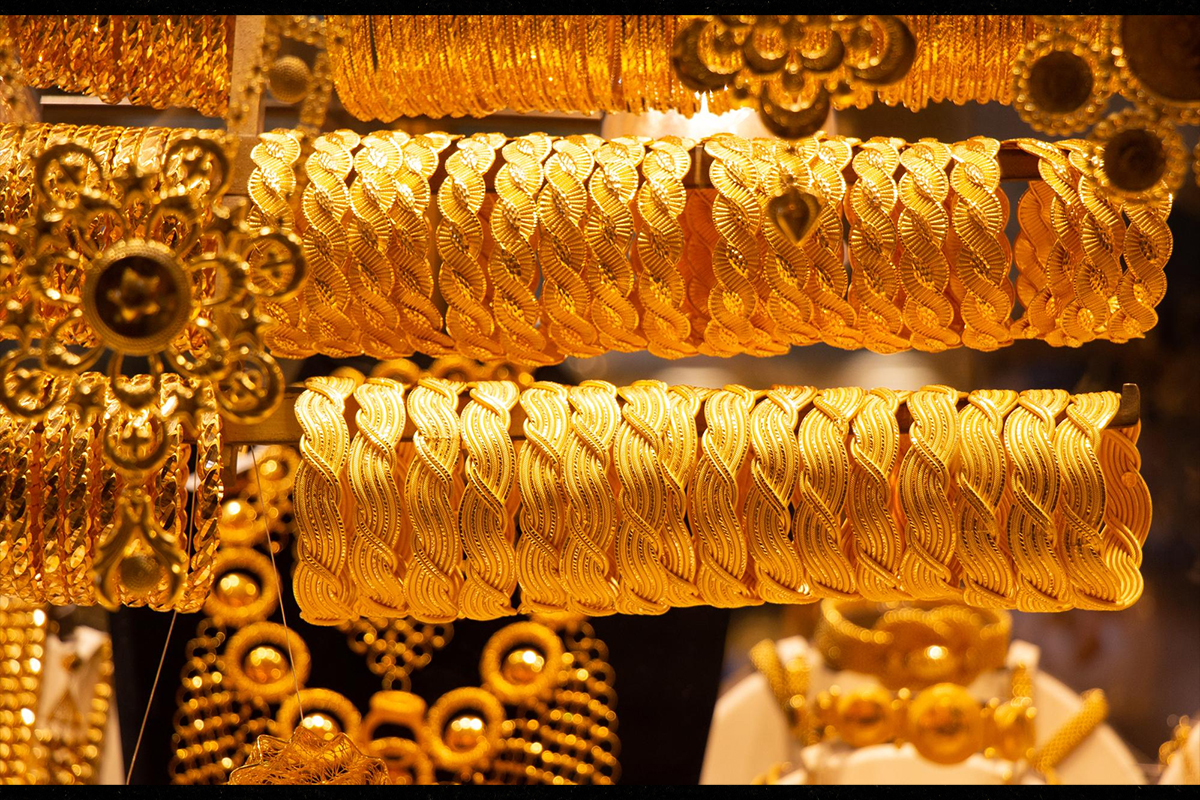
Against 24K gold, 22K offers a meaningful advantage for jewelry: the copper content makes it harder and more resistant to the knocks and scratches that pure gold is susceptible to. Rings in particular benefit from this — a 22K gold ring will hold its shape and finish better under daily wear than an equivalent 24K piece, though for items subject to heavy abrasion, 18K remains the more durable option.
At BullionStar, we stock a range of 22K gold jewelry sourced and professionally refurbished to as-new condition — all stamped with their fine gold content and priced with low premiums to the spot price of gold. This makes our jewelry range one of the most cost-effective ways to buy high-purity gold in wearable form in Singapore, whether you are buying for personal use, gifting, or as a portable store of value. Browse our full 22K gold jewelry range for current availability.
22K Gold for Investment
For investors, 22K gold occupies a distinct position. It is not the purity-optimised choice that 24K gold is. The alloy content means it cannot match pure gold for straightforward valuation, but the most widely traded 22K gold coins carry a substantial level of global recognition and liquidity. The British Sovereign, South African Krugerrand, and American Gold Eagle are among the most recognisable bullion coins in the world, and all are struck in 22K gold. For investors who prioritise resaleability and international demand over purity, this matters. A full explanation of how 22K coin weights compare to 24K is covered in the coins section below.
For investors based in Singapore, the key consideration is tax. 22K gold does not qualify for the Investment Precious Metal (IPM) GST exemption, which requires a minimum purity of 99.5%. This means GST applies to 22K purchases, adding to the cost of ownership in a way that does not apply to 24K bullion. It is worth noting, however, that BullionStar applies the Gross Margin Scheme to pre-owned 22K gold coins — meaning GST is calculated on the margin rather than the full purchase price. For collectors seeking historically significant coins like the Sovereign or Krugerrand, whose long-running reputations make them particularly sought after, this offers an opportunity to buy without being subject to the full GST cost. Investors focused purely on accumulating gold at the lowest cost should still consider 24K alternatives that qualify for the full IPM exemption.
22K Gold Coins
Some of the most recognised and widely traded bullion coins in the world are struck in 22K gold. The purity’s durability advantages, which made it the standard for circulating coinage, have carried through to the modern bullion market, where coins like the Sovereign, Krugerrand, and American Gold Eagle continue to attract strong global demand from investors and collectors alike.
The Gold Sovereign
The British gold Sovereign has been struck at 22K for more than 200 years, making it one of the longest-running and most widely recognised gold coins in existence. As the circulating £1 gold coin of the British Empire, the Sovereign travelled across the globe and built a particularly strong following in the Middle East — a legacy that still drives demand in the region today. Modern Sovereigns continue to be minted by the Royal Mint, and their long history gives them strong liquidity in secondary markets worldwide.
The Krugerrand
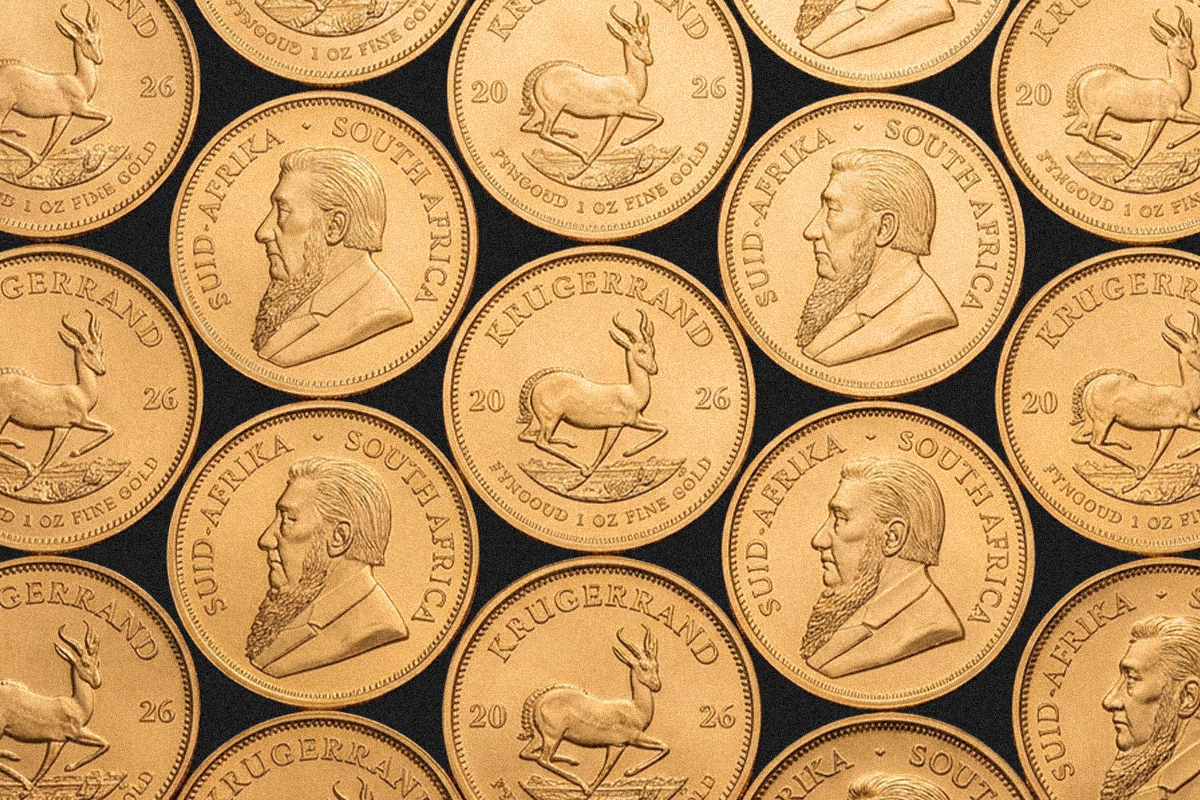
Launched in 1967 by South Africa’s Rand Refinery, the Krugerrand was the first gold coin produced specifically for investment purposes, and for many years was the most widely traded bullion coin in the world. It remains one of the best-selling coins globally, struck in 22K gold — the copper content giving it a distinctive reddish-gold tone that sets it apart visually from purer coins. The Krugerrand’s long track record and deep market penetration make it one of the most liquid 22K gold coins available.
The American Gold Eagle
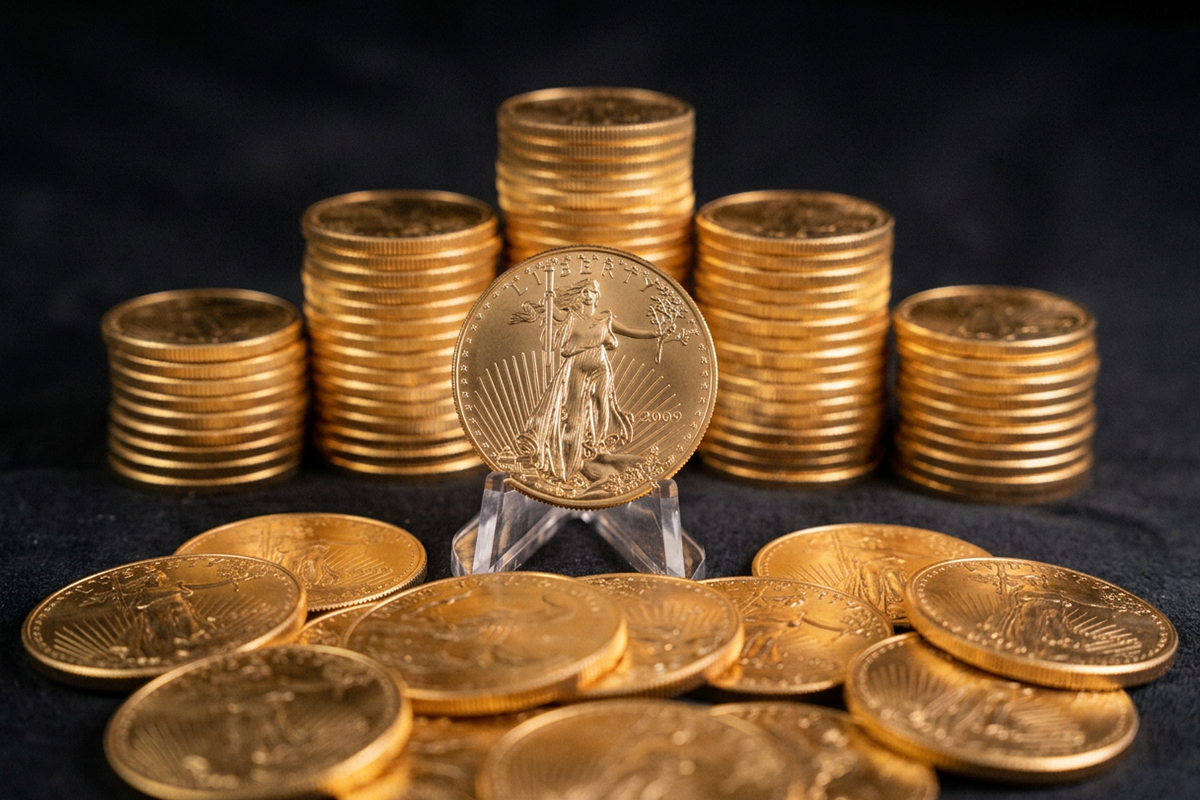
The American Gold Eagle is a bullion coin series introduced by the US Mint in 1986, struck in 22K gold. It should not be confused with the pre-1933 US circulating gold coins (the Eagle and Double Eagle) which were struck at 90% purity. The modern Gold Eagle has been minted at 22K throughout its bullion history, and remains one of the most recognisable investment coins in the world. For investors who prefer pure gold, the US Mint also produces the American Gold Buffalo at 24K.
Gold content and weight
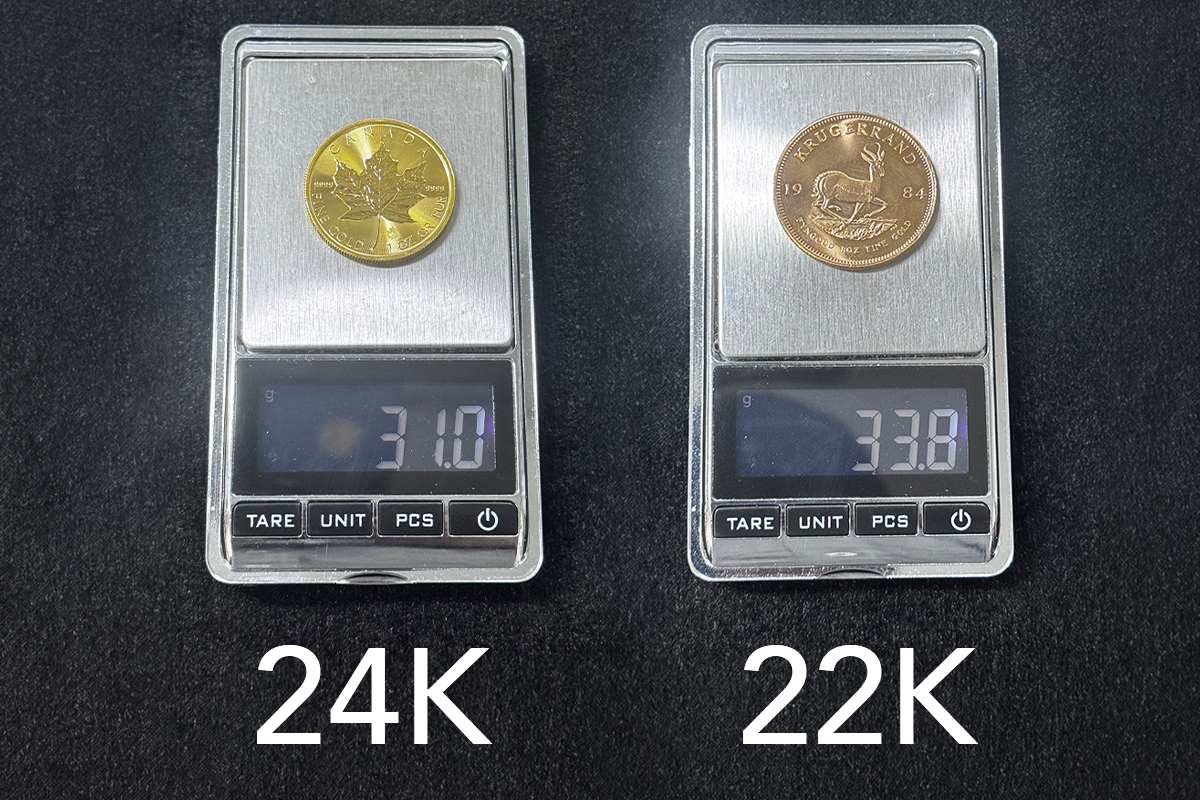
One point worth clarifying for investors comparing 22K and 24K coins: a 1 oz 22K gold coin contains the same gold as a 1 oz 24K coin. Coins like the Krugerrand and American Gold Eagle contain a full troy ounce (31.1g) of pure gold, with 2.83g of copper added to bring the coin to 22K standard, and giving a total weight of 33.93g. The gold value is identical; only the total coin weight differs.
At BullionStar, we stock a range of 22K gold coins including the Gold Sovereign, Gold Eagle and Krugerrand in multiple sizes.
22K Gold Bars
22K gold bars are rarely produced, and for good reason. Unlike coins, which benefit from the durability that 22K’s copper content provides, gold bars are intended for storage rather than handling, making the added hardness largely irrelevant. With no practical advantage over 24K, and the added complication that 22K bars do not qualify for Singapore’s IPM GST exemption, there is little incentive for refiners to produce them or investors to seek them out.
They do exist, typically as older or regionally produced pieces, but they are not recommended for investment. Liquidity is limited, premiums can be unpredictable, and valuation requires adjusting for the alloy content in a way that standard 24K bars do not. For investors looking to hold gold in bar form, 24K gold bars are the straightforward choice — GST-exempt in Singapore, widely produced by leading refiners, and simple to value and resell.
Frequently Asked Questions
Does 22K gold tarnish?
Unlike pure 24K gold, which is chemically inert and will not tarnish, 22K gold contains 8.33% copper, and copper can react slowly with moisture, oxygen, and chemicals over time. In practice, well-maintained 22K jewelry and coins are unlikely to show significant discolouration, but older pieces, particularly coins like the Sovereign that have been handled extensively, can develop a darker patina over time. Learn more about rust and gold.
Is 22K gold the same as 916?
Yes, 22K and 916 refer to the same gold purity expressed in different systems. The karat system divides gold into 24 parts — 22K means 22 of those parts are gold. The millesimal fineness system expresses purity as a number out of 1000 — 22 divided by 24 gives 0.9167, or 916.7, which is often rounded to 916. Both are used across the bullion and jewelry industry, and hallmarked 22K items will carry a 916 stamp as the standard mark of this purity.
What does 916 mean on gold?
916 is the millesimal fineness hallmark for 22K gold, indicating the metal is 91.6% pure. It is the stamp used on hallmarked 22K gold jewelry as a certified mark of purity issued by an accredited assay office. In Singapore, the 916 stamp is a familiar mark on gold jewelry, particularly pieces sold in Indian and Malay jewelry stores. If you see a piece of gold jewelry stamped 916, it is 22K gold.
Why is 22K gold popular in India?
Gold holds deep cultural and religious significance in India, where it plays a central role in weddings and festivals, and as a traditional form of inherited wealth. Pure gold is considered the ideal, but 24K gold’s softness makes it impractical for most jewelry. At 91.67% pure, 22K offers the highest purity considered workable for durable jewelry, which is why it became the Indian standard. Gold jewelry in India is also typically sold by weight, priced transparently against the spot rate, which reinforces the preference for the highest purity that can be practically worn.
Can I wear 22K gold daily?
22K gold is more durable than 24K, but still high in purity and softer than 18K or 14K alloys. Necklaces, chains, and earrings, which are less exposed to knocks and abrasion, are well suited to daily wear. Rings and bangles, which come into regular contact with surfaces, will show wear more quickly and are better suited to occasional wear or careful daily use. Storing 22K jewelry separately from harder pieces will help avoid surface scratching.
How much is 22k gold worth?
22K gold is worth 91.67% of the pure gold spot price. To calculate the value of a 22K item, multiply the current live gold spot price by 0.9167 to get the 22K gold price per gram or troy ounce, then multiply by the weight of your item. BullionStar’s live gold price charts give you the current spot price in your preferred currency at any time.
If you are looking to sell 22K gold, BullionStar buys back 22K gold jewelry and coins. You can get a live price on our sell gold page.
Does 22K gold qualify for GST exemption in Singapore?
No. In Singapore, gold must meet the Investment Precious Metal (IPM) criteria to be exempt from Goods and Services Tax (GST). One of the key requirements is a minimum purity of 99.5%, which 22K gold at 91.67% pure does not meet. GST therefore applies to 22K gold purchases in Singapore, including coins and jewelry. One exception applies to pre-owned 22K gold coins purchased through BullionStar, which are sold under the Gross Margin Scheme — GST is applied only to the margin rather than the full selling price. Investors primarily focused on minimising their cost of ownership should still consider 24K gold products, which qualify for the exemption by definition.
Is 22K gold a good investment?
22K gold can be a good investment depending on your priorities. The purity gives it significant gold content (91.67%) and some of the most widely traded investment coins are 22K gold. For investors in Singapore, however, the GST consideration is important: 22K gold does not qualify for the IPM exemption, adding to the cost of ownership compared to 24K alternatives. Buyers who place a premium on coin recognisability, historical significance, or cultural preference may find 22K compelling; those focused purely on accumulating gold at the lowest cost will generally be better served by 24K bullion.
Buy 22K Gold at BullionStar
22K gold occupies a distinct and enduring place in the gold market — high enough in purity to hold real investment value, durable enough to serve as jewelry for daily life, and carried by some of the most recognised and liquid bullion coins in the world. For buyers drawn to the Sovereign, the Krugerrand, or the deep cultural tradition of 916 gold jewelry across Asia and the Middle East, 22K offers something that pure bullion cannot replicate.
Investors in Singapore should weigh the GST position carefully, and 24K remains the more tax-efficient choice for straightforward bullion accumulation. But for those buying for cultural reasons, coin collecting, or as a wearable store of wealth, 22K gold is a well-established and globally recognised purity with centuries of history behind it.
At BullionStar, we stock a range of 22K gold products including the Gold Sovereign, the Krugerrand, and a selection of refurbished 22K gold jewelry, priced with low premiums to the spot price of gold. Browse our full range of gold products or visit us at our Singapore Bullion Centre to find the right product for your needs.
Popular Blog Posts by Gold & Silver 101
 An Introduction to Gold & Silver Investing
 Should I Invest in Gold, Silver, or Platinum Bullion?
 Gold Coins vs Gold Bars: Which Is Better?
 How Is Gold Taxed in Singapore? The IPM GST Exemption Explained
 Storing Precious Metals, Gold, and Silver Bullion
 Gold & Silver Bullion Investing FAQs
 Gold Hallmarks: A Guide to Marks, Stamps, and Standards
 Karat vs Carat: What’s the Difference?
 Gold Purity: The Complete Guide
 How Much Gold Is There in the World?