 Contact
 Help
Help






21K Gold: Purity, Properties & Jewelry Guide
 Gold & Silver 101



21K gold is a gold alloy containing 87.5% pure gold, with the remaining 12.5% made up of other metals, typically copper and silver. In the millesimal fineness system, where purity is expressed as a number out of 1000, 21K gold has a fineness of 875, which is why hallmarked 21K pieces are stamped 875. It is not a standard hallmark karat in Western markets, where 18K and 22K are the recognised benchmarks for high-purity jewelry, but it is the dominant gold standard across much of the Middle East and North Africa, widely traded and sold by weight in the souks and jewelry markets of Saudi Arabia, Egypt, and the UAE.
As an investment metal, 21K gold has limited appeal. Despite its high gold content, its purity falls below the 99.5% threshold required for Singapore’s Investment Precious Metal (IPM) GST exemption, and the value of a 21K piece reflects craftsmanship and design as much as metal content.
If you hold 21K gold jewelry and are looking to sell, BullionStar buys all kinds of gold, including 21K pieces, at competitive rates based on the prevailing gold price. Visit our sell gold jewelry page for more information.
In this guide, we cover what 21K gold is, how it compares to other karats, its significance in Middle Eastern jewelry markets, and answers to the most common questions about this purity.
What Is 21K Gold? Purity and Composition
21K gold contains 87.5% pure gold, with the remaining 12.5% made up of other metals — typically copper and silver. The “K" stands for karat, a traditional system that measures gold purity in parts of 24. 21K gold contains 21 of those 24 parts as pure gold, placing it among the higher-purity alloys in common use.
The relatively low proportion of alloy metals gives 21K gold a rich, warm yellow colour that is close in appearance to 22K, and noticeably deeper and more saturated than 18K or lower-karat alloys. It is harder and more durable than 22K or 24K gold due to its slightly greater alloy content, but softer than 18K or 14K, which contain a higher proportion of hardening metals. In practice, 21K strikes a balance that suits the jewelry traditions of the markets where it is most common — high enough in gold content to hold strong intrinsic value and carry the characteristic depth of colour associated with pure gold, while durable enough for the rings, necklaces, and bracelets sold by weight across the Middle East and North Africa. Yellow gold dominates at this purity, reflecting the strong preference for high-colour yellow gold in those markets, though rose gold variants using a higher proportion of copper are also produced.
In the millesimal fineness system, where gold purity is expressed as a number out of 1000, 21K gold has a fineness of 875. The 875 stamp is the standard hallmark for 21K gold, and any reputable 21K piece should carry it. While 875 is not a standard assay mark in Western markets such as the UK or US, where 18K (750) and 22K (916) are the recognised high-purity benchmarks, it is a widely recognised mark in Middle Eastern jewelry markets and should be present on any genuine 21K piece.
21K vs Other Karats
Gold alloys exist because pure gold, while visually distinctive and chemically stable, is too soft for most everyday applications. By mixing gold with harder metals, manufacturers produce alloys that hold their shape, resist scratching, and stand up to daily wear. The karat indicates how much of the alloy is pure gold. At 87.5%, 21K sits near the top of this scale — one of the highest-purity alloys in common use, with a rich colour and strong intrinsic metal value, but with enough alloy content to be meaningfully more durable than pure gold.
| Karat | Purity | Fineness stamp | Durability | Typical use |
|---|---|---|---|---|
| 24K | 99.9% | 999 / 999.9 | Low | Bullion bars, coins, investment jewelry |
| 22K | 91.67% | 916 | Moderate | Investment coins, Asian jewelry |
| 21K | 87.5% | 875 | Moderate | Middle Eastern jewelry |
| 18K | 75% | 750 | Good | Fine jewelry, watches, engagement rings |
| 14K | 58.3% | 585 | Very good | Everyday jewelry, chains, rings |
| 9K | 37.5% | 375 | Excellent | Budget jewelry (UK, EU, Australia) |
21K vs 24K Gold
The key difference between 21K and 24K gold is durability. 24K gold is 99.9% pure and the benchmark for investment-grade bullion, but its near-total absence of alloy metals makes it soft — prone to scratching and deformation under regular handling. 21K’s 12.5% alloy content makes it considerably harder and better suited to jewelry intended for everyday wear.
For investment, the comparison favours 24K clearly. Most 24K bullion products qualify for Singapore’s GST exemption as an Investment Precious Metal, are straightforward to value against the gold spot price, and are easy to resell due to the standardised bar and coin form. 21K does not meet the 99.5% purity threshold for the exemption, and its value reflects craftsmanship as well as metal content. For high-purity jewelry with strong gold content and the rich colour associated with near-pure gold, 21K is the practical choice over 24K — more wearable, more durable, and better suited to the daily wear that Middle Eastern jewelry traditions demand.
21K vs 22K Gold
This is the comparison most relevant to buyers in the Middle East and North Africa, and the choice that most often comes down to regional preference rather than a meaningful practical distinction. The difference in gold content between the two is narrow (87.5% against 91.67%), and the difference in appearance is similarly subtle. Both produce a rich, deeply saturated yellow that is characteristic of high-purity gold, and both are traded by weight in the souks and jewelry markets of the Gulf, Egypt, and the broader MENA region.
22K gold has slightly higher purity, which gives it a marginally greater intrinsic metal value per gram and makes it slightly softer — a consequence of its lower alloy proportion. It is also the purity used in some of the world’s most widely traded investment coins, including the British gold Sovereign and the South African gold Krugerrand, giving it a global recognition that 21K does not share. 21K, however, is the more prevalent standard in specific markets, such as Saudi Arabia and Egypt, where it has become the established benchmark for high-purity gold jewelry. Neither purity qualifies for Singapore’s Investment Precious Metal (IPM) GST exemption. For buyers in those markets, the choice between 21K and 22K is largely one of local convention rather than a meaningful difference in quality or value. BullionStar stocks a selection of pre-owned gold jewelry, including 22K, with many pieces available under the Gross Margin Scheme, where GST is applied only to the dealer’s margin rather than the full selling price. Investors focused primarily on minimising their cost of ownership should still consider 24K gold bullion products, which qualify for the GST exemption by definition.
21K vs 18K Gold
21K gold contains 87.5% pure gold against 18K’s 75%, a meaningful difference in both gold content and appearance. 21K has a noticeably richer, deeper yellow colour and a higher intrinsic metal value per gram, reflected in a higher price per finished piece. In the markets where 21K is most common, this higher gold content is central to the purchase: buyers in the Middle East and North Africa typically prioritise gold content and colour over the design and craftsmanship considerations that drive 18K gold purchases in Western markets.
18K’s advantages are durability and versatility. Its greater alloy content makes it harder and more resistant to scratching than 21K, and opens up a wider range of finishes (white gold using palladium, rose gold using copper), giving 18K the design versatility that makes it the global standard for fine jewelry in Western markets. For buyers in those markets, 18K represents the benchmark for engagement rings, watches, and designer pieces. For buyers in the Middle East prioritising gold content and colour above all, 21K is the stronger choice.
21K Gold Jewelry: Rings, Necklaces, Bracelets & Chains
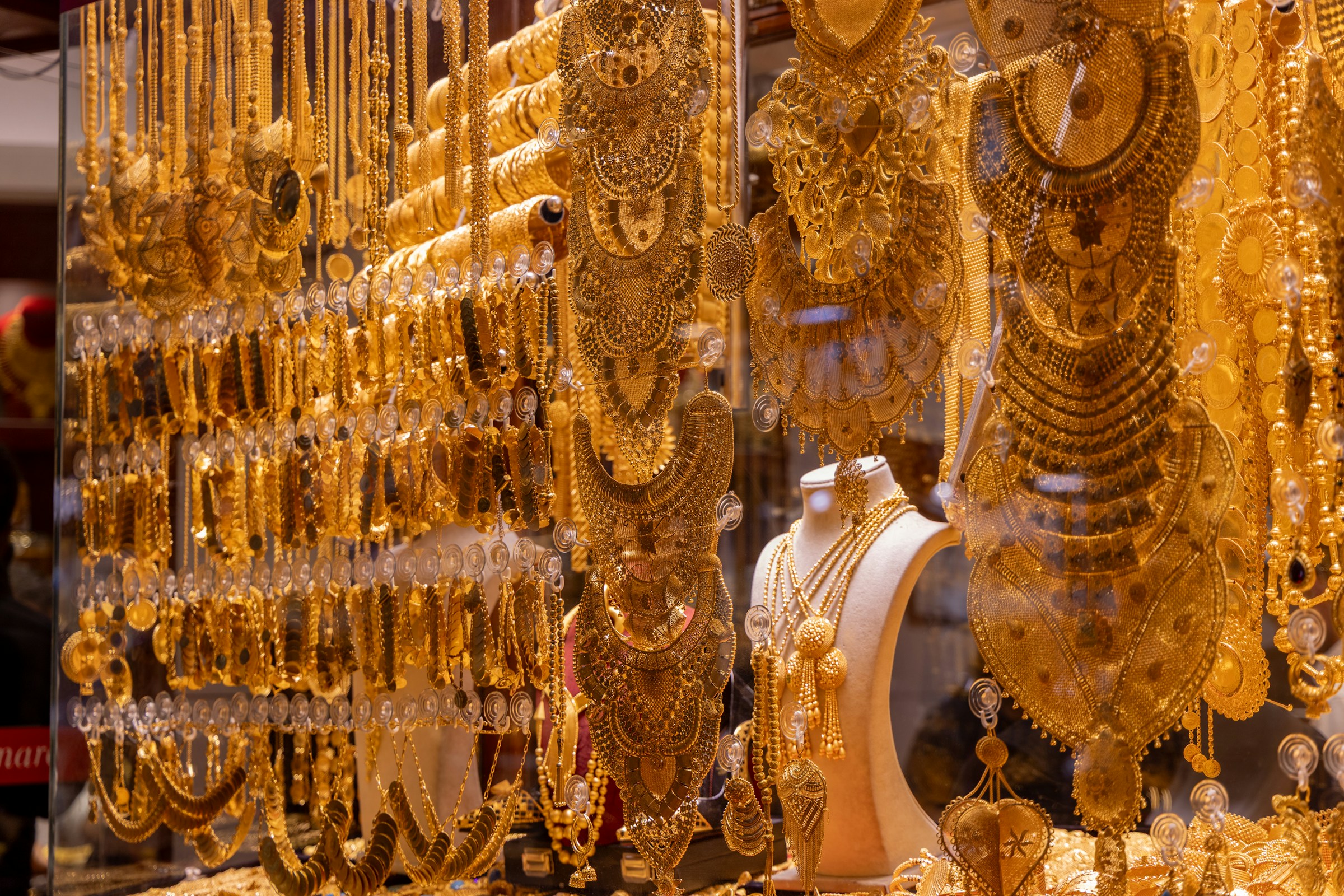
21K gold is the dominant jewelry standard across much of the Middle East and North Africa, and understanding it requires understanding the market in which it operates. In the souks and gold markets of Saudi Arabia, Egypt, the UAE, and the broader Gulf region, gold jewelry is sold primarily by weight rather than by design. The price of a piece is calculated against the prevailing gold price and the weight of the item, with a making charge added for craftsmanship. In this context, high gold content is not incidental; it is central to the purchase. Buyers in these markets are often acquiring jewelry as a store of wealth as much as an adornment, and 21K’s 87.5% gold content, combined with its rich yellow colour and practical durability, makes it the natural choice.
21K Saudi Gold
Saudi Arabia is one of the world’s largest markets for high-purity gold jewelry, and 21K is the dominant standard. The gold souks of Riyadh, Jeddah, and Mecca trade predominantly in 21K and 22K pieces sold by weight, and the tradition of gifting substantial gold jewelry at weddings and major life events means demand is consistent and deep-rooted. Saudi 21K gold is produced to the 875 fineness standard and should carry the corresponding hallmark. The term “Saudi gold" is widely used across the region and among diaspora communities globally to refer to high-purity yellow gold jewelry of this type, and 21K pieces from Saudi origin are broadly traded and recognised across the Gulf.
21K Dubai Gold
Dubai is home to one of the world’s largest and most active gold trading hubs, centred on the Gold Souk in Deira and supported by the broader UAE’s position as a major global gold trading centre. 21K gold is widely available and traded in Dubai alongside 22K, and the city’s gold market attracts buyers from across the Middle East, South Asia, and internationally. Dubai-origin 21K gold is produced to the same 875 fineness as any other 21K jewelry, with pieces typically carrying both the fineness stamp and a Dubai Central Laboratory (DCL) assay mark as a guarantee of purity.
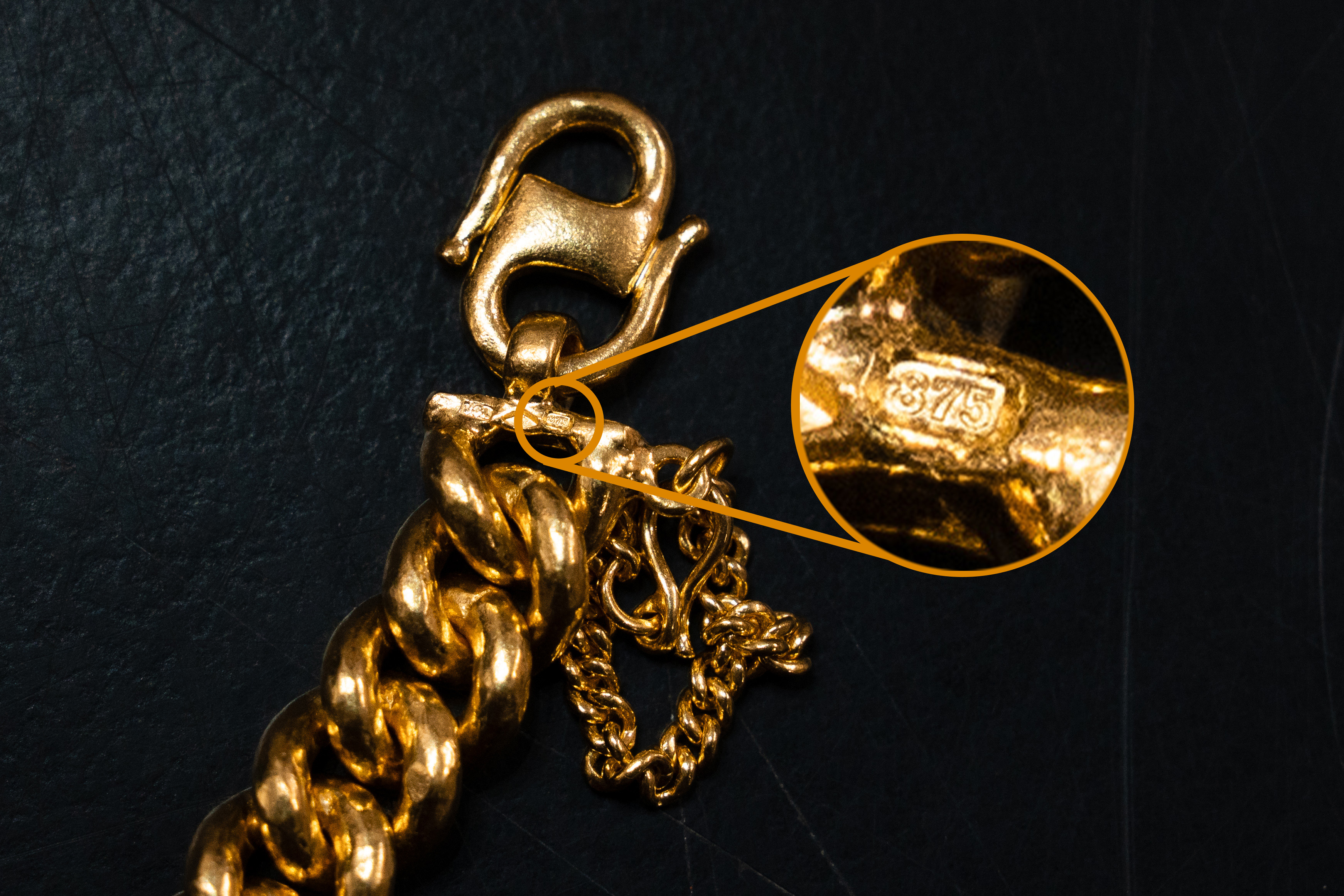
If you hold 21K gold jewelry and are looking to sell, BullionStar buys 21K gold at competitive rates based on the prevailing gold price and the gold content of your item. Visit our sell gold jewelry page for more information on how the process works.
Frequently Asked Questions
Is 21K gold real gold?
Yes. 21K gold contains 21 parts gold out of 24 (87.5% pure gold) and is a recognised standard in Middle Eastern and North African jewelry markets. It is certified by the 875 hallmark stamped on reputable pieces, and is real gold produced and traded to a defined standard. While 21K is not a common hallmark karat in Western markets such as the UK or US, this reflects regional convention rather than any question of authenticity. A genuine 21K piece is a high-purity gold alloy.
What is 21k gold as a percentage?
21K gold is 87.5% pure gold. The karat system divides gold purity into 24 parts; 21 divided by 24 gives 0.875, or 87.5%. In the millesimal fineness system used on hallmarks and bullion, this is expressed as 875. A piece stamped 875 contains 875 parts gold out of 1000, the same purity expressed differently.
How much is 21k gold worth?
21K gold is worth 87.5% of the prevailing spot price of pure gold. To calculate the intrinsic value of a 21K item, multiply the current gold spot price by 0.875, then multiply by the weight of the piece. In Middle Eastern markets, where 21K jewelry is typically sold by weight, this calculation is central to how pieces are priced and traded. For jewelry sold in Western markets, the retail price will also reflect craftsmanship and design, but this premium is generally not recovered on resale — the scrap value of a 21K piece is based on its gold content alone. Visit our sell gold jewelry page for more information on selling your 21K gold at BullionStar.
Does 21K gold tarnish?
Not significantly under normal conditions. With only 12.5% alloy content, 21K gold contains a relatively small proportion of reactive metals, making it considerably more tarnish-resistant than lower-karat alloys such as 18K, 14K, or 9K. Prolonged exposure to harsh chemicals, chlorinated water, or cleaning products could affect the surface over time, but well-maintained 21K pieces are unlikely to show meaningful discolouration under ordinary wear.
Is 21K gold the same as 875?
Yes. 875 is the millesimal fineness hallmark for 21K gold, indicating the metal is 87.5% pure. The two systems (karats and millesimal fineness) express the same purity differently. 21K describes the gold content in parts of 24; 875 describes it as parts per 1000. A piece stamped 875 is 21K gold.
Why is 21K gold popular in the Middle East?
21K gold’s popularity in the Middle East and North Africa is rooted in a long tradition of treating gold jewelry as a store of wealth as much as an adornment. In markets where jewelry is sold by weight and valued primarily for its gold content, a high-purity alloy like 21K is naturally preferred over lower-karat alternatives. The purity has become the established standard in key markets including Saudi Arabia and Egypt, where it is embedded in the jewelry trade and in cultural traditions around weddings, gifts, and inherited wealth. Its slight durability advantage over 22K also makes it practical for the heavy, intricately worked pieces common in the region.
Can 21K gold be used for everyday wear?
Yes, with some consideration for the type of piece. 21K gold is more durable than 22K or 24K due to its higher alloy content, and is well suited to necklaces, bracelets, and chains worn daily. Rings, which are exposed to more knocks and abrasion than other jewelry, will show surface wear over time as with any high-purity alloy, but are widely worn daily across the Middle East without issue. Storing pieces separately and avoiding prolonged contact with harsh chemicals will help maintain their appearance.
Is 21K gold good for investment?
Despite its high gold content, 21K gold is not well suited to investment purposes. Its purity falls below the 99.5% threshold required for Singapore’s Investment Precious Metal (IPM) GST exemption, meaning it does not qualify for the tax advantage that makes 24K gold the preferred choice for investors in Singapore. The value of a 21K piece also reflects craftsmanship as well as metal content, and this premium is generally not recovered on resale. Buyers looking to hold gold for investment are better served by 24K gold bars or gold coins, which are GST-exempt in Singapore, straightforward to value, and easy to resell.
Sell Your 21K Gold at BullionStar
21K gold occupies a well-defined place in the global gold market, even if it sits outside the standard karat ranges of Western jewelry. It is not an investment metal, as its purity falls below the threshold for Singapore’s GST exemption, and the value of a 21K piece reflects craftsmanship and cultural tradition as much as it does metal content. But as the dominant jewelry standard across Saudi Arabia, Egypt, and the broader Middle East, it has earned that position on its own terms: high in gold content, rich in colour, and deeply embedded in the regional traditions around weddings, gifting, and inherited wealth. 21K pieces are also common in diaspora communities globally, and the 875 hallmark is widely recognised by buyers and sellers who know the market.
If you hold 21K gold jewelry and are looking to sell, BullionStar buys all kinds of gold at competitive rates based on the prevailing gold price and the fine gold content of your item. The process is straightforward — the 875 hallmark tells us exactly what we need to know about purity, and we price accordingly. Visit our sell gold jewelry page to find out how to sell your gold at BullionStar.
For those looking to buy gold for investment, 24K gold remains the benchmark — GST-exempt in Singapore, straightforward to value, and available in a wide range of gold bars and gold coins from the world’s leading refiners.
Popular Blog Posts by Gold & Silver 101
 An Introduction to Gold & Silver Investing
 Should I Invest in Gold, Silver, or Platinum Bullion?
 Gold Coins vs Gold Bars: Which Is Better?
 How Is Gold Taxed in Singapore? The IPM GST Exemption Explained
 Storing Precious Metals, Gold, and Silver Bullion
 Gold & Silver Bullion Investing FAQs
 Gold Purity: The Complete Guide
 How Much Gold Is There in the World?
 Junk Silver: What It Is and What It’s Worth
 999 Fine Silver: Investment-Grade Silver Explained