 Contact
 Help






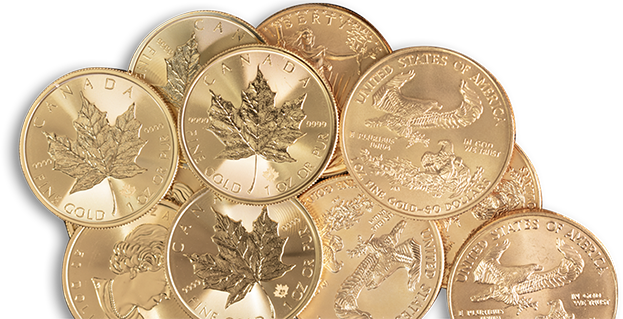


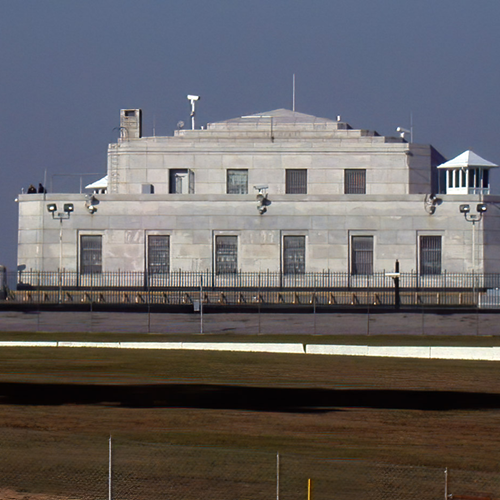
Fort Knox Gold: How Much Gold Is in Fort Knox?


Fort Knox is the most famous gold vault in the world. Its official name is the United States Bullion Depository, and it stands next to the US Army post of Fort Knox in Kentucky. The vault holds 147,341,858.382 fine troy ounces of gold, about 4,582.8 tonnes, according to the US Treasury’s Status Report of U.S. Government Gold Reserve dated 31 August 2026. That is more than half of all US gold reserves.
The depository was completed in December 1936, and the first gold arrived the following month. It has been a byword for impenetrable security ever since. No visitors are allowed in, no public tours have ever been held, and outsiders have been allowed into the vault only twice in nearly 90 years. That secrecy has also made it the centre of a long-running debate. The gold at Fort Knox has never had a full, independent physical audit, and calls to verify it have grown louder since 2025.
This guide explains what Fort Knox is and how much gold it holds, including what the gold bars inside are made of. It also covers the origins of Fort Knox’s gold, drawing on BullionStar analyst Koos Jansen’s research into where the gold in Fort Knox came from, and sets out the full history of audits and inspections, from 1953 to the present day.
Highlights
- Fort Knox holds 147,341,858.382 fine troy ounces (4,582.8 tonnes) of gold, 56.3% of US government gold reserves, according to the US Treasury’s report dated 31 August 2026.
- The US Bullion Depository at Fort Knox was completed in 1936, received its first gold in 1937, and held more than 20,000 tonnes at its 1941 peak.
- Most of its gold arrived as imports from Europe in the 1930s rather than from coins confiscated from Americans, and much of it is now stored in 90%-pure coin melt bars.
- The gold has never had a full independent physical audit, and only two groups of outsiders have entered the vault, in 1974 and 2017.
What Is Fort Knox?
Fort Knox is the common name for the United States Bullion Depository, a high-security gold vault in Kentucky, about 35 miles south-west of Louisville. Strictly speaking, Fort Knox is the US Army post that surrounds it. The vault itself belongs to the US Treasury and is run by the United States Mint, which also holds US gold at West Point and Denver.
The depository was built to store the gold the US government took in after 1933. The Gold Reserve Act of 1934 transferred the Federal Reserve’s gold to the Treasury, and the government wanted it kept somewhere safe from attack. Until then, much of it was held at the Philadelphia Mint and the New York Assay Office, both on the exposed East Coast. An inland site next to a major army base offered far more protection. Congress approved the transfer of the land from the Army to the Treasury in August 1935.
According to the US Mint, the building was completed in December 1936 at a cost of US$560,000. It used 16,000 cubic feet of granite, 4,200 cubic yards of concrete, 750 tons of reinforcing steel and 670 tons of structural steel. The first gold arrived on 13 January 1937, shipped from Philadelphia and New York by US Mail under heavy guard.
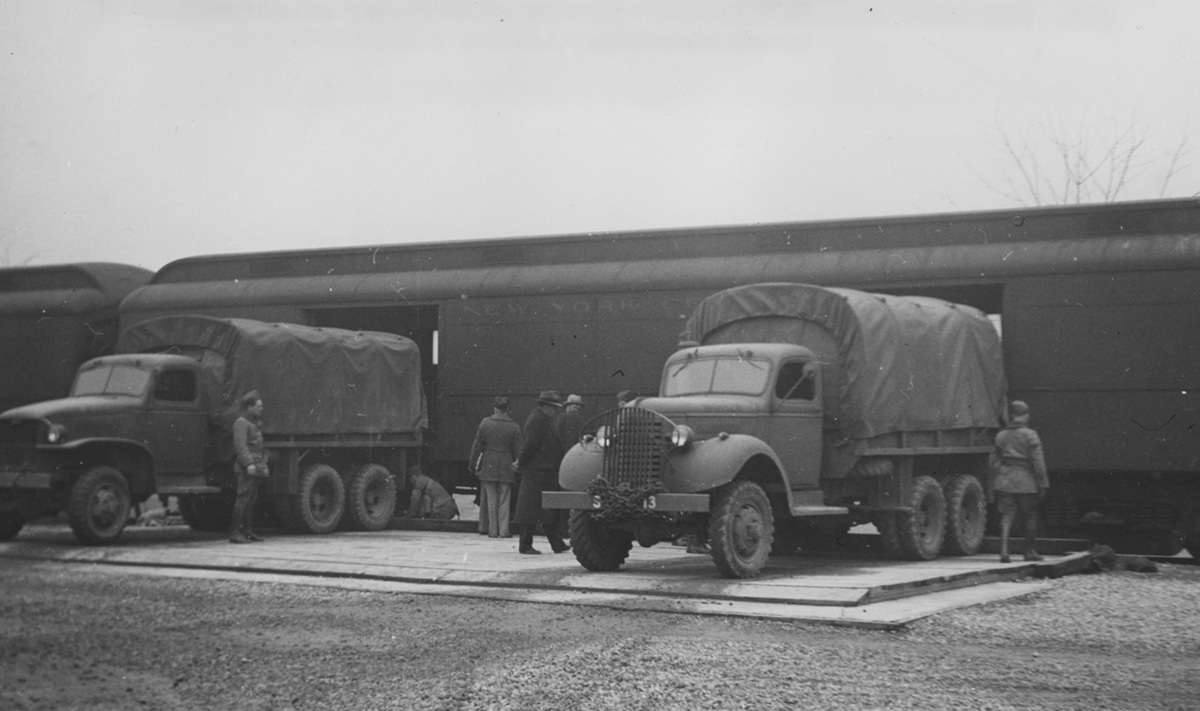
Gold trains preparing to unload bullion onto Army trucks, 1941. United States Post Office Department, Public domain, via Wikimedia Commons
How Secure Is Fort Knox?
Few details of the vault’s security have ever been made public. The US Mint says only that few people know the building’s structure and contents, and that no one person knows all the procedures needed to open the vault. The site is guarded by the US Mint Police, with the Army next door. No visitors are allowed in.
Gold is not the only thing Fort Knox has protected. During the Second World War, the Declaration of Independence, the US Constitution and the Bill of Rights were stored there, along with one of the original copies of the Magna Carta. After the war, the Holy Crown of Hungary was kept at Fort Knox until the US returned it to Hungary in 1978.
How Much Gold Is in Fort Knox?
Fort Knox holds 147,341,858.382 fine troy ounces of gold, which is 4,582.8 tonnes. That figure comes from the US Treasury’s Status Report of U.S. Government Gold Reserve dated 31 August 2026. It makes Fort Knox the largest single store of US government gold, holding 56.3% of the country’s total reserve of 8,133.5 tonnes. For a look at how US holdings compare with other countries, see our guide to gold reserves by country.
| Fort Knox gold | Figure |
|---|---|
| Fine troy ounces | 147,341,858.382 |
| Tonnes | 4,582.8 |
| Share of US gold reserves | 56.3% |
| Approximate number of bars | 368,000 |
| Book value (US$42.2222 per ounce) | US$6.22 billion |
| Market value (LBMA Gold Price PM, 12 October 2026) | US$614.7 billion |
Source: US Treasury, Status Report of U.S. Government Gold Reserve, 31 August 2026; bar count as widely reported from the 2011 US Mint gold inventory.
The Treasury classes all of the gold at Fort Knox as “deep storage”. The bullion is held in sealed vault compartments that are opened only rarely, and the Treasury’s Office of the Inspector General examines the seals every year. None of this gold is used for coin production. The US Mint keeps a separate working stock of gold for that.
The amount of gold in Fort Knox has not changed for decades, but it is far below its peak. At the end of 1941 the depository held 649.6 million ounces, more than 20,000 tonnes and over four times today’s total. Some was moved to other US depositories, but much of it left the country over the following three decades, as foreign central banks exchanged their dollars for US gold. The full story is in our guide to US gold reserves.
What Kind of Gold Is in Fort Knox?
The gold in Fort Knox does not look like the gold traded on today’s wholesale market. When Congress published the US Mint’s gold bar inventory in 2011, it showed that most of the bars are “coin melt” bars. They were made by melting down gold coins and casting the gold into bars of roughly 400 ounces. Like the US coins of the time, most of these bars are about 90% pure gold, with the rest mostly copper.
Only a minority of the bars reach the 99.5% purity required for London Good Delivery, the standard set by the LBMA and used by central banks and bullion banks in the London gold market. So most of the gold in Fort Knox would need to be refined before it could be traded internationally.
Is There Really Gold in Fort Knox?
According to the US Treasury, yes. Its monthly reports list the gold at Fort Knox down to the thousandth of an ounce, and senior officials, most recently Treasury Secretary Scott Bessent in July 2026, have stated that all of it is “present and accounted for.” But the gold has never had a full, independent physical audit, which is why the question keeps being asked. The audit history is set out in full below.
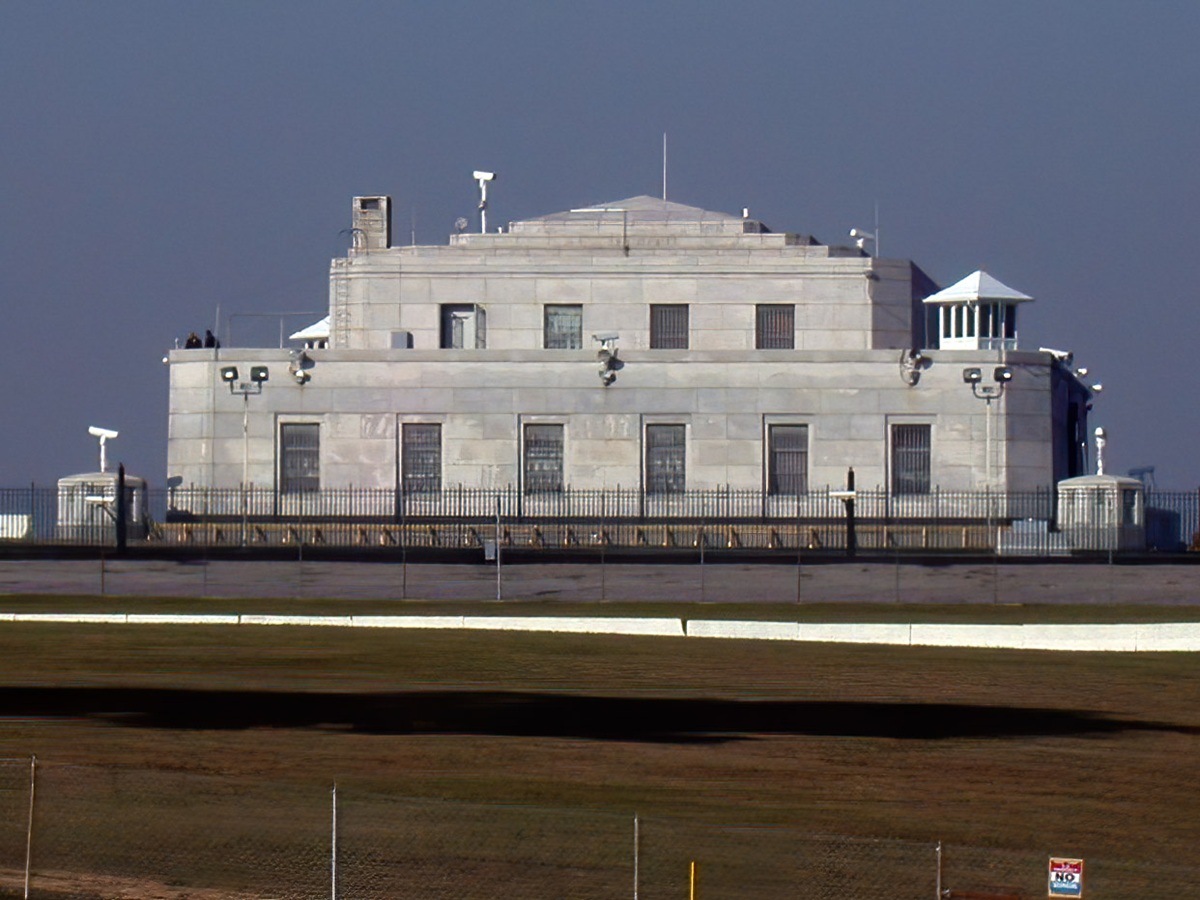
Work permit Original author=Cliff, CC BY-SA 4.0, via Wikimedia Commons

Where Did the Gold in Fort Knox Come From?
The usual answer is that Fort Knox was filled with gold confiscated from Americans in 1933. In April 1933, Executive Order 6102 required Americans to hand in most of their gold coins, bars and gold certificates at US$20.67 an ounce. Ten months later, the Gold Reserve Act raised the official price to US$35, an increase of almost 70%, and gave the government title to the Federal Reserve’s gold. The gold sent to Fort Knox from January 1937 came from these holdings, moved from the Philadelphia Mint and the New York Assay Office.
The confiscation alone, though, cannot account for what followed. BullionStar’s Koos Jansen examined US Mint and Mineral Yearbook data in his research into where the gold in Fort Knox came from. By the US Mint’s own estimates, there were about 2,515 tonnes of gold coin in the United States at the end of 1931. Around 1,900 tonnes of that was already held by banks and the government, which leaves only about 614 tonnes in the hands of the public. Yet US official gold reserves rose from about 6,500 tonnes in 1933 to more than 19,500 tonnes by 1940, an increase of over 13,000 tonnes in seven years.
Most of that gold came from abroad. Once the US raised the gold price to US$35, it became very profitable to ship gold to America, and as war approached, Europe’s governments and investors moved their wealth across the Atlantic. Several European central banks, including those of France, the Netherlands, Switzerland and Italy, sold over 2,000 tonnes of gold before the end of 1936. Higher prices also boosted US mining, with domestic output roughly doubling from 71 tonnes in 1933 to 151 tonnes in 1940. That was a useful addition, but small next to imports.
The answer, then, is that Fort Knox was filled mainly with gold from overseas, not from Americans’ coin collections. Confiscated gold was only a modest share. It does leave a further question: as the 2011 bar inventory shows, so much of the gold in Fort Knox is now held in coin melt bars, which would mean a large part of the imported gold was later melted down into these bars. That puzzle is still unanswered, and will likely remain so while Fort Knox remains shrouded in secrecy.
Has Fort Knox Ever Been Audited?
The gold at Fort Knox has been audited, but never in a way that satisfies its critics. Every audit since the 1950s has been carried out by the government itself. No full, independent physical audit, in which every bar is counted, weighed and tested by an outside auditor, has ever taken place. Much of the official record is incomplete, and some of it is missing altogether.
The 1953 Audit and the 1974 Visit
The first audit of Fort Knox came in 1953, soon after President Eisenhower took office. An advisory committee checked just 3 of the vault’s 22 compartments at the time, holding 34.4 million ounces. That was less than 6% of the Treasury’s gold. The committee concluded that “the same agreement would be found” if the rest were checked, but it never checked them.
The next look inside came on 23 September 1974, when around 100 journalists and nine members of Congress were allowed into the vault. It remains the best-known moment in Fort Knox’s history, but visitors were shown only one compartment. A team led by the General Accounting Office (now the Government Accountability Office) went on to inventory and assay around 31 million ounces at Fort Knox, about a fifth of the gold held there.
The Continuing Audits, 1975 to 1986
Pressure from Congress led the Treasury to start a “continuing audit” in 1975, aiming to check about 10% of the gold each year. The audits were run by a committee of Treasury, US Mint and New York Fed staff. Rather than weigh and test every bar, the committee checked bars against the inventory lists and tested one melt in every 50. The Treasury says Fort Knox was fully covered by September 1982, and that 97% of the Mint’s gold had been audited by the time the programme ended in 1986.
The paper trail is weak, though. When BullionStar’s Koos Jansen went looking for the annual audit reports in 2015, he found that 7 of the 13 reports could not be located by the Treasury’s Office of the Inspector General, the GAO, the US Mint or the National Archives.
Seals Instead of Audits
Since 1993, the Treasury’s Office of the Inspector General has been responsible for auditing the Mint’s gold. Fort Knox’s gold is now kept in 15 sealed compartments. Once a compartment’s gold has been verified and sealed, later audits are generally limited to checking that the seal is intact, rather than counting or testing the gold again. Koos’s later research found that the annual audit reports give few details of any physical checks, and that most workpapers from before 2004 had been destroyed. He concluded that audits of US monetary gold severely lack credibility.
From Mnuchin’s Visit to Calls for a Full Audit
In August 2017, Treasury Secretary Steven Mnuchin visited Fort Knox with Kentucky’s governor and members of Congress. It was the first time outsiders had entered the vault since 1974. The visit was brief and involved no counting or testing, and BullionStar’s Ronan Manly argued that Mnuchin’s visit proved nothing about the gold itself.
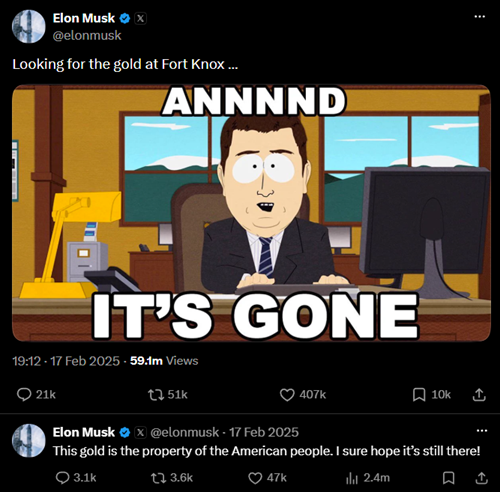
The question has come back strongly since 2025. That February, Elon Musk and President Trump both called for an inspection of Fort Knox, and Trump renewed the call in May 2026, posting “TIME TO AUDIT FORT KNOX.” Representative Thomas Massie and Senator Mike Lee have introduced the Gold Reserve Transparency Act, which would require a full independent assay and inventory of US gold every five years, but both bills are still in committee. Treasury Secretary Scott Bessent said in July 2026 that all the gold is “present and accounted for,” while confirming he had not visited Fort Knox himself.
Frequently Asked Questions
How much gold is in Fort Knox?
Fort Knox holds 147,341,858.382 fine troy ounces of gold, or about 4,582.8 tonnes. That figure comes from the US Treasury’s Status Report of U.S. Government Gold Reserve dated 31 August 2026. It is 56.3% of all US government gold, which makes Fort Knox the largest single store of US gold reserves.
Has Fort Knox ever been audited?
Fort Knox has been audited only partially, and only by the US government. In 1953, auditors checked 3 of its 22 compartments. A Treasury-led continuing audit between 1975 and 1986 used sample testing. Since then, annual checks have mainly confirmed that the vault seals are intact. The gold has never had a full, independent physical audit in which every bar is counted, weighed and assayed.
Can you visit Fort Knox?
No. The US Bullion Depository at Fort Knox is closed to the public, and no tours are offered. Outsiders have been allowed into the vault only twice: a group of journalists and members of Congress in September 1974, and Treasury Secretary Steven Mnuchin with Kentucky’s governor and members of Congress in August 2017.
Is the gold in Fort Knox really there?
The US Treasury says it is, reporting 147.3 million ounces at Fort Knox every month and stating that all of the gold is “present and accounted for.” Because there has never been a full independent audit, though, that claim has not been verified from outside the government. Large parts of the audit record from 1975 to 1986 are also missing.
Who owns the gold in Fort Knox?
The gold in Fort Knox belongs to the US Treasury. The US Mint, a bureau of the Treasury, holds it in custody at the US Bullion Depository. The Federal Reserve does not own it. The Fed handed its gold to the Treasury under the Gold Reserve Act of 1934 and received gold certificates in return.
How much is Fort Knox gold worth today?
At the LBMA Gold Price of US$4,171.90 an ounce on 12 October 2026, the gold in Fort Knox was worth about US$614.7 billion. On the government’s books, it is valued at the statutory price of US$42.2222 an ounce, which puts it at about US$6.22 billion.
Fort Knox and the Case for Owning Gold Yourself
For nearly 90 years, Fort Knox has stood for the idea that gold is the ultimate store of value. The US government still keeps more than 4,500 tonnes of it there, decades after the dollar’s link to gold was cut. But Fort Knox also shows the weakness of holding gold through someone else. Its owners, the American public, cannot see it, count it or check it. Every audit has been carried out by the government itself, much of the audit record is missing, and the question of whether all the gold is there has gone unanswered for more than 70 years.
Owning physical gold yourself removes that uncertainty. Gold bars and coins, such as the US Mint’s American Gold Buffalo, are held in your own name, with no government or institution standing between you and the metal.
For those who would rather not store gold at home, BullionStar runs its own vault facility within Le Freeport in Singapore, one of the world’s most secure storage facilities. Unlike Fort Knox, it is built around transparency. Every bar in BullionStar’s vault storage is fully allocated to its owner and fully insured. Customers can see photos of their own bars, review independent audits of the vault’s holdings, and visit the vault in person to inspect their gold. It is the kind of audit Fort Knox has never had.
Subscribe to Gold University Articles
Copyright Information: BullionStar permits you to copy and publicize articles or information from the BullionStar Gold University provided that a link to the article's URL or to https://bullionstar.com is included in your introduction of the article or blog post together with the name BullionStar. The link must be target="_blank" without re="nofollow". All other rights are reserved. BullionStar reserves the right to withdraw the permission to copy content for any or all websites at any time.