 Contact
 Help
Help







Should I Invest in Gold, Silver, or Platinum Bullion?
 Gold & Silver 101



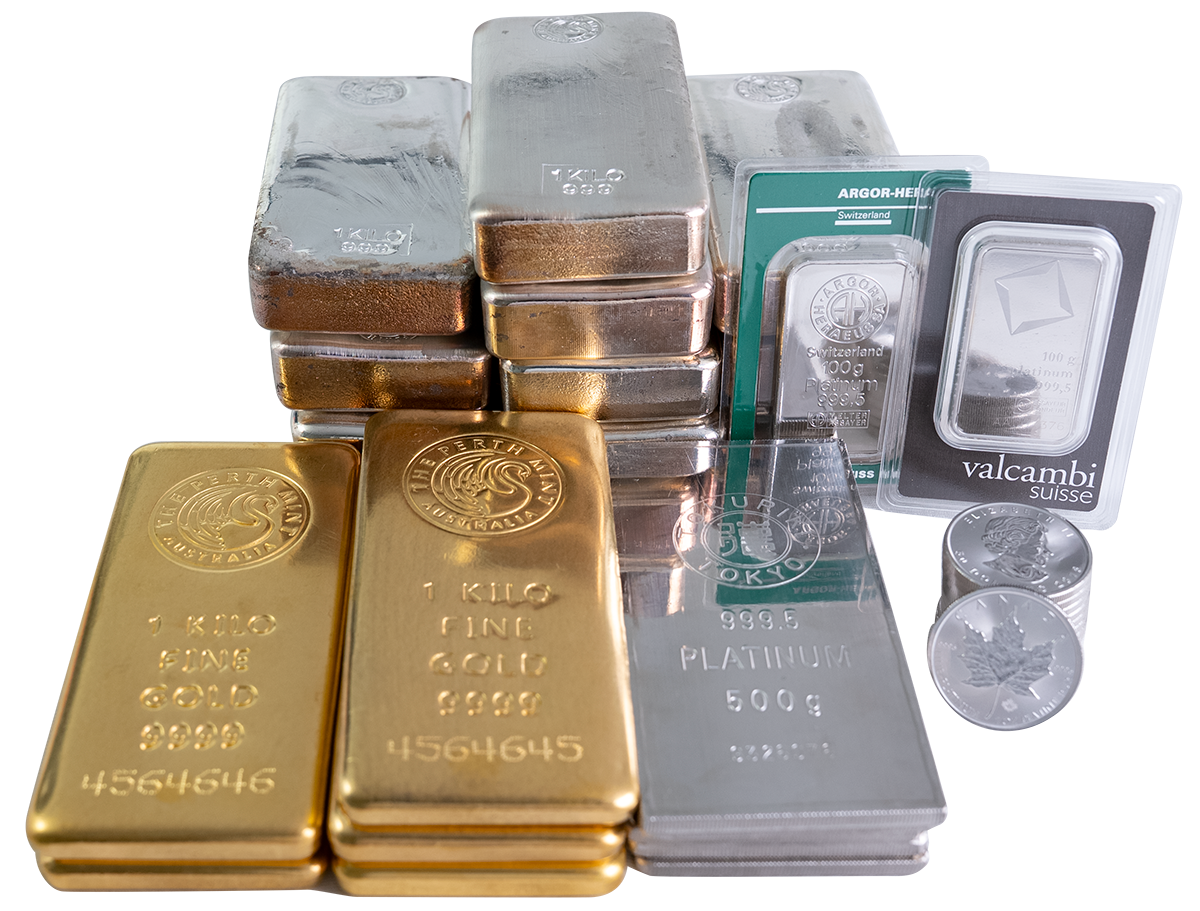
Gold, silver, and platinum are the three major precious metals available as investment-grade bullion. Each is traded through the same network of LBMA and LPPM accredited refiners, and each qualifies as an Investment Precious Metal (IPM) in Singapore, exempting it from GST, yet each behaves quite differently as an asset.
The choice between which to buy really comes down to two lenses. You can decide based on personal preference: which metal you’re drawn to, and what fits your budget, since silver carries the lowest entry cost of the three. Or you can decide based on diversification: gold, silver, and platinum aren’t perfectly correlated with each other, so holding more than one can smooth out a precious metals allocation in a way that holding only one metal can’t.
This guide compares gold, silver, and platinum head-to-head, covers how their prices and performance differ, and ends with a straightforward framework for which metal, or mix of metals, suits which kind of investor.
Please note that BullionStar does not provide investment or financial advice. The information below is for informational purposes only. Your individual circumstances and goals will always be the most important factors in any investment decision.
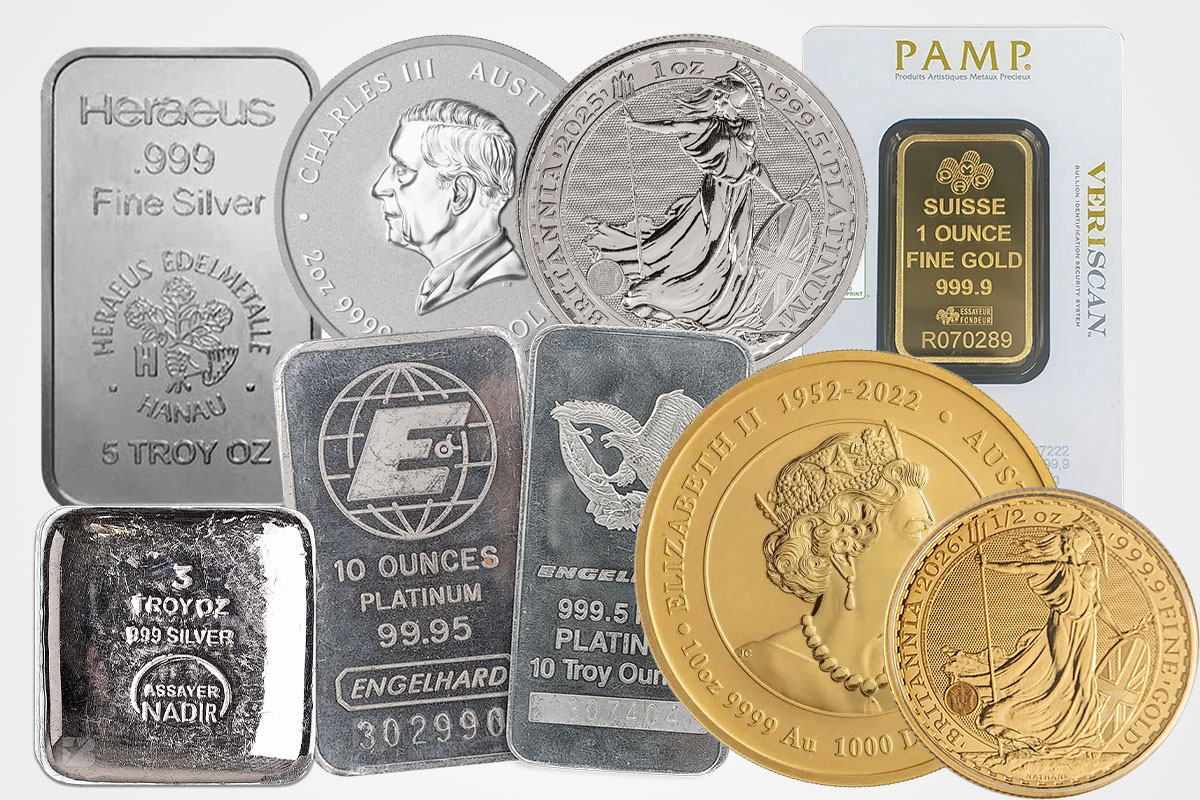
Gold vs Silver: Which Should You Buy?
Gold and silver are the two most established precious metals for investment, and the first two metals investors will normally weigh up. The choice between them comes down to risk tolerance and budget as much as anything else.
Gold is the more stable of the two, moving largely independently of industrial demand, which makes it the more conservative store-of-value holding. Silver shares gold’s monetary history, but its price is also driven by industrial demand, from electronics to solar panels to electrical wiring. This makes it considerably more volatile in both directions and gives it more upside potential during precious metals bull markets.
Silver also carries a lower entry cost, making it an easier metal to start with on a smaller budget, though that volatility calls for a slightly higher risk tolerance in return. For the full comparison, including performance history and portfolio role, see our dedicated guide: Gold vs Silver: Which Is the Better Investment?
An Insight into Customer Preferences
Every year, BullionStar publishes its financial performance alongside a breakdown of sales by product category, and those figures offer a genuine, real-world look at how investors actually split their money across the three metals, rather than just how they say they would.
For the financial year (July 2024 to June 2025), gold accounted for 73.4% of BullionStar’s sales by value, silver for 24.9%, and platinum and other metals for the remaining 1.7%. That’s a shift from the year before, when gold made up 68% of sales and silver 30%.
Within gold, bars made up 86.6% of sales by value versus 13.1% for coins, with 100-gram bars the single most popular product at 59.4% of gold bar sales, followed by 1-kilogram bars at 27.8%. Within silver, bars represented 89.4% of sales versus 10.5% for coins and rounds, with 1-kilogram bars dominating at 77.9% of silver bar sales.
The order data tells its own story about who’s buying: BullionStar processed 55,686 buy orders in FY2025, up 44.6% year-on-year, with a median order size of SGD 1,469, up 46.7%. Growth is coming from more investors making smaller, more frequent purchases as much as from larger allocations.
What we see at BullionStar reflects wider global trends. Gold and silver are the primary metals of choice for investors, while platinum makes up a much smaller proportion from those that want added diversification.
Gold vs Platinum: Price, Rarity and Performance
Platinum is one of the more counterintuitive precious metals to understand, because its price doesn’t follow its rarity. Platinum is genuinely scarcer than gold, yet for most of the last decade it has traded at a noticeable discount to gold, a reversal of the relationship that held for most of the 20th century. Understanding why comes down to what actually drives each metal’s price.
How Rare Is Platinum Compared to Gold?
By supply, platinum is far rarer than gold. Annual mine production runs at roughly 190 tonnes a year, compared to around 3,200 tonnes for gold, meaning platinum supply is a small fraction of gold’s. Platinum is also a much newer addition to the precious metals world. Gold has been mined and used as money for thousands of years, while platinum wasn’t identified and separated as a distinct metal until the 18th century, and lacks anything like gold’s long monetary history.
Why Does Platinum Trade Below Gold?
Rarity alone doesn’t set price. Demand structure does, and that’s where gold and platinum diverge sharply. Gold’s demand is overwhelmingly monetary: central bank reserves, investment bars and coins, and jewellery bought largely as a store of value. Platinum’s demand is overwhelmingly industrial, dominated by autocatalysts for combustion-engine vehicles, alongside jewellery and other industrial uses. That leaves platinum’s price far more exposed to industrial and automotive cycles, including concerns about the long-term shift toward electric vehicles, than to the safe-haven demand that supports gold. Learn more about what makes gold valuable.
Supply concentration adds to that exposure. The large majority of the world’s platinum comes from a small number of South African mines, making platinum’s supply far more vulnerable to regional labour disputes, power shortages, or production disruptions than gold’s more geographically diversified mine output. Central banks, meanwhile, hold substantial gold reserves as a monetary asset, but essentially none hold platinum, reinforcing just how differently the two metals are actually used.
What This Means for Investors
None of this makes platinum a worse metal to hold, only a different one. Gold’s price is driven by its role as money and a safe haven, making it the more stable, defensive of the two. Platinum’s price is driven by industrial and automotive demand, which means it can move sharply on news that has nothing to do with monetary conditions at all, in either direction.
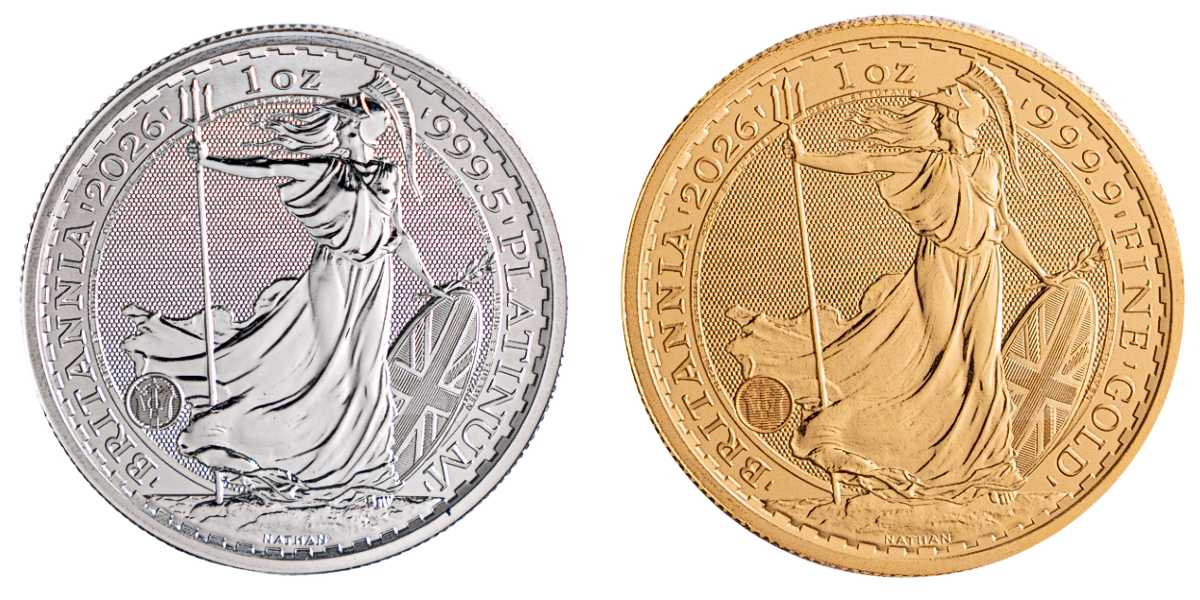
Silver vs Platinum
Silver and platinum are often lumped together as “the other" precious metals compared to gold, but the similarity is mostly superficial. Both are silver-toned metals that typically trade below gold’s price, and both carry real industrial demand alongside investment demand. From there, the two diverge: silver’s industrial demand is broad, centering on electronics and solar panel manufacturing, while platinum’s is highly concentrated on autocatalysts for combustion-engine vehicles. Those are different industries entirely, moving on different economic cycles, which is why silver and platinum prices don’t move in lockstep despite both sitting outside gold’s more monetary demand profile.
For most investors, silver’s much lower price per ounce and broader market makes it the more accessible starting point of the two. Platinum’s rarity and industrial exposure make it the more specialised choice.
Price and Performance Compared
Gold, silver, and platinum prices move constantly throughout each trading day. For live, up-to-the-minute prices, use our price charts, which are fully customisable across metals, timeframes, and currencies, as well as our dedicated gold price today and silver price today charts.
A single day’s price tells you less than it seems to, though. Looking at performance over time is far more useful for comparing the three metals:
| Gold | Silver | Platinum | |
|---|---|---|---|
| Today (20 Aug 2026) | $4,497 | $67.12 | $1,803 |
| 1-year return | +31.0% | +67.7% | +78.5% |
| 5-year return | +150.0% | +167.0% | +65.4% |
| 10-year return | +259.5% | +291.6% | +82.6% |
| 20-year return | +644.5% | +481.1% | +57.8% |
| 50-year return | +3,497.6% | +1,443.0% | +1,078.2% |
Over the last year, gold and silver’s rally has been driven by the same safe-haven and monetary forces, while platinum’s strong recent return sits alongside much weaker 5, 10, and 20-year numbers, reflecting how much more platinum’s price answers to industrial and automotive cycles than to the steady, structural demand behind gold.
None of this tells you which metal is “best," only how differently gold, silver, and platinum have actually behaved over time, and why. Gold’s numbers reflect its role as money and a safe haven, silver blends that same monetary character with a much bigger industrial swing, and platinum’s comparatively muted longer-term returns are the clearest evidence yet that it answers to a different set of forces entirely. That distinction is exactly what should guide which metal, or mix of metals, fits your own goals.
Gold vs Silver vs Platinum: Which Metal to Buy?
The honest answer is that gold, silver, and platinum aren’t really substitutes for each other. Each is suited to a different goal, and the right approach for most people isn’t picking a single winner, it’s understanding which one actually matches what they’re trying to achieve.
| If you’re… | Consider… | Because… |
|---|---|---|
| Prioritising capital preservation above all else | Gold | The most stable of the three, driven by monetary and safe-haven demand rather than industrial cycles |
| New to precious metals with a smaller budget | Silver | The lowest entry cost of the three, while still sharing much of gold’s monetary character |
| Looking for exposure that moves independently of monetary demand | Platinum | Priced mainly on industrial and automotive cycles, giving genuine diversification from gold and silver |
| Building a diversified precious metals allocation | A mix of all three | Each responds to a different set of forces, smoothing out the volatility of holding just one |
Palladium is worth a mention here too, as the fourth major precious metal. It sits outside this comparison because its price is even more tightly tied to a single industrial use: catalytic converters for petrol engines. See Is Palladium a Good Investment? if that’s relevant to you.
For a deeper look at any single metal on its own terms, see Is Gold a Good Investment?, Is Silver a Good Investment?, or Is Platinum a Good Investment?
Most portfolio allocation frameworks suggest holding 5–10% of a portfolio in precious metals as a group, before even deciding how that’s split between metals. Our Gold & Silver Portfolio Allocation guide breaks down the main frameworks in more detail.
It’s well worth remembering that you don’t have to choose only one metal within that allocation. Many investors hold two, or all three, precisely because their prices don’t move in lockstep. They buy gold for stability, silver for growth potential, and platinum for exposure that’s genuinely uncorrelated with monetary demand. Our guide on portfolio diversification covers how to think about weighting a mix of precious metals within a broader portfolio.
Frequently Asked Questions
Is platinum a better investment than gold?
Neither is universally better, they serve different roles. Gold is driven primarily by monetary and safe-haven demand, giving it more price stability, while platinum is driven by industrial and automotive demand, which can mean sharper swings in either direction. The right choice depends on whether you want stability or exposure to industrial cycles.
Why is platinum cheaper than gold?
Despite being rarer than gold by mine supply, platinum trades below gold because of what drives its price. Platinum’s demand is dominated by industrial uses like automotive catalysts, exposing it to economic and automotive cycles, while gold’s demand is dominated by monetary and safe-haven buying. That demand mismatch, not rarity, is why platinum trades at a discount to gold today.
Which metal holds value best in a recession?
Gold has historically held value best during recessions and financial crises, since safe-haven demand tends to rise exactly when confidence in other assets falls. Silver often follows gold’s direction but with sharper swings, while platinum, being more industrially driven, can actually fall during a recession if automotive and industrial demand weakens alongside it.
Should a beginner start with gold or silver?
Either can work, depending on budget and risk tolerance. Gold is the more stable, straightforward starting point, while silver’s lower entry cost makes it more accessible, though its price swings are considerably larger. Many beginners start with gold for stability and add silver later for diversification.
Can I hold all three metals in one vault account?
Yes. A single BullionStar account can hold gold, silver, and platinum together, with storage available in Singapore, the US, and New Zealand. This includes physical bullion products and our Bullion Saving Program.
Which metal is most liquid to sell?
Gold is the most liquid of the three, backed by the deepest, most established dealer network and buy-back demand worldwide. Silver is also widely bought back but can carry wider spreads given its bulkier weight relative to value. Platinum is the least liquid of the three, with a smaller pool of specialist buyers, which can mean wider spreads or longer wait times when selling.
Choosing Your Metal
Gold, silver, and platinum each earn their place for different reasons: gold for stability and its long monetary history, silver for accessibility and growth potential, platinum for genuine diversification away from monetary demand entirely. Which one, or which combination, is right for you comes down to your own goals, budget, and risk tolerance, all covered throughout this guide.
Ready to buy? Browse our full range of gold bars and coins, silver bars and coins, and platinum bars and coins. If you’d rather build a holding across all three, our Bullion Savings Programme covers gold, silver, and platinum in gram-sized increments, fully backed by BullionStar, with 24/7 trading, and options to convert to physical.
Popular Blog Posts by Gold & Silver 101
 An Introduction to Gold & Silver Investing
 Should I Invest in Gold, Silver, or Platinum Bullion?
 Gold Coins vs Gold Bars: Which Is Better?
 How Is Gold Taxed in Singapore? The IPM GST Exemption Explained
 Storing Precious Metals, Gold, and Silver Bullion
 Gold & Silver Bullion Investing FAQs
 How Much Gold Is There in the World?
 Junk Silver: What It Is and What It’s Worth
 999 Fine Silver: Investment-Grade Silver Explained
 Gold Savings Account vs Bullion Savings