Contact
 Help






Karat vs Carat: What’s the Difference?
 Gold & Silver 101


Karat and carat sound the same but usually measure different things. A karat measures the purity of gold, on a scale of 24. A carat measures the weight of a gemstone, where one carat equals 0.2 grams. A “24 karat” gold bar is pure gold, while a “1 carat” diamond weighs 200 milligrams.
The confusion comes from spelling. In the United States, “karat” is used for gold and “carat” for gemstones. In the UK and much of the Commonwealth, “carat” is used for both. Singapore uses both spellings, so you’ll sometimes see “22 carat” and “22 karat” on gold jewellery in the same shopping centre.
This guide explains the difference, where both words come from, and how karats relate to the fineness numbers stamped on gold, such as 999 and 750.
Karat vs Carat: The Short Answer
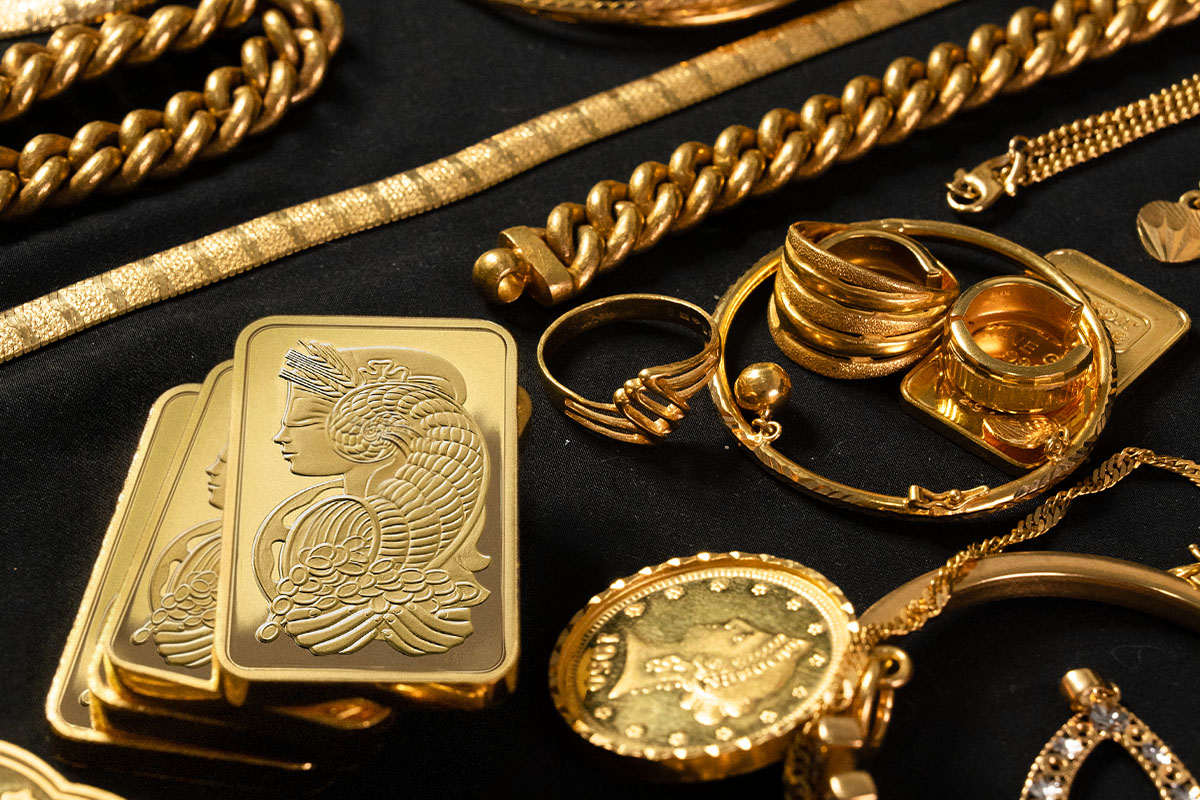
Karat (K or kt) measures gold purity, while carat (ct) measures gemstone weight. A karat is one twenty-fourth of the whole, so 24 karat gold is pure gold and 18 karat gold is 18 parts gold out of 24, or 75%. A carat is a unit of weight equal to 0.2 grams, used for diamonds and other precious stones.
| Karat | Carat | |
|---|---|---|
| Measures | Gold purity | Gemstone weight |
| Scale | Parts out of 24 | 1 carat = 0.2 g (200 mg) |
| Abbreviation | K or kt | ct |
| Example | 22K gold = 91.67% gold | 1 ct diamond = 0.2 g |
| Spelling | “Karat" in the US; often “carat" elsewhere | “Carat" in English |
The catch is that outside the US the word “carat” is often used for both. “18 carat gold” in the UK, Australia or India means exactly the same as “18 karat gold” in the US. Context tells you which is meant: a carat of gold is a purity, and a carat of diamond is a weight.
Why the Spelling Differs by Country
Both words come from the same root, so the split between “karat” and “carat” is mainly a matter of where you are:
| Country or region | Gold purity | Gemstone weight | Typical stamp on gold |
|---|---|---|---|
| United States | Karat | Carat | 14K, 18K, 14kt |
| Canada | Karat or carat | Carat | 10K, 14K |
| UK, Australia, New Zealand | Carat | Carat | 9ct, 18ct, plus fineness hallmark |
| India | Carat | Carat | 22K916, 18K750 (BIS hallmark) |
| Singapore and Malaysia | Both | Carat | 916, 999, 22K |
| Japan | Karat (K) | Carat | K18, K24 |
| China and Hong Kong | K金 (“K gold") | Carat | 18K, 足金 (990) |
In the United States, the separate spelling “karat” became standard for gold in the 19th and 20th centuries and is now used in US trade rules for jewellery. That gives American English two different words for two different measures. British English kept the older single spelling, “carat”, for both, and most of the Commonwealth followed. So a British jeweller selling an “18 carat gold ring with a 1 carat diamond” is using the same word for two quite different things.
Singapore sits in between. British influence and the Indian jewellery trade mean “22 carat” is common in shops, while international bullion dealers and many searchers use “karat”. Both are correct, and BullionStar uses “karat” for gold to keep purity and gemstone weight clearly separate.
Other languages vary too. German uses “Karat” for both gold and gemstones, which is why that spelling appears on some European pieces. Japanese jewellery often puts the K first, so a piece stamped “K18” is 18 karat gold.
Where Karat and Carat Come From
Karat and carat share a single origin: the carob tree. The ancient Greek word keration, meaning “little horn”, described the carob’s curved seed pod. Through Arabic (qīrāṭ), Italian (carato) and French (carat), it became the English “carat”, and later the American “karat”.
Carob seeds were used as small weights for gold and precious stones across the ancient Mediterranean and Middle East. It’s often said they were chosen because every seed weighs exactly the same, but that’s a myth. Studies have found carob seeds vary in weight about as much as other seeds. What made them useful was simply that they were small, common and roughly consistent.
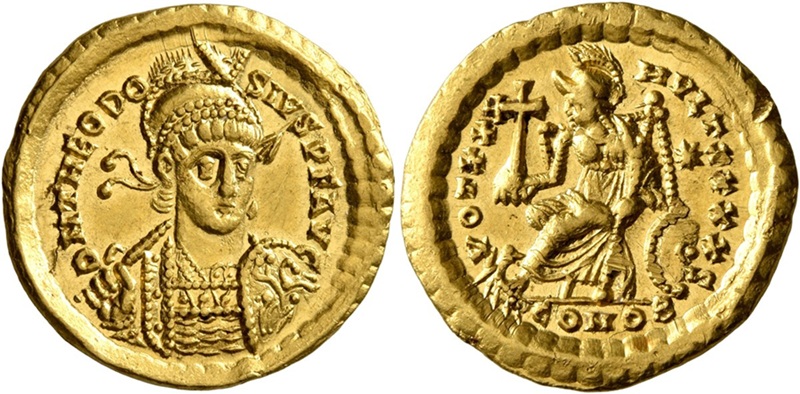
The link to the 24-part gold scale is usually traced to the Roman Empire. In the early 4th century, Emperor Constantine introduced the solidus, a gold coin that weighed 24 siliquae, the Latin name for carob-seed weights. Because a pure gold solidus contained 24 of these units, it became natural to describe gold content in twenty-fourths. A coin with 22 parts gold out of 24 was “22 carats” fine, and that is the system still used today.
Gemstone weights followed a separate path. The carat used for gems varied from one trading centre to another for centuries, until a standard metric carat of exactly 200 milligrams was proposed in 1907 and adopted around the world in the years that followed.
Karats and Fineness: Measuring Gold Purity
The karat scale runs from 24 down, with each karat representing one twenty-fourth of the metal. These are the grades you’re most likely to come across:
| Karat | Gold content | Fineness mark |
|---|---|---|
| 24K | 99.9%+ | 999 or 999.9 |
| 22K | 91.67% | 916 |
| 21K | 87.5% | 875 |
| 18K | 75% | 750 |
| 14K | 58.33% | 585 |
| 10K | 41.67% | 417 |
| 9K | 37.5% | 375 |
Alongside karats or carats, most gold also carries a third measure of purity: millesimal fineness. This expresses purity in parts per thousand, so 750 means 750 parts gold out of 1,000, which is the same as 18 karat. Fineness is the system used by refiners, mints and assay offices, and it’s what you’ll find stamped on gold bars, bullion coins and most hallmarked jewellery. Karat and fineness describe exactly the same thing on different scales. Some marks, like India’s 22K916 gold hallmark, even show both together.
For the full range of purities from 24K down to 8K, how to read the stamps on gold, and which purity to choose, see our complete guide to gold purity.
Carat as a Gemstone Weight
For gemstones, a carat is a measure of weight, not purity. One metric carat equals exactly 200 milligrams (0.2 grams), so five carats make one gram.
Each carat is divided into 100 points, which is how jewellers describe smaller stones. A 50-point diamond weighs half a carat, and a 25-point stone a quarter of a carat. When a piece contains several stones, jewellers often quote the total carat weight (tcw or ctw), which is the combined weight of all the gems rather than the size of any single one.
Carat measures weight, not size. Different gemstones have different densities, so a one-carat ruby is slightly smaller than a one-carat diamond.
As for gold jewellery set with stones, the two measures often appear side by side. A ring described as “18 carat gold with a 0.5 carat diamond” is 75% gold, set with a 100-milligram stone.
Frequently Asked Questions
What is the difference between karat and carat?
Karat measures the purity of gold, on a scale of 24, so 24 karat gold is pure gold and 18 karat is 75% gold. Carat measures the weight of gemstones, where one carat equals 0.2 grams. In the UK and much of the Commonwealth, “carat” is also used for gold purity, so the right meaning depends on context.
Is it 24 karat or 24 carat gold?
Both are correct. “24 karat” is the standard spelling in the United States, while “24 carat” is used in the UK, Australia, India and much of the Commonwealth. Both mean the same thing: gold that is 24 parts out of 24, in practice 99.9% pure or higher. Singapore uses both spellings.
What does “ct” or “kt” mean on gold?
Both are abbreviations for the same measure of gold purity. “Ct” (carat) is used mainly in the UK and Commonwealth, as in “9ct” or “18ct”. “Kt” or “K” (karat) is used in the US and elsewhere, as in “14kt” or “18K”. An 18ct ring and an 18K ring are both 75% gold.
Does carat measure gold weight?
No. When used for gold, carat (or karat) measures purity, not weight. Gold is weighed in grams or troy ounces. Carat only measures weight when it refers to gemstones, where one carat equals 200 milligrams. So a “1 carat” diamond is a weight, while “18 carat” gold is a purity.
Understanding Gold Purity
Whichever spelling you use, the key point is simple: when it comes to gold, karat or carat tells you how pure it is, not how much it weighs. 24K is pure gold, and every lower karat contains a smaller share of gold mixed with other metals. When it comes to gemstones, carat is a measure of weight.
To see how every purity compares, from 24K down to 8K, what the stamps on gold mean and which purity suits what you’re buying, read our complete guide to gold purity.
If you’re buying gold as an investment, 24K is the standard. BullionStar offers a wide range of 24K bars and coins from the world’s leading refiners and mints. In Singapore they qualify as Investment Precious Metal (IPM) and are exempt from GST. You can buy gold online, with international shipping, vault storage or collection from our Bullion Center in Singapore.
Popular Blog Posts by Gold & Silver 101
 An Introduction to Gold & Silver Investing
 Should I Invest in Gold, Silver, or Platinum Bullion?
 Gold Coins vs Gold Bars: Which Is Better?
 How Is Gold Taxed in Singapore? The IPM GST Exemption Explained
 Storing Precious Metals, Gold, and Silver Bullion
 Gold & Silver Bullion Investing FAQs
 Karat vs Carat: What’s the Difference?
 Gold Purity: The Complete Guide
 How Much Gold Is There in the World?
 Junk Silver: What It Is and What It’s Worth