 Contact
 Help
Help







Does Gold Rust? The Science Behind Gold’s Permanence
 Gold & Silver 101



Can gold rust? Not in its pure form. Real 24 karat gold is one of the least reactive metals on the periodic table, known as a noble metal. It is immune to the oxidation that turns iron to rust, and resistant to the tarnishing that dulls silver or copper over time. That’s why gold coins, gold bars, and jewellery recovered from shipwrecks and ancient tombs can still look almost as bright as the day they were made, sometimes thousands of years later. It’s also part of why gold has persisted as a monetary metal throughout human history, and remains a popular choice for investment today.
The complication is that almost none of the gold worn as jewellery is pure. Anything below 24 karat is an alloy, mixed with metals like copper, silver, or nickel to make it harder and more practical to wear, and it’s those other metals, not the gold itself, that can tarnish, change colour, or dull over time. So while gold genuinely doesn’t rust or corrode, whether a specific piece holds its shine depends heavily on what it’s actually made of.
This guide covers the chemistry behind why gold doesn’t rust, why some gold can still tarnish or change colour, the odd case of red spots appearing even on pure gold, and how purity affects how well a piece holds up over the years.
Does Gold Rust?
Technically, no piece of gold can ever rust, in the strictest sense of the word. Rust specifically refers to iron oxide, the reddish-brown compound that forms when iron reacts with oxygen and moisture. So when people ask “can gold rust," the honest answer is more precise than a simple yes or no: rust isn’t chemically possible for gold at any purity, full stop.
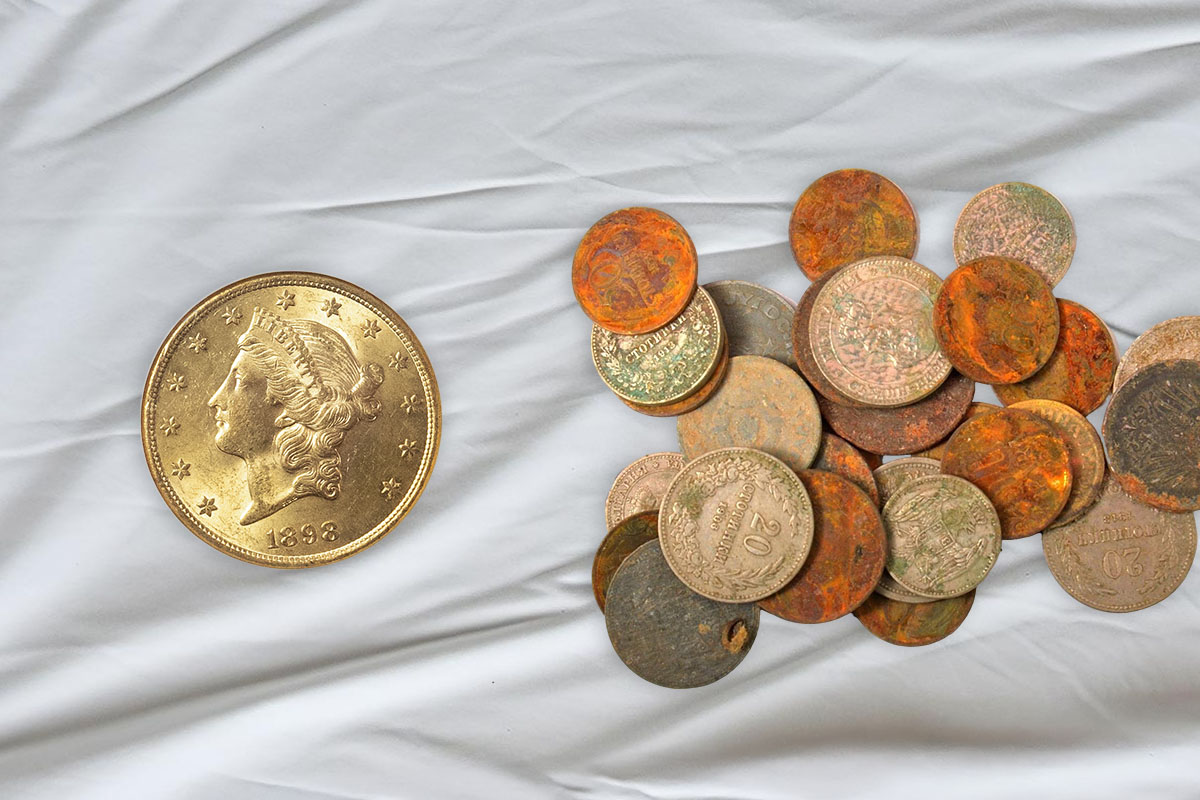
Does real gold rust, then, in the looser sense of corroding or breaking down? Not for practical purposes. Pure 24 karat gold is genuinely rust resistant and about as close to chemically inert as a metal gets. This is why it doesn’t corrode, oxidise, or degrade under normal conditions, even after being submerged in seawater or buried underground for centuries.
Where things get more complicated is anything below 24 karat. 10K, 14K, and 18K gold are alloys, blends of gold with other metals like copper, silver, zinc, or nickel to make the piece harder, cheaper, or a different colour. It’s those alloying metals, not the gold itself, that can tarnish or discolour over time. It’s a distinction covered in more depth in the science section below.
Red Spots on Gold
Even gold refined to very high purity, 999 (99.9%) or 9999 (99.99%) fineness, isn’t entirely gold. Those tiny percentages still add up to real metal: a standard 1 troy ounce (31.1 gram) coin struck at 999 fineness still contains about 0.031 grams, roughly 31 milligrams, of other metals. A 9999 fine coin contains about 0.0031 grams, or 3.1 milligrams. That’s far too small an amount to see or weigh in any practical sense, but it’s there, and it’s almost always copper.
While not common, it is something bullion dealers see from time to time. The trace copper within a pure coin or bar slowly migrates to the surface and oxidises, leaving small reddish or pinkish marks often called ‘copper spots’ in the trade. It tends to show up more on coins than bars, since coins are struck under high pressure that can bring trace metals closer to the surface, and it can appear even on coins that have sat untouched in a sealed tube or capsule for years.
Rust on 22K Gold Coins
Lower-purity gold coins face this same issue on a much bigger scale. A 22 karat coin like the Sovereign or Krugerrand is around 91.6% pure gold, meaning roughly 8.4% of its weight is copper or another alloy metal. With that much more copper in the mix, surface tarnishing, colour shift, and spotting are far more common and more noticeable over time.
The good news is that this is entirely a surface-level cosmetic effect. It doesn’t indicate the gold is fake, doesn’t affect the purity or weight of the metal underneath, and has no bearing on the value of a gold bar or coin as bullion. There are methods to remove copper spots, but it is recommended not to clean bullion, and collectable coins should only be conserved by a professional.
The Science: Why Gold Doesn’t Rust
Gold’s resistance to rust and corrosion comes down to basic chemistry. Rust and other forms of corrosion happen when a metal’s atoms give up electrons to bond with oxygen or other elements in the environment, exactly what happens when iron reacts with oxygen and water to form iron oxide. Gold oxidation essentially doesn’t happen under normal conditions, because gold’s outer electrons are held tightly enough that the metal rarely forms bonds with the oxygen, sulphur, or moisture in ordinary air or water.
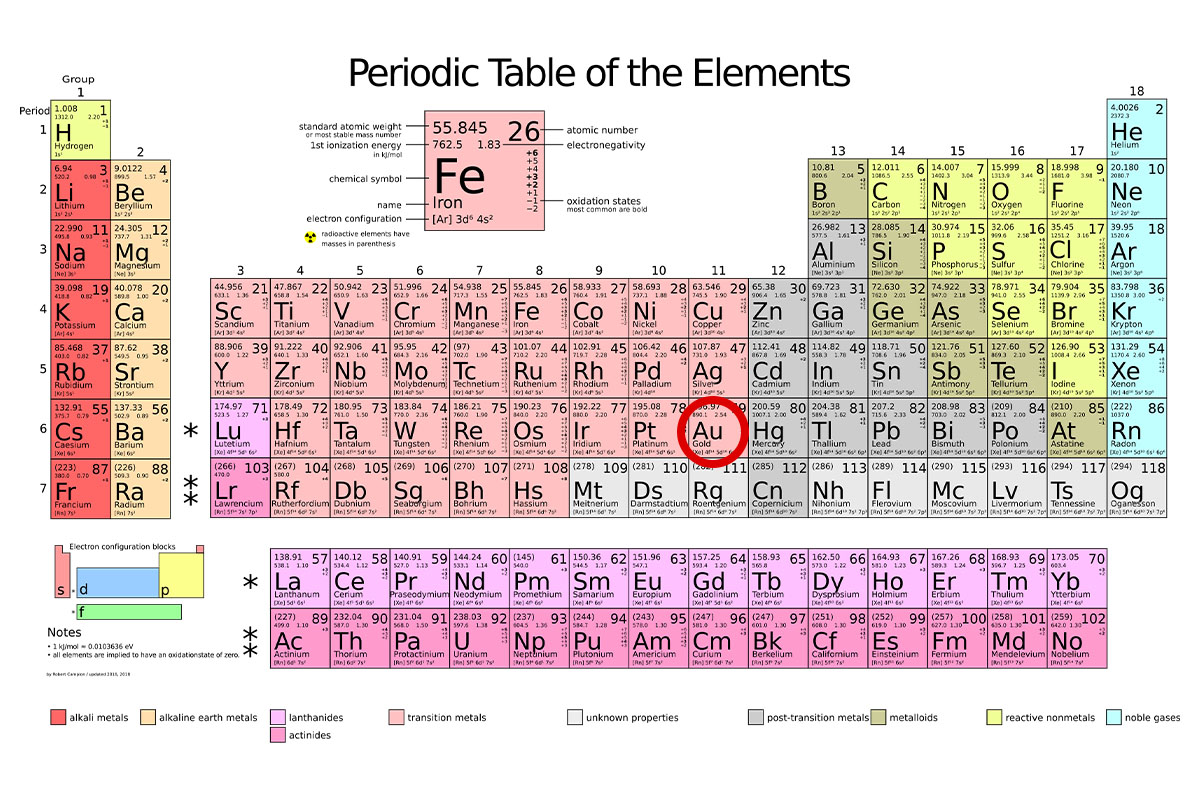
Why is gold non-reactive in the first place? Part of the answer is its position on the periodic table. Gold (atomic number 79, symbol Au) belongs to a small group of “noble metals," alongside platinum and silver, so named because they resist reacting with their environment the way “base" metals like iron, copper, and zinc readily do. Among even that select group, gold sits close to the very bottom of the reactivity series, the ranking chemists use for how easily a metal corrodes or forms compounds.
So does gold corrode at all, even in harsh conditions? For all practical purposes, no, not from air, moisture, or even saltwater. Gold coins recovered from centuries-old shipwrecks are regularly found in near-pristine condition, a level of preservation that would be impossible for almost any other metal object left underwater that long. Gold’s non-reactivity is thorough enough that dissolving it takes genuinely aggressive chemistry, most famously aqua regia, a corrosive mixture of nitric and hydrochloric acid strong enough to dissolve gold that neither acid can touch on its own, alongside a handful of industrial cyanide and chlorine-based processes used in gold refining. Outside a chemistry lab or refinery, gold simply has nothing in its everyday environment reactive enough to touch it.
Does Gold Tarnish or Change Colour?
Does gold tarnish?
Pure gold does not tarnish under normal conditions. 24 karat gold has no other metals in it to react with the environment, so it keeps its colour and shine indefinitely, whether it’s sitting in a drawer or worn every day.
Alloyed gold is a different story, though the change is almost always about colour, not the gold itself degrading. Gold can change colour over time in lower-karat pieces. Chlorine from swimming pools and hot tubs, mercury in some cosmetics and medications, and sulphur compounds in the air or in certain lotions can all react with the copper, silver, or nickel mixed into the alloy.
22-karat gold coins can also change colour over time, and the British gold Sovereign offers a good example of this. Struck at 916 fine (22 karat) and typically alloyed with copper alone, rather than the copper-and-silver mix used in some other 22K coins, Sovereigns can develop a warm, slightly reddish or amber tone as that copper content reacts with air and handling over the decades. Older Sovereigns are sometimes prized by collectors specifically for this natural toning rather than seen as a flaw, and it has no bearing on the coin’s gold content or bullion value.
Does gold turn black?
It can, though rarely because of the gold itself. Black discolouration on gold jewellery usually comes down to the silver content in the alloy: silver reacts with sulphur compounds in the air, the same reaction that tarnishes sterling silver cutlery, forming a dark silver sulphide layer on the surface. Skin chemistry plays a role too, since everyone’s skin pH and the chemicals in their sweat, lotions, or perfumes differ, which is why the same ring can look fine on one wearer and turn black or greenish on someone else.
Pure gold never really loses its shine. Lower-karat gold can look dull or patchy after prolonged exposure to any of the chemicals above, but unlike rust, none of this is permanent damage. A simple clean with mild soap and water, or a professional polish, is normally all it takes to bring the shine back.
Pure gold sits essentially unchanged indefinitely, and lower-karat gold might need the occasional clean to deal with surface tarnish, but in both cases the actual gold underneath is unaffected. That’s a big part of why gold, unlike almost every other metal, can be melted down and reused indefinitely without any loss in purity.
Karat Gold and Tarnishing
None of this changes based on karat when it comes to rust specifically: does 24K gold rust? No. Does 14K gold rust? No either, since rust requires iron, and no standard gold alloy contains any. What does change with karat is tarnish potential, since a lower karat simply means a higher percentage of other metals for the environment to react with.
As a quick reference: 24K and 22K gold hold their colour extremely well, 18K and 14K are more prone to gradual tarnishing or colour shift with regular wear, and 10K and 9K, with under half their weight in actual gold, tarnish the most readily of all. Each karat has its own trade-offs between durability, cost, and appearance, covered in more detail on our dedicated pages for 24K, 22K, 18K, 14K, 10K, and 9K gold.
Frequently Asked Questions
Does gold rust in water?
No, not even in saltwater. Gold has no iron to oxidise, so rust is never chemically possible, and pure gold shows no meaningful reaction even after being submerged for centuries, which is why gold recovered from shipwrecks is so often found in near-pristine condition.
Why doesn’t gold rust?
Gold is one of the least reactive metals on the periodic table, a “noble metal" whose outer electrons resist bonding with the oxygen, moisture, and sulphur compounds that cause other metals to corrode or rust.
Will my gold ring rust over time?
No, though it can tarnish or change colour if it’s below 24 karat. Rust itself is impossible regardless of purity, but the copper, silver, or nickel alloyed into lower-karat gold can react with sweat, chlorine, or the air over time.
Does pure gold tarnish?
No. 24 karat pure gold has nothing else in it to react with air, moisture, or skin chemistry, so it keeps its shine indefinitely regardless of how it’s stored or worn. Any tarnishing or colour change on a “gold" item almost always comes from the metals it’s alloyed with, not the gold itself.
What causes gold-plated items to tarnish?
Gold-plated jewellery is a thin layer of real gold over a base metal core, usually brass, copper, or nickel. Those base metals react with air, moisture, or skin chemistry and this causes tarnishing, especially once the plating wears thin with regular use.
What causes red spots on pure gold?
Trace amounts of copper, present even in gold refined to 999 or 9999 fineness (24k gold), can slowly migrate to the surface of a coin/bar and oxidize there. These areas of concentrated copper form small red dots, sometimes referred to as ‘copper spots’. This is a cosmetic issue only, and doesn’t affect the coin or bar’s purity or value.
The Real Measure of Gold’s Permanence
Gold itself doesn’t rust, corrode, or degrade, under any conditions, at any karat. What can tarnish, discolour, or turn black is always the other metal mixed in below 24 karat, whether that’s copper in a Sovereign slowly warming in tone, silver reacting with sulphur in the air, or trace copper surfacing as a red spot on an otherwise near-pure coin.
That distinction matters most if you’re holding gold as an investment rather than wearing it daily. Higher-purity bullion, 999 and 9999 fine coins and bars, keeps this whole conversation almost entirely theoretical, since there’s so little alloy left to react with anything. If that’s given you a reason to look more closely at pure gold bars and gold coins, BullionStar’s range is the ideal place to start.
Popular Blog Posts by Gold & Silver 101
 An Introduction to Gold & Silver Investing
 Should I Invest in Gold, Silver, or Platinum Bullion?
 Gold Coins vs Gold Bars: Which Is Better?
 How Is Gold Taxed in Singapore? The IPM GST Exemption Explained
 Storing Precious Metals, Gold, and Silver Bullion
 Gold & Silver Bullion Investing FAQs
 Gold Purity: The Complete Guide
 How Much Gold Is There in the World?
 Junk Silver: What It Is and What It’s Worth
 999 Fine Silver: Investment-Grade Silver Explained