 Contact
 Help
Help






Silver Hallmarks: A Guide to Marks, Stamps, and Standards
 Gold & Silver 101



A hallmark is the fastest way to learn what a piece of silver actually is: how pure it is, where it was made, sometimes even when and by whom. In the UK and many other markets, silver hallmarks aren’t just convention, they are a legal requirement above certain weights, enforced by assay offices whose job is to test and stamp metal before it’s sold. For buyers, collectors, and anyone clearing out an inherited jewellery box, being able to read these marks is one of the most useful skills there is.
The difficulty is that there’s no single system to learn. Hallmarking has been practised in various forms for over 700 years, and almost every country has developed its own marks, symbols, and conventions. A stamp that means one thing on a Victorian teapot can mean something different, or nothing at all, on a piece of modern jewellery.
This guide won’t catalogue every hallmark ever struck, that would take a book, not a page, but it will give you the tools to make sense of what you’re looking at. We cover what the different types of marks represent, how to start identifying an unfamiliar stamp, the systems used in major hallmarking countries, and what the common purity numbers (like 925) actually mean.
If you already suspect a piece isn’t genuine, our guide to testing silver at home covers the physical tests that can confirm it. Already deciphered the silver hallmarks on your item, and are looking to sell? BullionStar buys unwanted and broken silver jewellery at competitive rates; anything below sterling (925) purity, we’re unable to accept. Learn more about selling silver to BullionStar.
What Are Silver Hallmarks?
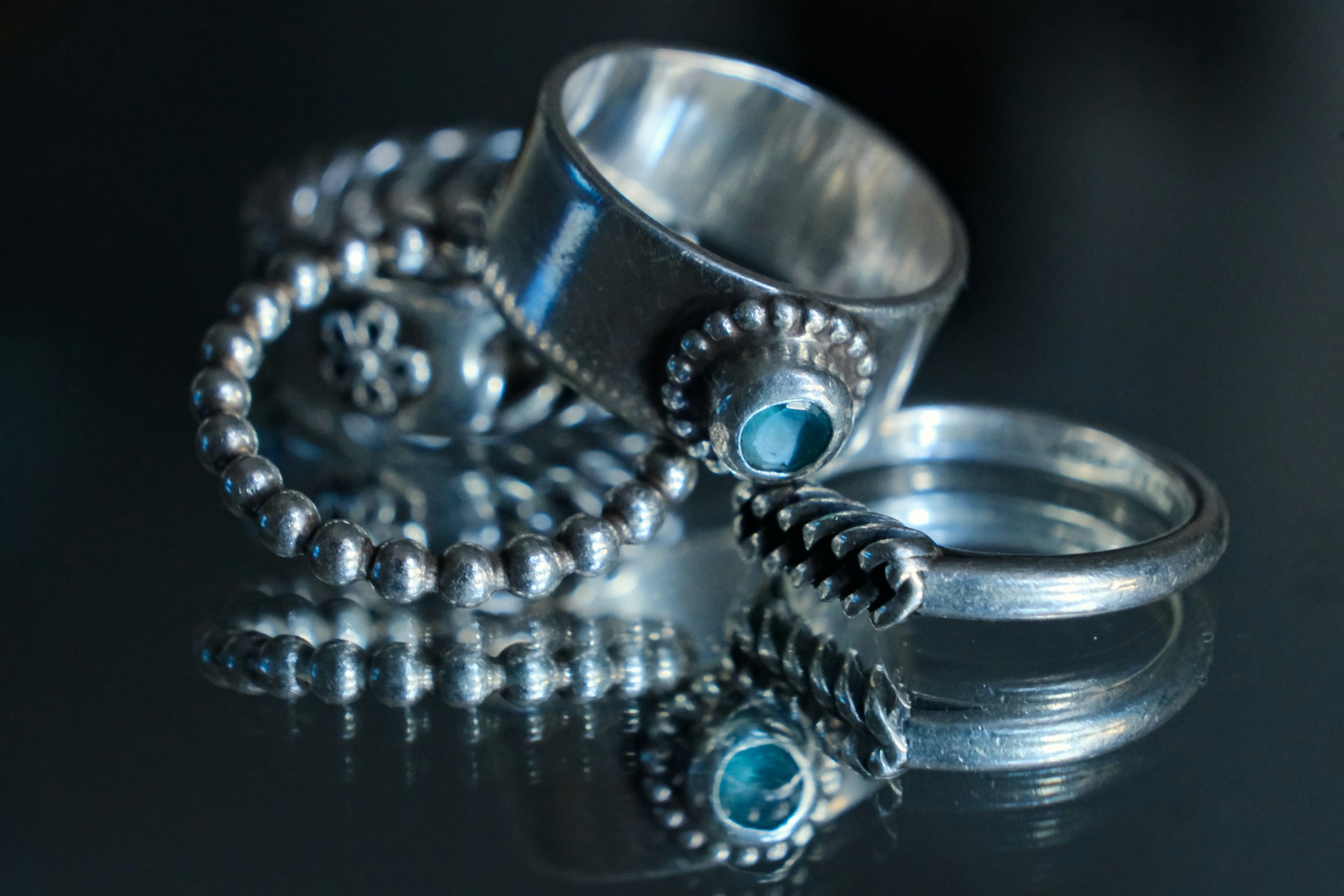
A silver hallmark is an official mark struck into a piece of silver by a recognised, independent assay office. It certifies that the metal has been tested and meets a specific standard of purity. The term gets used loosely to cover almost any stamp on a silver item, sometimes called silver markings, but a genuine hallmark specifically means a mark applied by an authorised testing body, not simply a maker or retailer stamping their own work.
Hallmarking exists for a practical reason: before independent assay offices existed, buyers had no reliable way to know whether a piece was genuinely as pure as claimed. Assay offices solved this by testing metal and legally certifying the result with a stamp. This was backed by government oversight, which makes forging or falsifying a hallmark a criminal offence, not just bad practice. That’s why hallmarking silver above certain weights is a legal requirement in the UK and many other markets, rather than a voluntary courtesy.
Silver hallmarks ultimately exist to maintain that trust, one of the foundations of the wider jewellery industry.
What Do Silver Stamps Mean?
A full hallmark usually isn’t a single symbol, it’s a small group of marks struck together, each answering a different question: how pure is this metal, where and when was it tested, and who submitted it. A purity or “standard" mark confirms the fineness (sterling, fine silver, and so on), an assay office mark identifies where the piece was tested, and depending on the country and era, a date letter and a maker’s or sponsor’s mark may be included too. The exact combination varies considerably from country to country.
Not every stamp that looks official is one. Some marks are designed to resemble a genuine hallmark without ever passing through an assay office, and older silver-plated items often carry their own set of marks that can be mistaken for solid silver hallmarks at a glance. The next section covers how to tell the difference.
How to Read and Identify Silver Hallmarks
Silver hallmarks identification isn’t about memorising thousands of individual stamps, it’s about knowing where to look, what each part of the mark represents, and where to check once you’ve noted it down. Learning how to read silver hallmarks is a skill built from a handful of habits, not a single trick.
Where to Find the Marks
Hallmarks are typically struck somewhere discreet, chosen so the mark doesn’t interfere with the piece’s design. On rings, look inside the band; on necklaces and bracelets, check the clasp or an inconspicuous link; on flatware, marks are usually on the back of the handle or the underside of the bowl. Larger items like teapots or trays often carry marks on the base or near a handle join. Because these marks are small, often only a few millimetres across, a jeweller’s loupe or magnifier makes a genuine difference. Straining to read a mark with the naked eye is one of the most common reasons people misidentify what they’re looking at.
A Real Silver Hallmark Example
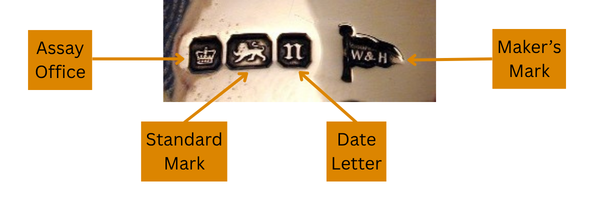
Reading isolated symbols is far easier with a real example in front of you. The image below shows a set of traditional British hallmarks, one of the most complete and standardised systems in use:
By Mrs Rockefeller – Transferred from en.wikipedia to Commons., CC BY-SA 3.0.
The chart below breaks down what the four elements mean:
| Mark | What It Shows | Example |
|---|---|---|
| Standard mark | Purity of the silver | Lion passant (sterling, 925) |
| Assay office mark | City where the item was tested | Crown (Sheffield – 1773 until 1974) |
| Date letter | Year the item was assayed | A single letter; style and font indicate the year (Lower-case n – 1905) |
| Sponsor’s or maker’s mark | Who submitted the item for hallmarking | Initials, usually two or three letters (W & H in a flag – Walker & Hall) |
From the image above, we can work out that the example item was submitted for hallmarking by Walker & Hall in 1905 to the Sheffield Assay Office. The item features the ‘Lion Passant’ which means it is sterling silver (92.5% pure). This demonstrates the power of hallmarks. With just four small stamps you can figure out some of the fascinating history behind any piece.
Once you’ve identified each element, you can usually confirm the details, particularly the date letter and assay office, against published reference charts. These vary considerably by country and era, so keep a note of exactly what you see, including the shape of the shield or surround each mark sits in, since that detail often matters as much as the symbol itself. For a fuller silver hallmarks list broken down by country, the next section covers the major systems in more depth.
Hallmarks on Bullion Coins and Bars
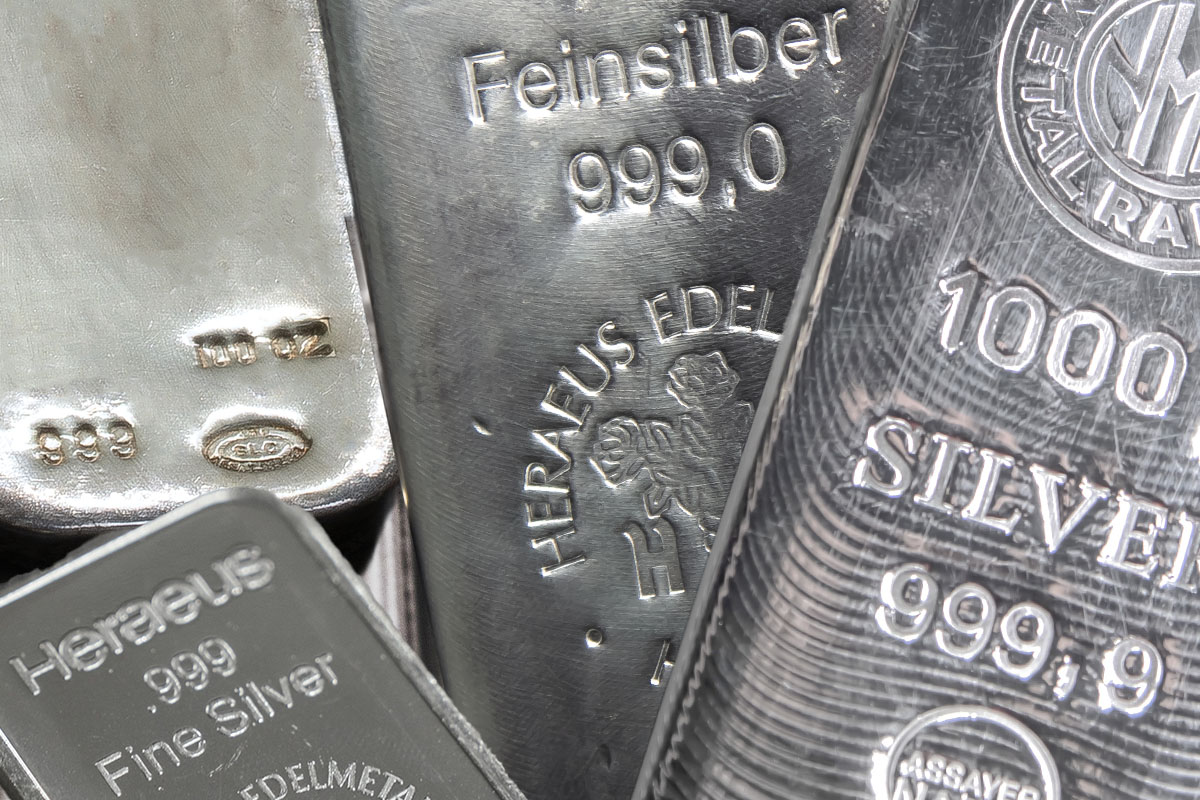
Silver coins and silver bars are a distinct case. In the UK for example, both are specifically exempt from mandatory hallmarking under the Hallmarking Act 1973, coins because their precious metal content is already guaranteed by the issuing mint or government, and bars because they’re classed as raw material rather than a finished, worked item. You won’t find a full multi-part hallmark on either.
That doesn’t mean they go unmarked, however. Reputable mints and refiners stamp their own bars and coins with the details that matter most: purity (typically 999 fine for investment-grade silver), weight, and the refiner or mint’s own mark, often alongside a unique serial number for larger bars. This isn’t a hallmark in the legal sense, but it serves a similar purpose in practice, identifying who stands behind the product and giving you a purity figure to check it against. The reputation of the refiner or mint, rather than a government stamp, is what buyers are ultimately relying on, which is why sourcing bullion from an LBMA-accredited refiner or a recognised national mint matters.
Pseudo Hallmarks and Plated Silver (EPNS)
Not every stamp that resembles a hallmark is one. Some decorative or export marks were designed to look official without ever passing through an assay office, particularly on nineteenth and early twentieth century items made for foreign markets. Others are more deliberate: fakes designed specifically to trick buyers who only give an item a casual glance. Pseudo hallmarks like these can closely mimic genuine marks in size and placement, which is exactly why noting the precise shape and detail of a mark matters before assuming it’s genuine.
A related, and very common, source of confusion is EPNS: Electroplated Nickel Silver. Despite containing the word “silver," EPNS indicates the opposite of solid silver. It is a base metal (typically a nickel alloy) electroplated with a thin layer of silver. Items marked EPNS, or similar marks like “EP" or “A1," are silver-plated rather than solid, and won’t carry a genuine purity hallmark because there’s no solid silver content to certify. Their decorative lettering can sometimes make them look like a genuine hallmark at first glance, which is why EPNS and similar marks catch out newer collectors particularly often.
Silver Hallmarks by Country
Despite serving the same basic purpose everywhere, testing purity and certifying trust, silver hallmarking developed differently in almost every country that adopted it. Some systems rely on formal silver assay marks tied to a government-run office, encoding fine detail like the exact year and workshop of a piece. Others lean far more on purity stamps and maker’s marks, with no assay authority involved at all. This section covers the major systems you’re most likely to encounter as a collector or buyer, including Britain, France, and the United States, along with what’s typically seen in Singapore and the wider Asia region.
British Silver Hallmarks
British hallmarking is among the oldest continuously operating systems in the world, tracing back to a royal statute in 1300 and still enforced by law today for items weighing 7.78 grams or more. Lighter pieces are legally exempt from carrying a hallmark at all.
A full British hallmark typically combines a standard mark (most commonly the lion passant for sterling silver), an assay office mark showing which of the UK’s remaining assay offices tested the piece, a date letter unique to that year, and a sponsor’s or maker’s mark. Older pieces, particularly those made between 1784 and 1890, may also carry a monarch’s head duty mark, showing that tax had been paid on the item.
Because British hallmarks follow a genuinely standardised format, they’re often the easiest starting point for anyone learning to identify sterling silver hallmarks. A vast repository of specialist reference charts let you pin down the precise silver hallmark dates once you’ve correctly read each individual mark.
French Silver Hallmarks
France has one of the longest hallmarking traditions in Europe, though its system developed quite differently from Britain’s. Before the French Revolution, marks were applied at a local or guild level, varying significantly by region, which is part of why old silver hallmarks from this period can be difficult to research without specialist help.
The modern system, introduced in the nineteenth century, centres on the Minerva head mark, used in two forms to denote two purity standards (currently .950 and .800), and is legally required only on items weighing 30 grams or more. Lighter pieces, such as small pendants or delicate flatware, can be genuine silver without carrying any mark at all.
Imported silver sold in France carries its own marks entirely: a boar’s head for pieces meeting French standards, and a crab for those falling below it. Unlike British hallmarks, French marks generally don’t encode a specific year, so identifying silver hallmark dates on French pieces usually relies on stylistic and historical context rather than reading the mark itself.
US Silver Hallmarks
The United States takes a fundamentally different approach to the two systems above: there’s no government assay office that tests and certifies silver before sale, and no minimum weight threshold to speak of, because there’s no legal requirement to mark purity in the first place.
The National Gold and Silver Stamping Act of 1906 (now enforced largely through the Federal Trade Commission’s rules on jewellery marketing) governs quality marks only when a manufacturer chooses to use one. If a piece is stamped “sterling" or “925," it must genuinely meet that standard within a small legal tolerance, and the mark must be accompanied by the maker’s registered trademark or name, so responsibility traces back to a specific manufacturer. Falsely marking an item’s purity is a federal offence, but the system relies on manufacturer accountability rather than independent testing before sale. In practice, this means American silver almost always carries a purity stamp and a maker’s mark, but rarely anything resembling the multi-part assay hallmark used in Britain.
Silver Hallmarks in Singapore and Asia
There’s no single hallmarking authority across Asia in the way Britain or France has one, and silver hallmarks seen in Singapore reflect that mix rather than a single local standard. Much of the antique silver found in Singapore originates from its time as a British colony, and carries genuine British hallmarks from that period.
Chinese Export Silver, produced from the nineteenth century onward for Western and local markets, is a different case again. Pieces are typically identified through retailer or maker’s marks rather than a formal assay system, alongside a purity stamp such as “900" or “STERLING." Modern silver jewellery sold locally, including the 925 pieces common across the region, is usually stamped only with a purity number, without the fuller mark set seen on British items.
For anyone wanting formal certification today, Singapore’s bullion industry offers assay and testing standards through bodies like the Singapore Bullion Market Association (SBMA), though this operates as a voluntary industry standard rather than a legal requirement, and accordingly there’s no minimum weight threshold in Singapore either, since no law mandates hallmarking to begin with.
Common Silver Hallmark Numbers
Most silver hallmarks and purity stamps use a three-digit number rather than a word, and once you know the system, it’s simple to decode: the number shows how many parts per thousand are pure silver, a format known as millesimal fineness. A mark of 999, for instance, means the metal is 99.9% pure silver, with the remaining 0.1% typically trace elements left over from refining.
The most common number by far is 925. 925 is sterling silver, the international standard used for the vast majority of silver jewellery, cutlery, and tableware worldwide. A 925 hallmark or stamp means the piece is 92.5% pure silver, alloyed with 7.5% other metal (almost always copper), added because pure silver alone is too soft for most everyday items to hold their shape and detail.
Beyond 925, a handful of other numbers turn up regularly. 999 marks fine silver, the standard used for most bullion coins and bars. 958 indicates Britannia silver, a higher-purity British standard used historically as an alternative to sterling. 800, and sometimes 835, is common on older Continental European silver, particularly from Germany and parts of Eastern Europe. Occasionally 900 appears too, a standard historically used for coin silver in the US and France. Whatever the number, the principle is the same: read it as parts per thousand, and you’ve identified the purity without needing to know anything else about where the piece came from.
Silver Maker’s Marks
Alongside the marks that show purity and origin, most silver hallmark sets include a maker’s mark, sometimes called a sponsor’s mark, identifying the individual, workshop, or company that made or submitted the piece. It’s usually the smallest and least standardised element of the set: often just two or three initials, sometimes a symbol or monogram, registered with the relevant assay office or trade body at the time.
Maker’s marks matter for reasons beyond simple curiosity. For collectors, a recognised silversmith or workshop can significantly affect a piece’s value. Maker’s marks are also often the only reliable identifier on silver from countries without a formal assay system. As covered earlier, American silver and much of the antique silver found across Asia typically carries little beyond a purity stamp and a maker’s or retailer’s mark, making that mark the main route to learning anything more about the piece.
Identifying an unfamiliar maker’s mark usually starts with narrowing the search rather than guessing outright. The country and date, if you’ve already read those from the surrounding hallmark, narrow the field considerably, since maker’s marks were typically registered locally and changed over time. From there, specialist silversmith mark registers (many assay offices and collector societies publish searchable directories), auction house archives, and dedicated reference books are the most reliable next step. For rare, high-value, or particularly unclear pieces, a professional valuer or dealer with hallmark expertise can usually identify a mark far faster than trawling directories alone.
Frequently Asked Questions
What do silver hallmarks mean?
A silver hallmark is an official mark, or more often a small group of marks, showing that a piece has been tested and certified by a recognised assay office. Read together, the marks typically confirm the metal’s purity, where it was tested, and often when it was made and by whom. Not every stamp on a silver item is a true hallmark, though; genuine hallmarks come only from an authorised testing body, not from a maker or retailer marking their own work.
Are silver bullion coins and bars hallmarked?
No, not in the traditional sense. Silver coins and bars are exempt from hallmarking law in the UK and several other countries, coins because a mint or government already guarantees their content, and bars because they count as raw material rather than a finished item. Reputable mints and refiners still stamp their products with purity, weight, and their own mark, which serves the same practical purpose as a hallmark even though it isn’t one legally.
What does 925 mean on silver?
925 means the item is sterling silver: 92.5% pure silver alloyed with 7.5% of another metal. It’s the most common purity standard worldwide for silver jewellery, cutlery, and tableware, and a 925 stamp on its own is a purity mark rather than a full hallmark, since it doesn’t confirm testing by an assay office.
What does ‘ster’ mean on silver?
“Ster" is shorthand for sterling, confirming the item is sterling silver (92.5% pure) rather than fine silver or a lower-purity alloy. It’s typically used interchangeably with a 925 stamp, particularly on American silver and other pieces where a full hallmark system isn’t used, and functions as a purity claim by the maker rather than independent certification.
How do I know if my silver is genuine?
Start with the marks: a genuine hallmark or consistent purity stamp (like 925 or 999) is a strong first indicator, particularly alongside a maker’s mark that can be traced. From there, physical testing can confirm what the marks suggest, our guide to testing silver at home covers methods like the magnet and density tests that can verify purity directly. This is especially useful for unmarked pieces or when a stamp looks inconsistent or unclear.
Are unmarked silver pieces worth anything?
Yes, absolutely. Plenty of genuine silver, particularly older pieces, small items below a country’s legal hallmarking weight, or silver from regions without a formal assay system, carries no hallmark at all despite being solid silver throughout. An unmarked piece isn’t a red flag by itself; it simply means you’ll need to rely on physical testing rather than reading a stamp to confirm what it is.
You Don’t Have to Identify It Alone
Hallmarks are one of the richest sources of information a piece of silver can carry, but as this guide shows, reading them well is a skill built up over time, not a single lookup. Between varying national systems, missing or worn marks, pseudo-hallmarks, and the sheer number of individual makers who’ve ever registered a stamp, it’s entirely normal to identify some elements of a mark, the standard, the country, even a rough era, without being able to pin down every detail.
When a hallmark only gets you partway, or a piece carries no mark at all, physical testing is the next logical step. Our guide to testing silver at home covers the checks that can confirm purity directly, regardless of what’s stamped on the surface. As long as you have the weight and purity you can begin to work out what the intrinsic value of a piece would be.
Once you know what you’re holding, you don’t have to decide what to do with it alone either. BullionStar buys unwanted and broken silver jewellery at competitive rates, provided it’s sterling silver or higher (925). So if what you’ve found isn’t something you want to keep, turning it into something useful is straightforward. Learn more about selling silver to BullionStar.

Popular Blog Posts by Gold & Silver 101
 An Introduction to Gold & Silver Investing
 Should I Invest in Gold, Silver, or Platinum Bullion?
 Gold Coins vs Gold Bars: Which Is Better?
 How Is Gold Taxed in Singapore? The IPM GST Exemption Explained
 Storing Precious Metals, Gold, and Silver Bullion
 Gold & Silver Bullion Investing FAQs
 Karat vs Carat: What’s the Difference?
 Gold Purity: The Complete Guide
 How Much Gold Is There in the World?
 Junk Silver: What It Is and What It’s Worth