 Contact
 Help
Help






How to Test Silver: A Complete Guide
 Gold & Silver 101



Silver’s lower price tag compared to gold doesn’t make it any less of a target for counterfeiters. Plated coins, “sterling" jewellery stamped with false hallmarks, and bars misrepresented as fine silver all circulate in the market, and rising silver prices only add more incentive to pass off fakes as genuine. Stories of buyers discovering their silver isn’t what they thought are common across online marketplaces and forums.
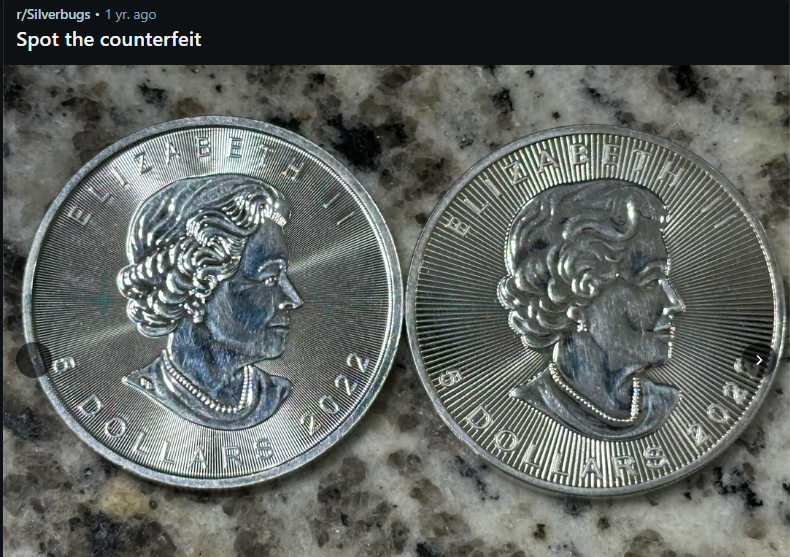
So how do you tell if silver is real? As with gold, the answer depends on the certainty you need. A magnet test or a quick weight check takes seconds and rules out the most obvious fakes. An acid test or an ice test is more rigorous, probing properties specific to silver. Professional-grade tools like electronic verifiers leave almost no room for doubt, but aren’t something most people keep at home.
This guide walks through every practical method for testing silver, from 30-second checks you can do right now to the equipment used by dealers and collectors. Whether you’re verifying a silver coin, a silver bar, or a piece of silver jewellery, you’ll know what each test can and can’t tell you.
How to Tell If Silver Is Real (Quick Checks)
Before reaching for any testing equipment, there are three checks that take under a minute and are the fastest way to spot fake silver before it becomes a bigger problem.
Check for hallmarks. Genuine silver is usually stamped with a purity mark. On bars and coins, this is clearly printed or engraved by the mint. On jewellery, look for a small silver hallmark stamp, typically inside a ring band, on a clasp, or near the fastening of a chain or bracelet. The two marks you’ll see most often are 925 (sterling silver, 92.5% pure) and 999 (fine silver, 99.9% pure). A missing, blurry, or inconsistent hallmark is one of the fastest ways to identify real silver from a fake, though a well-made counterfeit can carry a convincing stamp too, so don’t treat this alone as proof. For bullion coins, information is readily available online for what markings should appear on a specific coin, such as fineness, year of minting, mint marks. Missing features are a red flag that the coin may not be legitimate. Bullion bars will typically have fineness marked, as well as the weight, and refiner’s hallmark as well.
Try a magnet. Silver is not magnetic. Hold a strong magnet close to the item; if it’s pulled toward the magnet or sticks to it, you’re not looking at real silver. This catches a wide range of fakes made from nickel, steel, or other iron-based alloys. It won’t catch everything, since counterfeit metals like brass and pewter are also non-magnetic, but a magnetic reaction is a clear sign something is wrong.
Feel the weight. Silver is denser than most metals used to fake it, though less dramatically so than gold. A genuine silver coin or silver bar should feel solid and substantial for its size, particularly compared with the same shape in aluminium or nickel silver (a nickel, copper, and zinc alloy that, confusingly, contains no silver at all). This check is especially useful with coins, where the exact weight and diameter are well documented and easy to look up.
These checks won’t give you certainty on their own. Detecting real vs fake silver often comes down to more rigorous testing, but these methods offer a fast, free filter before you invest time or money in anything more involved.
At-Home Silver Testing Methods
The quick checks above are a useful first pass, but they are unlikely to catch sophisticated fakes. The silver testing methods below can be carried out at home, and each probes a different physical or chemical property of silver. No single test is definitive on its own, but used together they build a much clearer picture.
How to Test Silver at Home – Physical Property Tests
The following tests look for a specific physical property of silver, and are generally non-destructive when done with care.
Silver Magnet Test
Pure silver is not magnetic, so a basic attraction check rules out ferrous fakes immediately. But silver has a second, more distinctive magnetic property worth using too: it’s the best electrical conductor of any metal, which means a strong magnet moved across or dropped down an inclined silver surface generates eddy currents that visibly slow it down.
What you need: A strong rare-earth (neodymium) magnet, and ideally a smooth inclined surface (a silver bar works well for this).
How to do it: First, hold the magnet close to the item and confirm there’s no pull or attraction. Then, for bars or flat items, slide the magnet down the inclined surface and watch its speed. On real silver, the magnet noticeably drags or slides in slow motion, an effect you won’t see on plated or base-metal fakes.
Limitations: The basic attraction check only rules out ferrous metals; brass, pewter and nickel silver are also non-magnetic and will pass. The slide test is more distinctive to silver but works best on bars or larger flat surfaces, and is harder to demonstrate on small or oddly shaped jewellery.
Silver Ice Test
Silver has the highest thermal conductivity of any metal, which makes this test genuinely specific to silver rather than just a general authenticity check. Ice placed on real silver melts noticeably faster than on almost any other surface, because heat is drawn away from the point of contact so efficiently.
What you need: An ice cube, and ideally a control item made from another metal (a stainless steel spoon works well) for comparison.
How to do it: Make sure the silver item and the control item are at the same starting temperature, then place an ice cube on each at the same time. On genuine silver, the ice will visibly melt faster, often dramatically so compared with stainless steel or plated items.
Limitations: This works best as a comparative test against a known control, rather than a standalone check. Copper is the only metal that comes close to silver’s conductivity, so a copper-based fake could produce a similar result. Ambient temperature and the size of the item both affect how clear the result is.
Silver Ping Test
Real silver produces a distinct, sustained ringing tone when struck, a result of its density and molecular structure. Base metals produce a duller, shorter sound.
What you need: Another coin or small metal object to tap with. Several smartphone apps can also analyse the sound frequency against known values.
How to do it: Balance the coin on the tip of your finger so it can vibrate freely, tap it lightly, and listen. A genuine silver coin should ring clearly for a second or more.
Limitations: Works best on coins of a known type, where the expected sound is documented. Less useful for bars or jewellery, and background noise affects the result.
Silver Density Test
Silver has a specific gravity of approximately 10.49, distinct enough from common counterfeit metals that measuring it gives a meaningful check on authenticity, even if it’s less dramatic a gap than gold’s.
What you need: A precise digital scale and a container of water large enough for the item to be fully submerged without touching the sides. Silver bars and larger coins need more clearance for this than an equivalent-value piece of gold, so check your container and scales before starting.
How to do it:
- Weigh the item in air and record the result.
- Suspend the item in water, fully submerged but not touching the bottom or sides, and record the submerged weight.
- Calculate specific gravity using the formula: Specific Gravity = Weight in Air ÷ (Weight in Air − Weight in Water)
A result close to 10.49 is consistent with fine silver. Sterling silver, being 92.5% silver alloyed with copper, sits slightly lower at around 10.36. The table below shows the approximate density of silver purities alongside common metals used to fake it:
| Metal | Purity | Specific Gravity |
|---|---|---|
| Fine Silver | 99.9% | 10.49 |
| Britannia Silver | 95.8% | ~10.40 |
| Sterling Silver | 92.5% | 10.36 |
| Stainless Steel | – | 7.75–8.05 |
| Nickel Silver | 0% (no silver) | 8.70 |
| Pewter / Tin | – | 7.30 |
| Lead | – | 11.34 |
Limitations: Fine silver and sterling silver sit close enough together (10.49 vs 10.36) that a slightly imprecise scale or a small air bubble during submersion can blur the line between them, so treat borderline results with caution. This test also won’t catch a carefully resized composite fake, though this is far harder to pull off convincingly than it is with a straightforward plated item. As with gold, it’s a strong indicator rather than a final verdict.
How to Test Silver at Home – Chemical Tests
These test use the chemical properties of silver to test its reactivity with other at home products one may already have. While these tests are useful, it is worth understanding that these tests are destructive, and will likely damage a part of your silver item. If testing for educational purposes, these tests can be done with caution, however for items of value, it is best to limit your testing to the non-destructive methods outlined above, or have your silver professionally tested, as in the next section down.
Silver Acid Test
The acid test is one of the most reliable home methods, and it’s also the best way to confirm sterling silver specifically, since a kit calibrated to .925 will react differently on a lower-purity alloy, a plated item, or a falsely stamped piece. It’s worth noting however that this test will leave a mark on the item, and is not recommended for bullion coins and bars, as it may reduce the resale value of the item.
What you need: A silver testing acid kit, which typically includes nitric acid solutions calibrated to different purities such as .800, .925 and .999.
How to do it: Make a small scratch in an inconspicuous area to expose the inner metal, apply a drop of the corresponding acid, and compare the reaction against the kit’s colour chart. A clean, consistent reaction confirms silver at or above that purity. A green or blue-green tinge typically points to copper or brass underneath.
Safety: Nitric acid is corrosive. Wear gloves and eye protection, work in a well-ventilated area, and follow the disposal instructions included with your kit.
Silver Vinegar Test
Vinegar is a popular budget alternative to a proper acid kit, though it’s worth understanding upfront that it’s far less conclusive. As with the acid test, this test could discolour the item, and other methods may be more suitable for coins and bullion bars.
What you need: White vinegar and a dropper or cloth.
How to do it: Apply a few drops of vinegar to an inconspicuous area and leave it for several minutes. Genuine silver typically shows no reaction. Base metals such as copper, nickel or zinc alloys may discolour, fizz slightly, or develop a visible colour change.
Limitations: Vinegar is a weak acid (acetic acid, compared with the nitric acid used in proper kits), so the reaction is often subtle and easy to misread. Treat this as a rough first filter rather than a reliable verdict, particularly for anything of real value.
Silver Bleach Test
Household bleach contains chlorine, which reacts rapidly with silver to form silver chloride, a dark, almost black compound. This makes bleach a fast, low-cost way to provoke a visible reaction. This test will visibly discolour the item, which can possibly be polished away afterwards but is worth knowing beforehand.
What you need: A small amount of household bleach and a dropper or cotton swab.
How to do it: Apply a drop to an inconspicuous area and watch closely. Genuine silver darkens quickly, often within seconds. Little or no reaction on an item claimed to be silver is a warning sign.
Safety: Bleach fumes are irritating in enclosed spaces, work in a ventilated area, wear gloves, and never mix bleach with ammonia or other cleaning products.
Testing Silver Coins
Silver bullion coins are produced to exact published specifications, which makes them one of the easier items to verify with precision rather than guesswork.
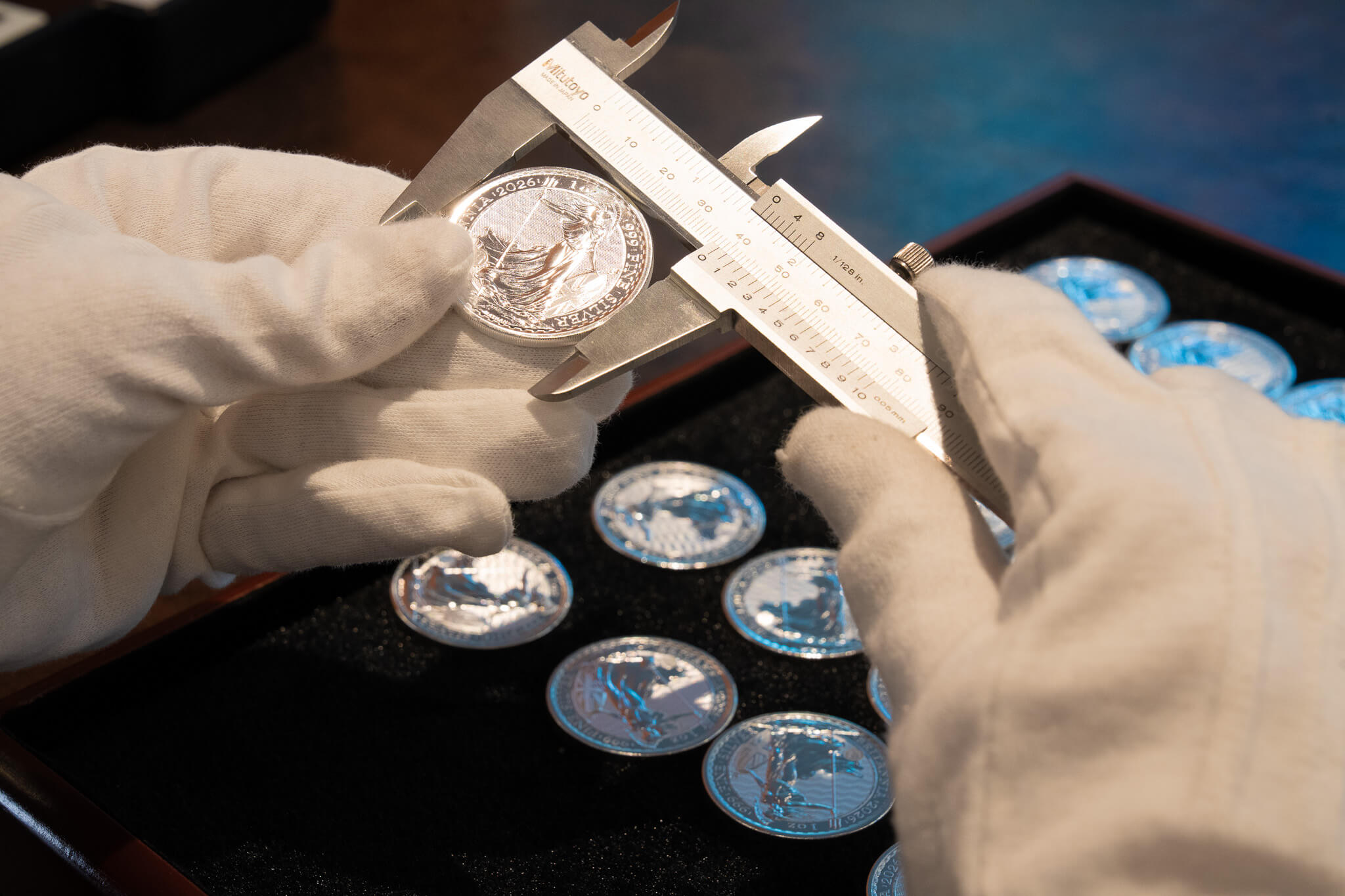
Diameter and weight. Mints publish exact figures for every coin they produce, a silver American Eagle, UK Britannia, or Canadian Maple Leaf will have documented diameter, thickness and weight, typically to a fine tolerance. A precision scale and a set of calipers let you check against the published specification directly. A coin that’s out of tolerance on either measurement is not genuine, whatever it looks like.
Design details. Genuine coins are struck with sharp, consistent detail. Look closely at fine elements, lettering, fine texture, small design features, and check they’re crisp rather than soft or blurred. Counterfeits produced from lower-quality dies often get small details wrong: incorrect font weight, misaligned design elements, or a design that doesn’t quite match reference images from the mint.
Edge and security features. Check the reeding (the ridged pattern on a coin’s edge): the number and spacing of ridges is documented for most bullion coins, and counterfeits frequently get this wrong. Many modern bullion coins also carry mint-specific security features, such as radial lines, micro-engraved privy marks, or textured backgrounds visible only under magnification, that are difficult for counterfeiters to replicate accurately.
Silver Testing Kits and Equipment
The home tests above need nothing more than things you likely already have: a magnet, an ice cube, some vinegar. But if you’re testing silver regularly, or want a more reliable answer than improvised methods can give, there’s a small set of dedicated equipment worth considering, ranging from simple optical aids to electronic devices that show you how to check silver purity without marking the item.
Magnifiers
A good magnifier is one of the cheapest and most useful tools for anyone handling silver. It lets you examine hallmarks properly, confirming a stamp is genuine and engraved rather than shallow or inconsistent, and it makes it far easier to spot the fine design details covered in the coin-testing section above, or the wear points where plating often gives itself away first.
The Hand Held 7x Magnifier with LED is a practical everyday option, with a bright LED and a 7x aspheric lens that makes hallmarks and coin details easy to read. For closer inspection, the Magnifier with LED Light, 10x Magnification gives a stronger field of view, useful for fine reeding, micro-engraved security features, or surface wear at contact points.
Precision Scale and Calipers
As covered in the coin-testing section, checking an item’s weight and dimensions against a mint’s published specifications is one of the most reliable non-destructive ways to check silver purity, particularly for coins and bars produced to documented tolerances.
The Libra 500 Scale measures to at least 0.01g, precise enough to catch a coin or bar that’s out of spec. Paired with the Digital Sliding Gauge Caliper, you can check weight and dimensions together, a combination that catches a wide range of counterfeits without touching the surface of the item at all.
Precious Metal Verifier
For the most reliable silver purity test available outside a lab, an electronic precious metal verifier is the standout recommendation.
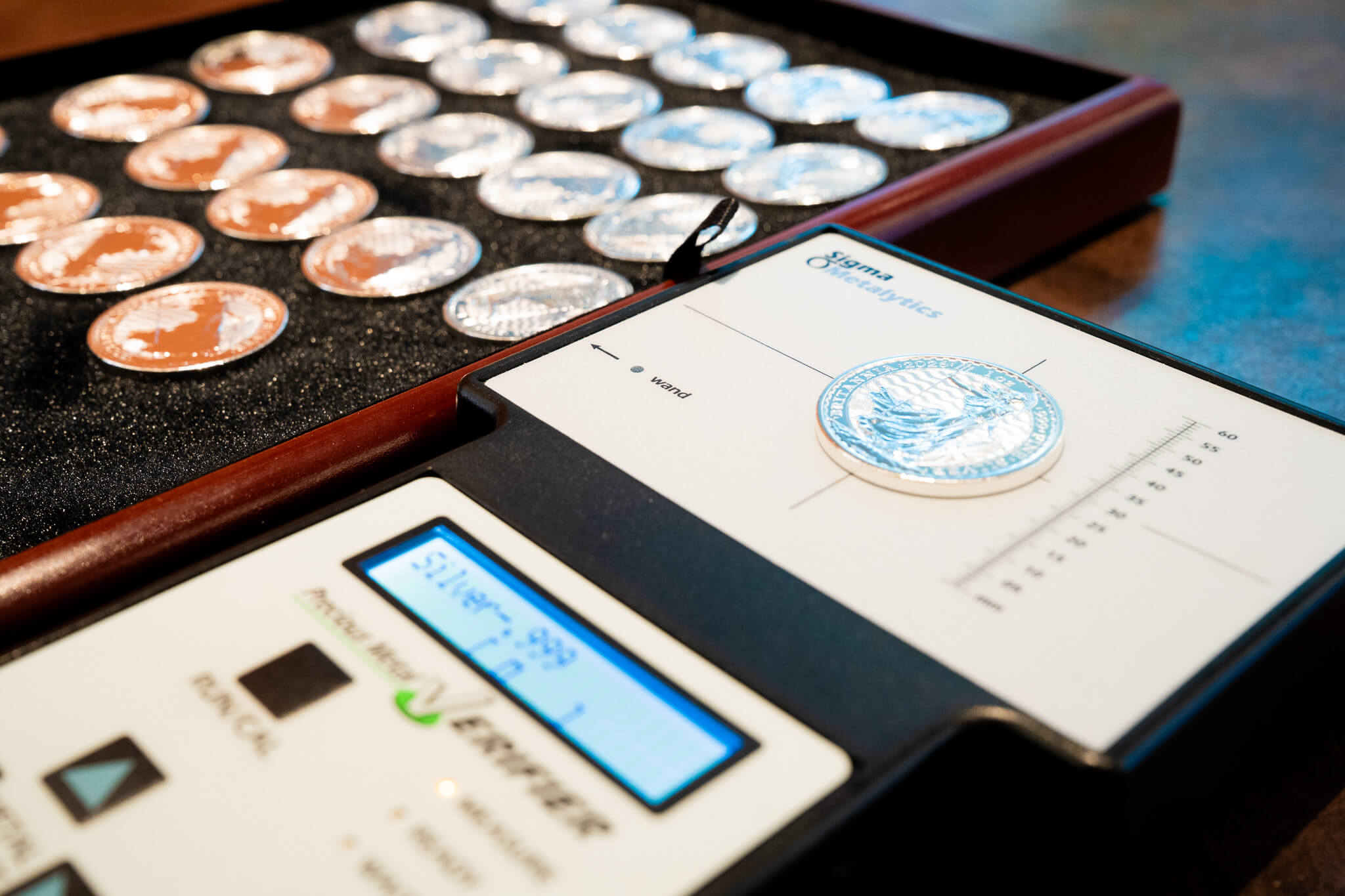
The Sigma Metalytics PMV Original uses electromagnetic signals to measure a metal’s resistivity, a property unique to each element and alloy. Unlike the tests above, it reads straight through the entire piece rather than just the surface, so it can’t be fooled by plating, and it works through assay cards, coin capsules and thin packaging, meaning your items never need to be removed or marked. It tests silver, gold, platinum and palladium, and comes with three wand attachments (small, large and bullion) to suit different item sizes. It’s widely used by professional bullion dealers and serious collectors, and is compact enough for home use.
Frequently Asked Questions
Does real silver tarnish?
Yes, real silver will tarnish over time. Unlike gold, genuine silver reacts with sulfur compounds in the air and develops a dull grey or black tarnish. This is a normal, harmless process that doesn’t indicate a fake. Silver-plated items can also tarnish, so tarnishing alone doesn’t confirm authenticity, but an item that resists tarnishing entirely over a long period is worth a closer look.
Will a magnet stick to real silver?
No, real silver is not magnetic, so a strong magnet should show no attraction to a genuine piece. Silver’s real magnetic “tell" is subtler: because it’s the best electrical conductor of any metal, a magnet moved across or dropped down an inclined silver surface generates eddy currents that visibly slow it down, an effect you won’t see on plated or base-metal fakes. A basic attraction check rules out ferrous fakes like steel or nickel, but non-magnetic counterfeits such as brass or pewter will still pass, so use it as a quick filter rather than a final answer.
Why does ice melt fast on real silver?
Silver has the highest thermal conductivity of any metal, meaning it moves heat away from a point of contact faster than almost anything else. When an ice cube sits on real silver, heat is drawn into the metal so efficiently that the ice melts noticeably faster than it would on stainless steel, aluminium, or most plated items. Copper is the only common metal that comes close to matching this, so comparing against an item made from something other than copper gives the clearest result.
Can I test silver with bleach?
Yes, but this can discolour the item and should not be used on bullion coins and bars. Household bleach contains chlorine, which reacts with silver to form silver chloride, a dark compound that appears within seconds of contact. Apply a small drop to an inconspicuous area, real silver should visibly darken almost immediately. Little or no reaction is a warning sign that the item isn’t genuine silver, or is only thinly plated. Work in a ventilated area, wear gloves, and never mix bleach with ammonia or other cleaning products.
How can I tell sterling silver from silver-plated?
The most reliable ways go beneath the surface. A scratch test in an inconspicuous spot will reveal a different colour metal underneath if the item is plated, since the silver layer on plated items is only a thin coating. An acid test calibrated to .925 gives an even clearer answer, reacting differently on solid sterling silver than on a plated base metal. Wear points like clasps, hinges, and edges are worth checking visually too, since plating tends to wear thin there first.
What’s the most accurate at-home silver test?
The density test (specific gravity calculation) is the most rigorous method available without specialist equipment, since it measures a property that’s difficult to replicate with common fake metals. For the highest confidence at home, pair it with a Precious Metal Verifier such as the Sigma Metalytics PMV, which reads a piece’s internal composition directly.
Buy Silver You Don’t Have to Test
Every method in this guide exists because silver can be faked, and because the consequences of buying a fake, however affordable the metal, add up over a collection or a portfolio. Knowing how to test silver is genuinely useful, particularly when verifying inherited pieces, gifts, or second hand purchases. But testing is always reactive, it tells you what you have after the fact.
The more reliable protection is buying from a source where authentication has already been done. BullionStar sources directly from the world’s most respected mints and refineries, and verifies our products using professional-grade testing, including the Sigma Metalytics PMV, before they reach a customer. When you buy from us, you’re not relying on a magnet, an ice cube, or a density calculation of your own, you’re buying silver that’s already passed scrutiny most home methods can’t replicate.
Whether you’re looking for a silver bar for long-term savings or a silver coin to start or grow a collection, the authentication is built in.

Popular Blog Posts by Gold & Silver 101
 An Introduction to Gold & Silver Investing
 Should I Invest in Gold, Silver, or Platinum Bullion?
 Gold Coins vs Gold Bars: Which Is Better?
 How Is Gold Taxed in Singapore? The IPM GST Exemption Explained
 Storing Precious Metals, Gold, and Silver Bullion
 Gold & Silver Bullion Investing FAQs
 Karat vs Carat: What’s the Difference?
 Gold Purity: The Complete Guide
 How Much Gold Is There in the World?
 Junk Silver: What It Is and What It’s Worth