 Contact
 Help
Help







Gold Nuggets: Value, Sources, and Famous Finds
 Gold & Silver 101



On 5 February 1869, two Cornish miners digging near Moliagul, in Victoria, Australia, pulled a single lump of gold weighing over 109 kilograms out of the ground, just a few centimetres below the surface. It’s still the largest gold nugget ever found anywhere on Earth. Within weeks it had been melted down into ingots and shipped to the Bank of England, so the actual nugget no longer exists. The story behind it, and the handful of giant nuggets that do still survive today, is part of what makes gold nuggets one of the more genuinely fascinating corners of the gold world.
A gold nugget, in the strict sense, is a naturally occurring piece of native gold, found already in metallic form rather than mixed through ore that needs processing to extract. That natural origin is exactly what makes nuggets different from the refined gold bars and coins most investors deal in. No two gold nuggets are alike, the purity varies by where they formed, and their value comes from a mix of weight, gold content, and how visually striking or rare the specimen itself is.
That combination of rarity and individuality is also why nuggets occupy an odd space between two different worlds. To prospectors and collectors, a nugget is a genuine prize, sometimes worth many multiples of its gold content. To investors, they’re a poor substitute for bullion: hard to authenticate consistently, awkward to value against a moving spot price, and without the tax advantages that standardised gold products carry in most jurisdictions.
This guide covers what a gold nugget actually is and how they form, how nuggets are valued and priced, where in the world they’re still found today, what to watch for if you’re buying one, and the famous giant nuggets that make this corner of the gold world worth knowing about even if you never plan to buy one. For the geology behind where gold deposits (and the nuggets within them) actually form, see our guide on where gold is found.
What Is a Gold Nugget?
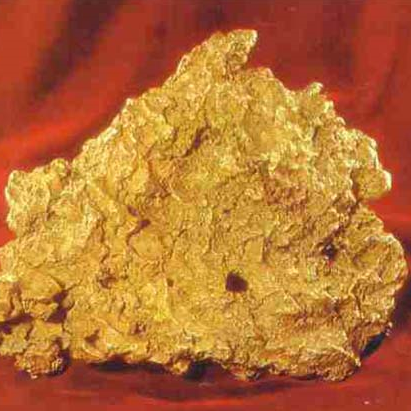
A gold nugget is a naturally occurring piece of native gold, formed in the ground and found already in solid metallic form rather than dispersed through ore that needs crushing, chemical processing, or smelting to extract. That’s the key distinction from most gold in circulation: a nugget is gold exactly as the earth produced it, not gold that’s been refined.
How Do Gold Nuggets Form?
Nuggets begin deep underground, where superheated, mineral-rich water deposits clusters of gold crystals into cracks and fissures in hard rock, almost always alongside quartz. Left in place, that’s a gold-bearing quartz vein or “reef." Over millions of years, weathering and erosion break the surrounding rock apart, and because gold is so dense, gravity and running water carry it downhill into streams and rivers while lighter rock and sediment wash away.
Nuggets found close to their original vein tend to be angular and often still have quartz attached. Nuggets that have travelled further in rivers get tumbled and rounded by the current, sometimes over thousands of years, which is why alluvial (river-worn) nuggets tend to look smoother than reef nuggets.
How Pure Is a Gold Nugget?
Rarely 100%. Natural gold nuggets are a naturally occurring alloy, almost always mixed with trace silver and copper picked up from the surrounding rock, and purity varies considerably by where they’re found. Australian nuggets are famously pure, typically 20-23 karat (roughly 96%) or higher, which is part of why Australia’s nuggets dominate the famous specimens covered later in this guide.
Elsewhere, purity swings much lower: some Alaskan nuggets run as pure as 21–22 karat, while others from the same state sit closer to 16–17 karat, depending on how far the gold travelled from its source before settling. There’s no single purity for a gold nugget worldwide, only a typical range for a given region.
Types of Gold Nuggets
Nuggets are generally grouped by where they formed. Alluvial (or placer) nuggets are found in rivers, streambeds, and old waterways, rounded and smoothed by water action over time. Reef (or eluvial) nuggets are found at or near their original quartz vein, and tend to be more angular, sometimes with visible quartz still embedded, which collectors often value as much as the gold itself. A related term worth knowing is specimen gold: crystalline gold still attached to its host quartz, prized for how it looks rather than purely for weight.
How to Identify a Real Gold Nugget
Many of the methods for testing gold bullion also work for gold nuggets. Weight is the first, simplest test: gold is far denser than almost anything it could be confused with, so a genuine nugget feels distinctly heavy for its size. The most common false positive is pyrite (“fool’s gold"), which is brittle and often has a faint magnetic pull from its iron content, whereas real gold is soft enough to dent with a pin and is not attracted to a magnet at all. Genuine nuggets also won’t show the sharp, uniform crystal faces of pyrite, and unlike gold-plated fakes, a real nugget’s colour and weight hold up all the way through, not just on the surface.
For anything of meaningful size or value, a reputable dealer or assayer can confirm authenticity with a density (specific gravity) test, which is difficult to fake convincingly.
Gold Nugget Value and Pricing
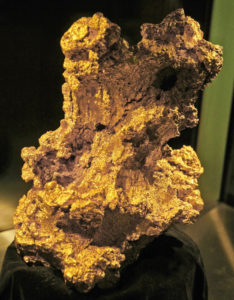
A gold nugget’s price starts with a simple calculation: gold spot price × weight × purity, which gives you the nugget’s melt value, what it would be worth reduced to raw gold. From there, desirable specimens routinely sell for well above that number, sometimes two to five times melt value, because collectors are paying for the nugget’s shape, rarity, and character as much as its gold content.
How Gold Nugget Value Is Calculated
The base (or melt) value is straightforward once you have three numbers: the current gold spot price, the nugget’s weight, and its purity. As a worked example, take a 10 gram nugget at 22 karat (91.6% pure), and use an illustrative spot price of $4,200 per troy ounce for the maths: 10 grams converts to about 0.322 troy ounces, which at $4,200/oz would be worth roughly $1,350 if it were pure gold. Multiply that by 91.6% purity (0.916), and the melt value comes out to approximately $1,238. That figure is the floor, not the market price, for anything but the most unremarkable, shapeless specimens.
The Collector Premium: Why Nuggets Sell for More Than Melt Value

Above that floor, price becomes much more subjective, and much more interesting. A nugget with striking natural crystal formations, an unusual or recognisable shape, or a documented find location and history can sell for two to five times its melt value, sometimes more for truly exceptional pieces. This is the same dynamic that makes the famous nuggets covered later in this guide worth vastly more than their weight in gold. The Hand of Faith, for instance, sold to a Las Vegas casino for far above its melt value purely because of what it was.
| Factor | Effect on Price |
|---|---|
| Weight | Sets the baseline — heavier nuggets have more gold content |
| Purity | Higher karat means more actual gold per gram of nugget |
| Shape and aesthetics | Unusual, crystalline, or visually striking nuggets command the largest premiums |
| Rarity and provenance | A documented find location or history adds collector value beyond the metal |
| Certification | Independent verification of weight and authenticity supports a higher, more trusted price |
Where to Find Gold Nuggets
Gold nuggets still turn up today in the same handful of goldfields that produced the famous giants of the 1800s. The major producing regions are Australia (particularly Victoria and Western Australia), the United States (California and Alaska), Brazil, and Russia. These are all places where the geology covered earlier, gold-bearing quartz reefs eroding into rivers and streams over millions of years, happened to be especially rich.
Australia: Victoria and Western Australia
Australia is the world’s premier source of gold nuggets, and Victoria’s “Golden Triangle" is the epicentre. This roughly 9,400 square kilometre stretch of central Victoria, bounded by Avoca, Castlemaine, and Wedderburn, has produced 32 of the 40 largest gold nuggets ever found in Australia, including the Welcome Stranger and the Hand of Faith, both found within its boundaries. Western Australia is the country’s other major region, centred on the historic goldfields around Kalgoorlie, Coolgardie, and Leonora, and remains home to more active commercial gold operations than anywhere else in the country.
United States: California and Alaska
California’s Mother Lode region in the Sierra Nevada foothills was ground zero for the 1849 Gold Rush. It is still productive for prospectors today, particularly along rivers that drain the historic reef systems. Alaska is the other major US source, especially the Nome district on the Seward Peninsula, where the alluvial gold is famously pure, a legacy of having travelled a long way from its original source before settling.
Brazil and Russia
Brazil’s Serra Pelada in Pará state produced the Pepita Canaã, the largest gold nugget still in existence, during a gold rush in the early 1980s that drew more than 100,000 miners to a single site. Russia’s Ural Mountains, particularly around Miass, have a long history of major nugget finds, including the Great Triangle, now held in the Kremlin’s Diamond Fund.
How to Find Gold Nuggets
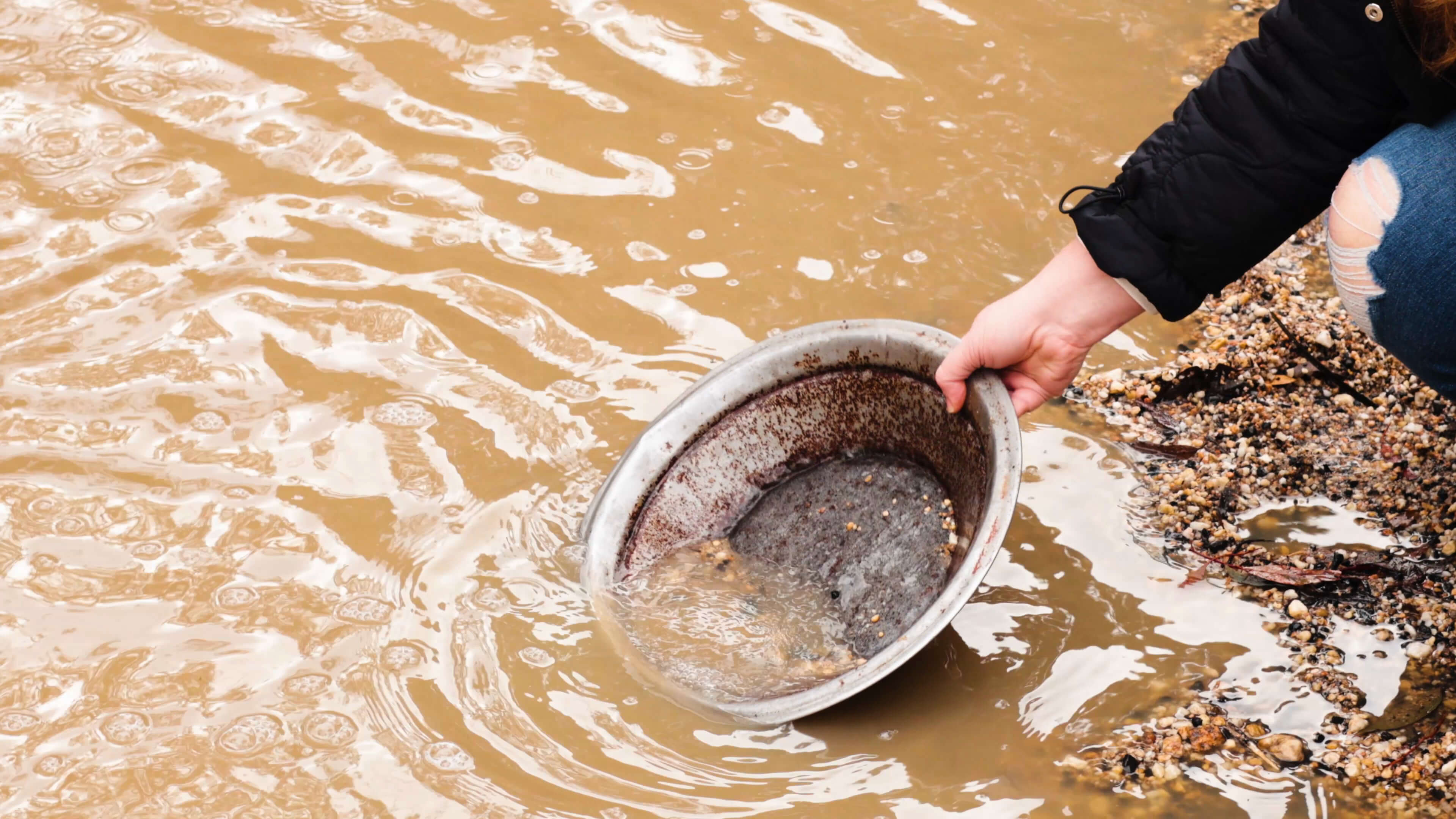
The two main methods are panning and metal detecting, and they suit different situations. Panning and sluicing work by washing lighter sediment away from denser gold in a riverbed or streambed, which is why most panning locations sit on rivers known to drain historic goldfields, rather than random waterways. Metal detecting works differently and has become the dominant method for nugget hunting on dry ground: gold-specific detectors are tuned to pick up small, weak signals that ordinary detectors miss, while filtering out the “hot rocks" and mineralised soil that make Australia’s goldfields notoriously difficult to search with standard equipment.
Wherever you’re prospecting, permission matters. In Victoria, for example, prospecting on Crown land legally requires holding a Miner’s Right, a low-cost permit, and similar licensing or access rules apply across most of the regions above. It’s always worth checking local regulations before heading out, since rules vary significantly by country and even by state.
Buying Authentic Gold Nuggets
Gold nuggets are bought and sold through specialist dealers, gem and mineral shows, and auction houses. Bullion dealers do not normally sell gold nuggets, and generally deal in refined gold bars and gold coins rather than natural specimens. Because nuggets are valued individually rather than by a standard weight and purity, buying one safely comes down to verifying authenticity before you pay.
A few basic checks help spot fakes: genuine nuggets have an uneven, textured surface rather than a uniform shine, feel notably heavy for their size (gold is far denser than pyrite or brass), and won’t show file marks or seams that suggest a cast fake. Reputable dealers will provide an assay or at least a density test on request, and many nuggets are sold with documentation of origin. Flea markets, informal online listings, and “too good to be true" prices are the most common sources of fakes or gold-plated lead.
It’s worth noting that gold nuggets are collectors’ items rather than an investment vehicle. They don’t carry the standardised purity or liquidity of bullion, aren’t eligible for the tax exemptions that apply to Investment Precious Metals in Singapore, and their value depends heavily on rarity, shape, and provenance rather than gold content alone. For anyone looking to invest in gold, bullion bars and coins remain the more straightforward route — nuggets are best approached as a curiosity for collectors.
Famous Gold Nuggets in History
The largest gold nugget ever found is the Welcome Stranger, unearthed near Moliagul, Australia, in February 1869. It weighed 109.59 kg gross (72.02 kg of pure gold), so large that it reportedly had to be broken on an anvil just to fit on the assay office’s scales. Like most of the biggest nuggets ever recorded, it no longer exists in its original form: it was melted down shortly after being sold.
That’s a pattern common to nearly all the largest nuggets in history. Value and impracticality of display usually won out over preservation. The largest nugget that still exists intact today is the Pepita Canaã, found in Brazil’s Serra Pelada region in 1983. At 60.82 kg gross (52.33 kg pure), it was bought by Brazil’s central bank and is now on public display at the Museu de Valores do Banco Central in Brasília.
A few other nuggets round out the list of history’s most famous finds:
| Nugget | Weight | Found | Status |
|---|---|---|---|
| Pepita Canaã | 60.82 kg (52.33 kg pure) | Serra Pelada, Brazil, 1983 | Largest nugget still in existence; displayed at Brazil’s central bank museum in Brasília |
| Great Triangle | 36.2 kg (91% pure) | Urals, Russia, 1842 | Displayed in the Kremlin’s Diamond Fund, Moscow |
| Hand of Faith | 27.66 kg | Kingower, Victoria, 1980 | Largest nugget ever found with a metal detector; displayed at a casino in Las Vegas |
| Normandy Nugget | 25.5 kg (80–90% pure) | Kalgoorlie, Western Australia, 1995 | Displayed at the Perth Mint museum |
| Ironstone’s “Crown Jewel" | 16.4 kg | California, 1992 | Crystalline gold leaf in quartz; displayed at Ironstone Vineyards heritage museum |
Between them, these finds span three continents and nearly two centuries. This is a reminder that, while nugget discoveries have become far rarer, some of the biggest still turn up in the same goldfields prospectors search today.
Frequently Asked Questions
Are gold nuggets pure gold?
No, gold nuggets are rarely 100% pure. Most contain a mix of silver, copper, or other trace metals, giving them a purity that typically ranges from around 20K to 23K in Australian finds, and as low as 16K in some other regions such as parts of Alaska.
How do I tell if a gold nugget is real?
Genuine nuggets have an irregular, textured surface, feel notably heavy for their size due to gold’s high density, and show no seams, file marks, or bubbles that would suggest a cast fake. A reputable dealer can confirm authenticity with a density test or assay.
How much is a gold nugget worth?
A gold nugget’s value depends on its gold content, rarity, and shape. They are usually priced at a premium above the melt value of the gold it contains, sometimes significantly more for well-formed or unusually large specimens. Common small nuggets may sell close to their gold weight, while rare or striking pieces can fetch many times that.
Are gold nuggets a good investment?
Gold nuggets are better suited to collectors than investors. Unlike bullion bars and coins, they don’t have standardised purity or weight, aren’t eligible for tax exemptions such as Singapore’s Investment Precious Metals scheme, and their resale value depends heavily on individual characteristics rather than gold content alone.
What’s the largest gold nugget ever found?
The Welcome Stranger, discovered near Moliagul, Australia, in 1869. It weighed 109.59 kg gross (72.02 kg of pure gold) but was melted down shortly after being found, so it no longer exists in its original form.
The Enduring Fascination With Gold Nuggets
Gold nuggets sit in a category of their own: unlike gold bars, gold coins, or jewellery, each one is a unique, unrepeatable product of geology, formed and shaped over thousands or millions of years before anyone ever laid eyes on it. That rarity, combined with the stories behind famous finds like the Welcome Stranger, is why nuggets continue to capture the public imagination long after the gold rushes that first brought them to light.
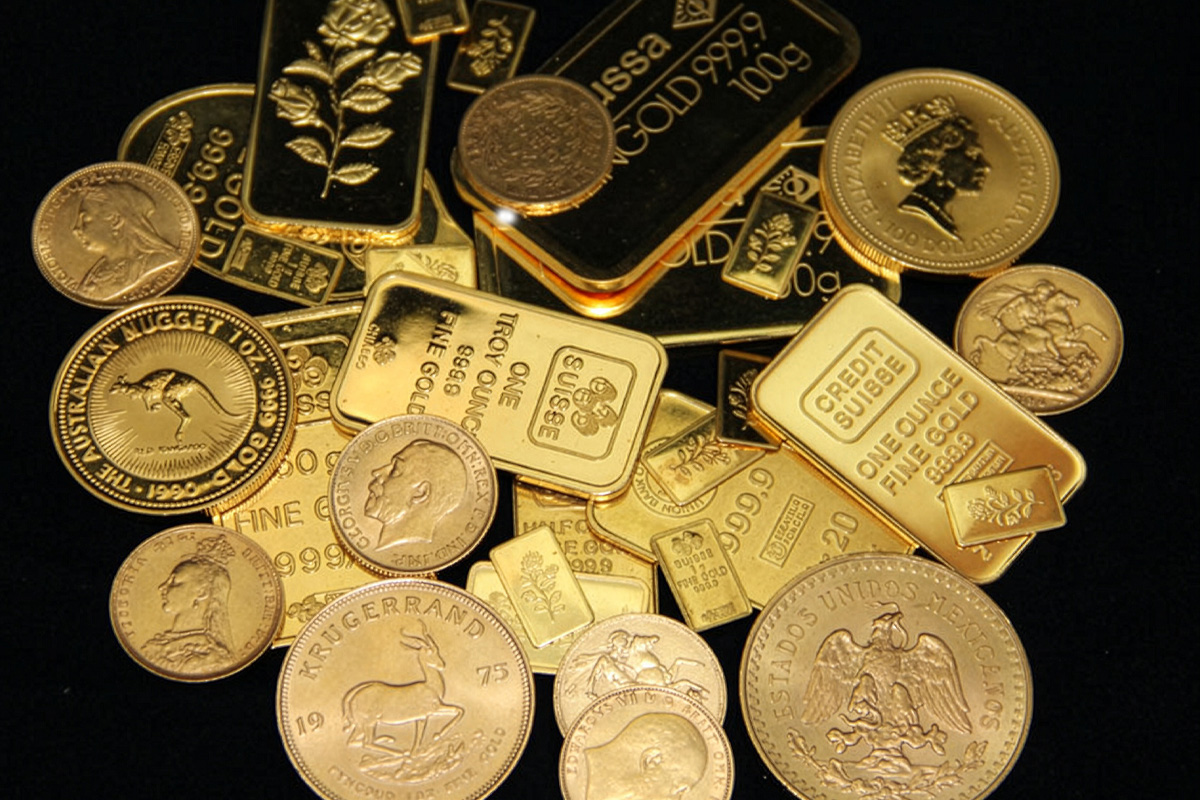
For collectors, a genuine nugget offers something bullion can’t: a direct, physical connection to the natural world and to the history of prospecting. For those more interested in gold as an investment, standard gold bars and coins remain the more practical choice, offering verified purity, easy liquidity, and tax advantages that nuggets don’t carry.
Either way, gold nuggets are a reminder of where gold ultimately comes from: not a vault or a mint, but the ground itself.
Popular Blog Posts by Gold & Silver 101
 An Introduction to Gold & Silver Investing
 Should I Invest in Gold, Silver, or Platinum Bullion?
 Gold Coins vs Gold Bars: Which Is Better?
 How Is Gold Taxed in Singapore? The IPM GST Exemption Explained
 Storing Precious Metals, Gold, and Silver Bullion
 Gold & Silver Bullion Investing FAQs
 Karat vs Carat: What’s the Difference?
 Gold Purity: The Complete Guide
 How Much Gold Is There in the World?
 Junk Silver: What It Is and What It’s Worth