 Contact
 Help
Help







Where Is Gold Found?
 Gold & Silver 101



Every piece of gold on Earth, from the items of jewellery we wear, to the bullion coins and bars used for investment, is older than the planet itself. Long before there was an Earth to mine it from, gold was forged in some of the most violent events in the universe: colliding neutron stars and dying stars, scattering heavy elements across space that eventually became part of the material our solar system formed from.
That’s the short answer to where gold ultimately comes from. But it’s also worth asking in a much more down-to-earth sense: which rocks, rivers, and countries actually produce the gold we mine, buy, and wear today. This guide covers both ends of that story, gold’s cosmic origins, how it forms and concentrates in the Earth’s crust, where it’s actually dug up around the world, and how it gets from raw ore into refined metal.
Where Is Gold Found in Nature?
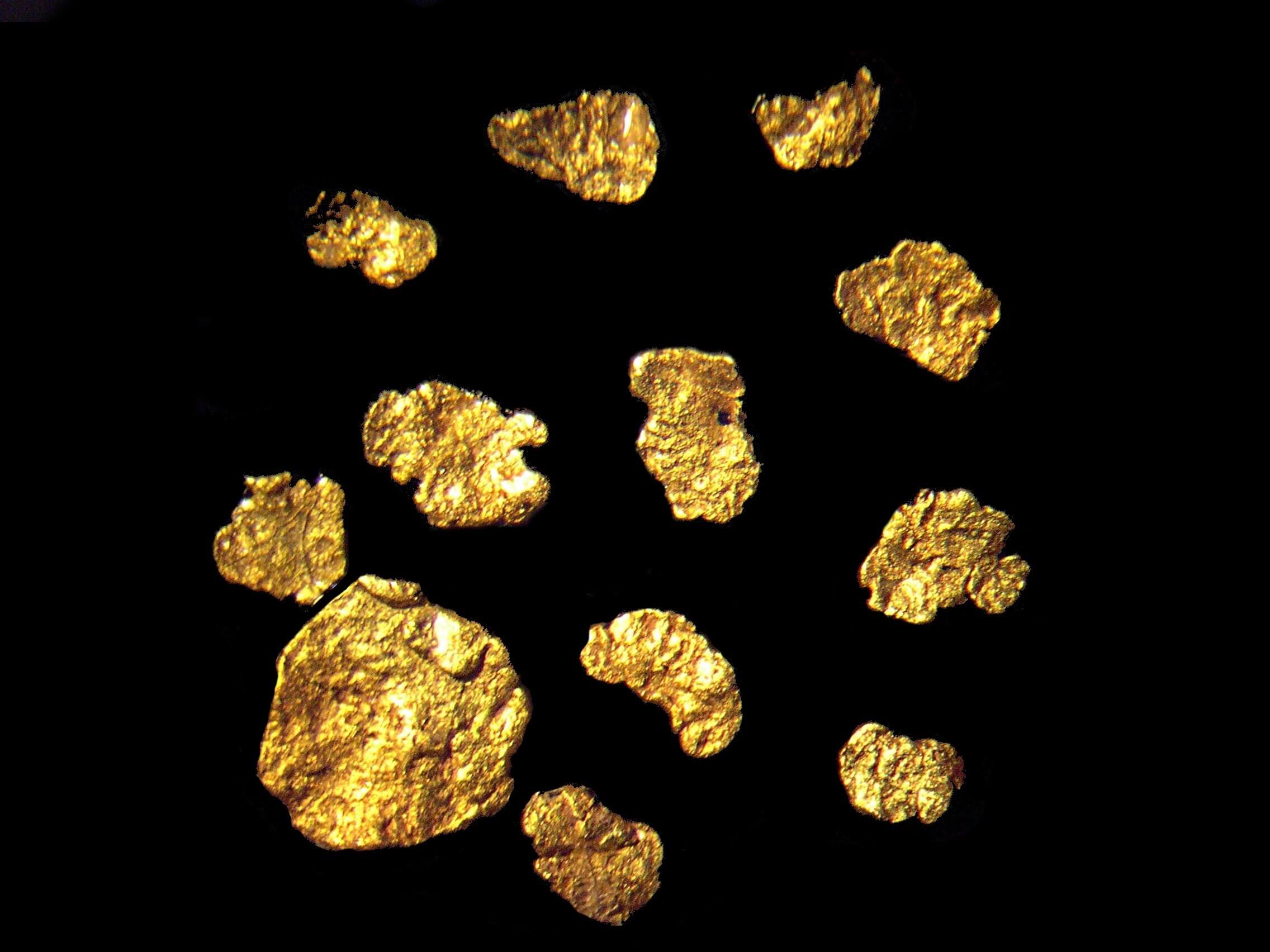
Gold occurs naturally in two main types of gold deposits: lode deposits, where it’s still locked inside rock, and placer deposits, where it’s been washed loose and collected somewhere new. Almost every gold deposit on Earth started out as the first type before some of it went on to become the second.
Lode (Vein) Deposits
This is where gold starts. Deep underground, hot, mineral-rich fluids move through cracks and fractures in rock, and as they cool, they deposit gold along with other minerals, most famously quartz. That’s why gold veins running through white quartz rock have become the classic, almost cartoonish image of a gold discovery. Lode deposits are the original gold sources, gold in its native hiding place, before erosion or mining ever touches it, and they’re the primary target of most large-scale mining today.
Placer Deposits
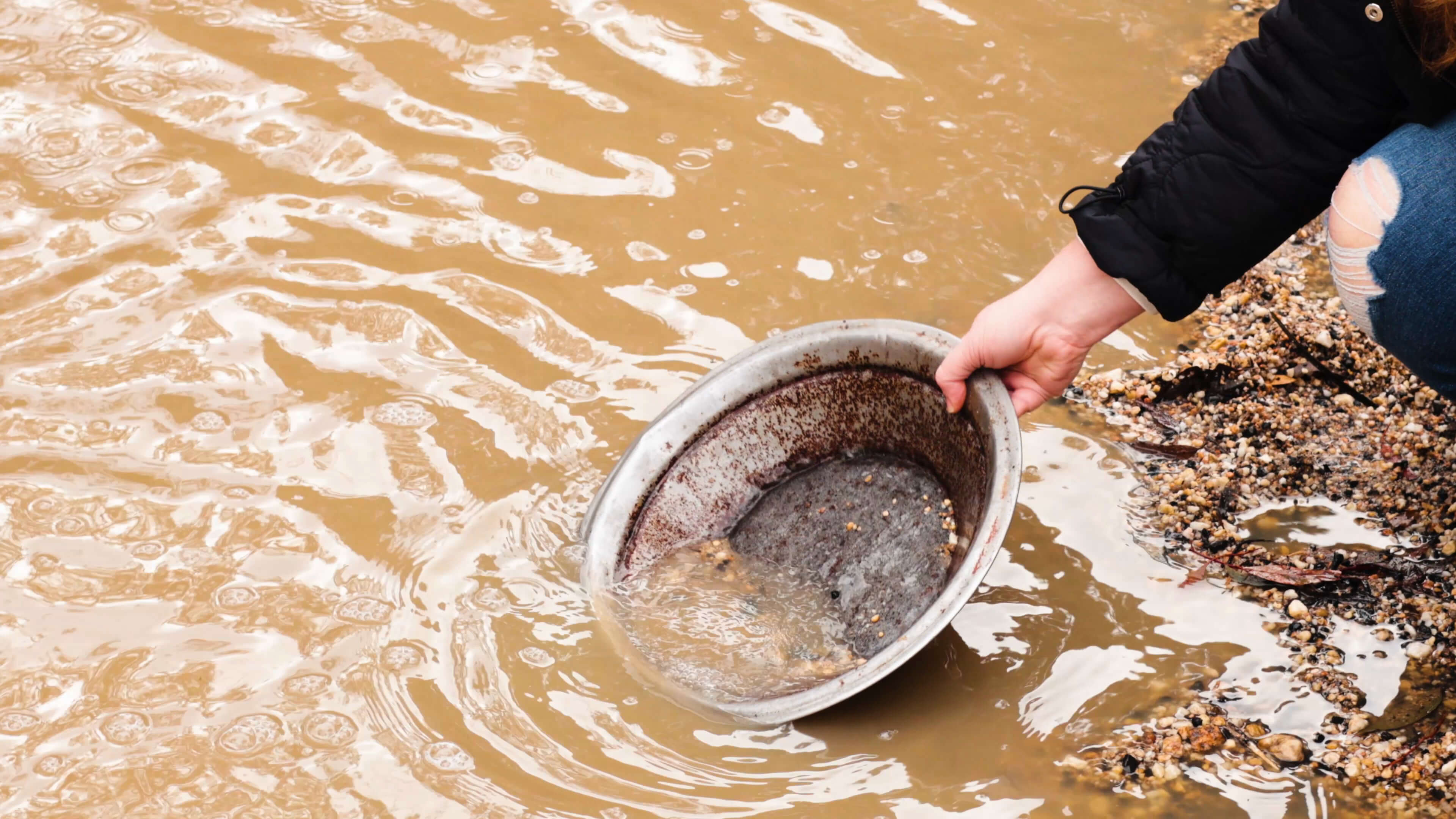
Over millions of years, weather and erosion break lode deposits apart, washing rock, gold, and everything else downhill into streams and rivers. Most minerals dissolve or grind down along the way. Gold, being chemically almost indestructible and far denser than the sand and gravel around it, doesn’t. It simply settles, in riverbeds, behind boulders, on the inside of bends, anywhere the water slows down enough to drop it.
That’s what makes placer gold findable with nothing more than a pan and some patience, and it’s why historic gold rushes (California, the Klondike, Australia’s Victoria goldfields) were placer gold stories, not mining-company ones. Most easily accessible placer gold worldwide has long since been panned out, but it’s still the reason “finding gold" and “panning for gold" are practically the same phrase in most people’s minds.
Where Did Gold Come From?
All the gold on Earth is, quite literally, stardust. Every wedding ring, gold bar, and gold coin is made of material forged before our solar system even existed.
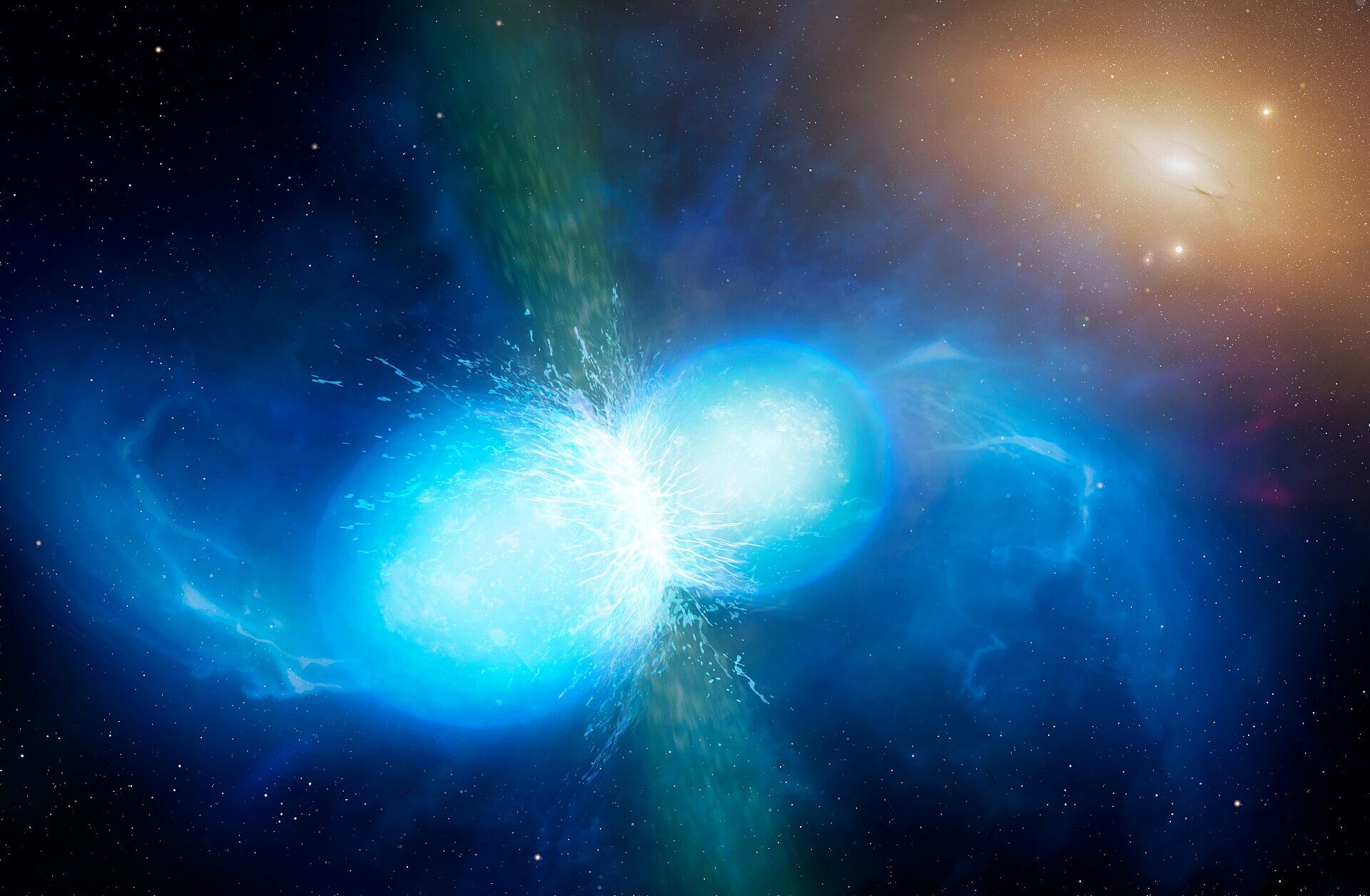
For a long time, the leading theory credited supernovae (exploding stars), with producing gold and other heavy elements. That changed in 2017, when astronomers observed something remarkable: two neutron stars (the ultra-dense collapsed cores of dead stars) colliding roughly 130 million light-years away. The collision, catalogued as GW170817, was picked up first as a ripple in gravitational waves, then as a burst of light whose chemical signature was unmistakable: heavy elements, including gold, being forged in real time. It was the first direct proof that neutron star collisions are a major source of the universe’s gold, through a process called rapid neutron capture, or the r-process, where atomic nuclei get slammed with so many neutrons so quickly that they’re transformed into heavier elements almost instantly. A single such collision is thought to produce enough gold to outweigh several Earths.
Supernovae haven’t been fully ruled out; some newer research suggests rare stellar explosions and magnetar flares may contribute too. But neutron star mergers are now considered the dominant source, and the 2017 observation remains the closest thing astronomy has to catching gold being made on camera.
So how did any of it end up here? When Earth was forming, it was a molten ball, and gold is a dense, “iron-loving" element that should have sunk straight into the core along with the rest of the planet’s iron, leaving almost none in the crust. The gold we actually find near the surface arrived later, delivered by asteroids and meteorites that pelted the young Earth after its crust had already solidified, a period known as the Late Heavy Bombardment, around 3.8 to 4.1 billion years ago. In effect, most of the gold within reach today is cosmic leftovers that fell to Earth after the party had already started.
How Is Gold Formed?
Gold forms in two stages: one cosmic, one geological. The element itself was created billions of years ago, mostly in neutron star collisions, as covered above. What happens on Earth is a separate process of concentration, where gold that’s scattered incredibly thinly through rock gets gathered into deposits dense enough to be worth digging up.
That concentration mostly happens through hydrothermal processes. Deep underground, hot water, heated by magma or tectonic activity, picks up trace amounts of gold as it moves through vast volumes of surrounding rock. As this mineral-rich fluid travels upward through cracks and fractures, it cools, and changes in temperature, pressure, or chemistry cause the dissolved gold to come out of solution and settle, along with quartz and other minerals, into veins. Repeat that over millions of years and thousands of cubic kilometres of rock, and you get a lode deposit worth mining.
Just how much concentrating that takes is the part most people don’t realise: gold is scattered through Earth’s crust at an average of only about 4 parts per billion. A deposit only becomes economically worth mining once natural processes have concentrated that gold by a factor of roughly 100 to 1,000 times, sometimes considerably more. Every working gold mine on Earth exists because geology did an extraordinary amount of natural sorting first.
Where Is Gold Mined Today?
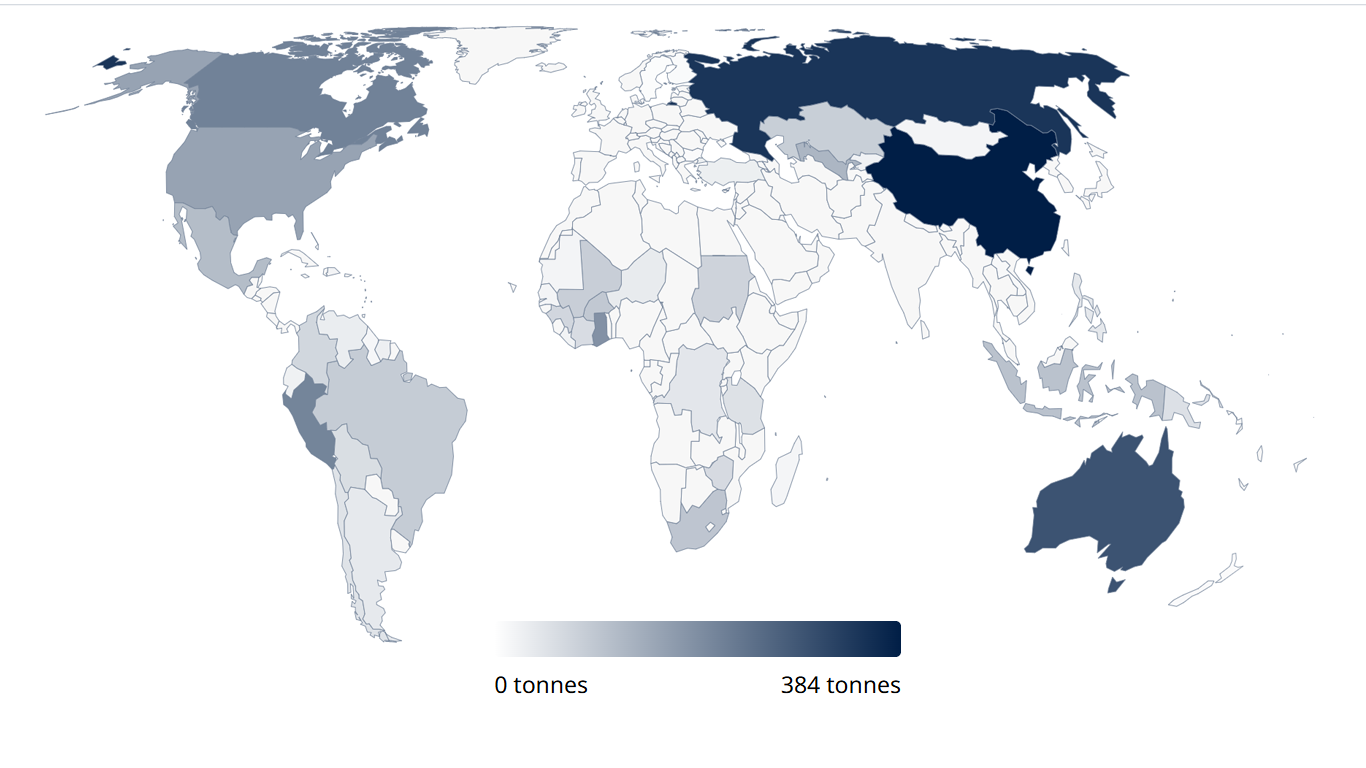
Global gold production now runs at roughly 3,300 to 3,700 tonnes a year. The rankings shift slightly year to year, but the same handful of countries have dominated for a while:
China — the world’s largest producer, at around 370–380 tonnes a year, spread across many mid-sized operations rather than one dominant mine.
Australia — around 310–320 tonnes annually, home to Boddington and Cadia, two of the largest gold mines on the planet.
Russia — close behind at roughly 310–315 tonnes, concentrated mainly in Siberia and the Far East.
Canada — around 200–210 tonnes, most of it from Ontario and Quebec.
United States — around 170–175 tonnes, the large majority mined in Nevada, home to the Carlin Trend, one of the richest gold mining districts ever discovered.
No single African country cracks that top five, but taken together, Africa produces more gold than any other continent, over 1,010 tonnes a year. Ghana leads at around 158 tonnes, followed by South Africa (roughly 100–115 tonnes, once the world’s dominant producer by a wide margin before its output declined from historic highs) and Mali (around 65 tonnes).
How Gold Is Extracted from Ore
Once a deposit is found, actually getting the gold out involves two very different stages: digging up the ore, then separating the gold from everything it’s mixed with.
Open-Pit, Underground, and Placer Mining
Most large modern mines use open-pit mining: terraced pits, sometimes kilometres wide, dug into large, low-grade deposits near the surface. It’s less dramatic than it sounds, since even a rich open-pit mine might process tonnes of rock for every gram of gold, but it’s efficient at scale and is how most of the world’s gold is produced today.
Underground mining is reserved for higher-grade veins that run too deep, or are too narrow, for an open pit to make economic sense. Tunnels follow the vein itself, which is more selective and less disruptive to the surface, but far more expensive per tonne of rock moved.
Placer mining works differently again, since the gold has already been freed from rock by erosion. Modern operations use dredges or gravity-separation equipment to process river gravel at a much larger scale than a prospector’s pan, but the underlying principle, letting gold’s density do the sorting, hasn’t changed since the first gold rushes.
Cyanide Leaching, Smelting, and Refining
Crushed gold ore still looks like rock, because it mostly is. Getting the gold out chemically is usually done through cyanide leaching: a dilute cyanide solution is passed over or mixed with the crushed ore, and it dissolves the gold, leaving the surrounding rock behind. The technique, known as the MacArthur-Forrest process, was developed in Glasgow in 1887 and first proven at scale at South Africa’s Witwatersrand goldfield in 1890. It’s been the dominant method of gold extraction ever since. Lower-grade ore is often stacked into huge heaps and sprayed with the solution (“heap leaching"), while higher-grade ore is processed in agitated tanks for a faster, more complete recovery.
Once dissolved, the gold is recovered from solution, typically by binding it to activated carbon, then stripped and smelted at high temperature into a rough gold bar called doré, usually somewhere between 80–95% pure gold, alloyed with silver and trace metals. From there, refining processes (commonly chlorination or electrolysis) strip out the remaining impurities to reach the 99.5% to 99.99% purity, the range spanning LBMA Good Delivery bars up to 24 karat (999.9 fine) retail bars and coins.
Frequently Asked Questions
Where is the most gold found?
It depends on what you’re measuring. By current annual production, China leads at around 370–380 tonnes a year. By history, no place comes close to South Africa’s Witwatersrand Basin, which has produced an estimated 40% of all the gold ever mined by humans over more than a century of continuous operation. By known reserves still in the ground, Australia leads with an estimated 13,000 tonnes, more than any other country.
Can I find gold near me?
Possibly, especially if you’re near a river or region with a documented gold-mining history (parts of the US, Australia, and Wales all have active recreational panning communities). Realistically, most easily accessible placer gold has already been found, so you’re more likely to turn up small flakes than a life-changing nugget. Check local land and mining regulations first, since panning isn’t legal everywhere, even on land that looks unclaimed.
Are gold rivers real?
Yes, in the sense that matters: rivers really do carry and concentrate placer gold, which is exactly what fuelled historic gold rushes. It’s not a river flowing with liquid gold, but water moving over gravel that happens to contain gold flakes and nuggets.
Where does the most gold come from in the universe?
The leading explanation is neutron star mergers. This was confirmed in 2017 when astronomers directly observed such an event taking place, and detected the chemical signature of heavy elements, including gold, being created. Before that, exploding stars (supernovae) were thought to be the main source; that theory hasn’t been fully ruled out, but current evidence points to colliding neutron stars as the dominant cosmic gold factory.
How much gold is left in the world?
Around 222,600 tonnes of gold have been mined throughout human history, and known reserves still in the ground are estimated at between 55,000 and 66,000 tonnes, depending on the source. At current mining rates, that’s only a few decades of supply from known deposits, though new discoveries and improved extraction methods have consistently pushed that horizon back before.
Is there gold in the ocean?
Yes, roughly 20 million tonnes of it, dissolved directly in seawater. It sounds like a fortune until you look at the concentration: about one gram of gold for every 100 million tonnes of water. No method exists to extract it profitably, so for now it stays exactly where it is.
From Stardust to Store Shelf: Gold’s Full Journey
Gold’s story starts billions of years ago, in the collision of dead stars, then gets buried, moved, and concentrated by processes that unfold over millions of years, before ending up, after a surprising amount of geological sorting and modern chemistry, as a ring on someone’s finger or a bar in a vault. Every stage of that journey, from a neutron star merger to a cyanide tank in Nevada, has to go right for that to happen, which is a big part of why gold has fascinated people for as long as it’s been found.
None of that history changes what gold is used for today: jewellery, industry, and a store of value that’s outlasted every currency system built to replace it. If this has left you curious about owning a small piece of that multi-billion-year story yourself, BullionStar offers a straightforward way to buy physical gold and silver. Browse our gold products, or visit our Bullion Center at 45 New Bridge Road, Singapore.
Popular Blog Posts by Gold & Silver 101
 An Introduction to Gold & Silver Investing
 Should I Invest in Gold, Silver, or Platinum Bullion?
 Gold Coins vs Gold Bars: Which Is Better?
 How Is Gold Taxed in Singapore? The IPM GST Exemption Explained
 Storing Precious Metals, Gold, and Silver Bullion
 Gold & Silver Bullion Investing FAQs
 Gold Purity: The Complete Guide
 How Much Gold Is There in the World?
 Junk Silver: What It Is and What It’s Worth
 999 Fine Silver: Investment-Grade Silver Explained