 Contact
 Help
Help







Gold Savings Account vs Bullion Savings
 Gold & Silver 101



Many banks in Singapore, UOB among them, offer something called a “gold savings account". These are an account that tracks the gold price and lets you build up a holding in grams, all through your existing online banking. It looks, on the surface, exactly like buying gold. In practice, it’s a meaningfully different product from actually owning bullion, and the difference comes down to a question most people never think to ask: what, precisely, do you own?
A bank’s gold savings account is still, structurally, a bank product. It’s an entry in your account that tracks a gold price, sitting inside the same institution as your regular savings account. BullionStar’s Bullion Savings Programme (BSP) is built differently, as a way to buy and hold real, physically-backed gold in gram-sized increments from the outset, with the option to convert into physical gold bars. Both let you start small and build a position gradually, but what you actually end up holding is not the same at all.
This guide walks through how a typical bank gold savings account works, what “allocated" and “unallocated" actually mean and why that distinction matters more than the interface makes it look, and how BullionStar’s Bullion Savings Programme compares directly on ownership, fees, and redemption. If you’re earlier in the decision and want the broader case for saving in gold at all, rather than which specific product to use, see our Gold Saving vs Gold Investing guide instead.
Please note that BullionStar does not provide investment or financial advice. The information below is for informational purposes only. Your individual circumstances and goals will always be the most important factors in any investment decision.

What Is a Gold Savings Account?
A gold savings account is a bank account that lets you buy, hold, and sell a gold-price-linked balance without leaving your regular banking app. The balance is typically denominated in grams rather than shares or units. Instead of walking into a shop and buying a coin or bar, you buy an amount of gold through your bank, its value tracked against the live gold price and shown alongside your other account balances.
It’s worth being precise about the term, since it’s easy to confuse “gold savings account" with “saving in gold" more broadly. A gold savings account refers specifically to this kind of bank-run product. Saving in gold is the much wider practice of regularly accumulating any form of gold, physical or otherwise, as a way of preserving wealth over time. Our Gold Saving vs Gold Investing guide covers that broader concept.
Most gold savings accounts share the same basic mechanics:
- Opened instantly through existing online or mobile banking, often with no separate application
- Gold bought and sold in gram increments, priced off the international gold rate plus the bank’s own spread
- Balance shown in grams and local currency, moving with the gold price in real time
- No storage, security, or delivery to arrange yourself, everything sits inside the bank account
- Usually a route to convert into physical gold, though often gated by minimums, fees, and in-person requirements, which vary significantly by bank
A number of banks, in Singapore and internationally, offer some version of this. UOB is the most recognisable example in Singapore, and it’s worth examining specifically, since the fine print of how its account actually works is where the real differences between this and owning gold outright become clear. That’s what the next section covers in detail. Learn more about buying gold from banks.
The appeal of a gold savings account is straightforward: no separate account to open with a bullion dealer, no storage to think about, and the same familiar interface as checking any other balance. What it doesn’t automatically give you is the same thing as owning gold outright, a distinction we believe is key to understanding.
UOB Gold Savings Account Explained
UOB’s Gold Savings Account (GSA) is a prime example of this product in Singapore, so it’s worth walking through exactly how it works, using UOB’s own published terms.
How the UOB Gold Savings Account Works
A GSA can be opened through UOB TMRW or at a branch, with a minimum opening amount of 5 grams and a minimum balance of 5 grams held at all times. From there, gold and silver are bought and sold in gram increments at a price UOB sets, based on the international gold price plus its own margin. An administrative fee applies too: 0.25% per annum of the highest monthly gold balance, plus GST, debited annually or on closure. Before April 2026 this carried a minimum monthly charge of 0.12 grams regardless of balance; from April 2026 it’s a straight 0.25% with no floor.
It’s worth being clear on one point of potential confusion: UOB also sells actual physical gold bars and kilobars directly, as a completely separate product from the GSA, purchased by appointment at its Main Branch Gold Counter or reserved online for collection. If you’re specifically after a UOB gold bar, that’s a different product line entirely, and one that involves genuine physical ownership from the moment of purchase. The GSA does not.
Converting a GSA Balance to Physical Gold
Converting a GSA balance into physical gold is possible. But it isn’t automatic, and it comes with conditions.
Conversions happen in 100-gram increments only. They must be paid for using non-CPF funds. (CPF is Singapore’s mandatory retirement savings scheme; money held there can be invested in gold, but can’t be freely withdrawn as physical metal.) You also need to go in person, to the Gold Counter, during banking hours.
Then there’s the cost. UOB charges “a premium at such rate as it may determine from time to time at its sole and absolute discretion." In plain terms: there’s no fixed, published price for converting your balance into a bar. It’s whatever UOB decides to charge on the day you ask.
That gap between holding a GSA balance and holding physical gold matters beyond convenience. UOB’s own account terms don’t describe GSA holdings as allocated to specific bars, and general banking disclaimers make clear that gold and silver products aren’t covered by Singapore’s Deposit Insurance Scheme, since they aren’t currency deposits. What that actually means for what you own, and what happens to it if things went wrong, is worth understanding properly rather than assuming, which is exactly what the next section works through.

Allocated vs Unallocated: Why It Matters
This is the distinction that actually decides what you own. Everything else, fees, minimums, convenience, matters less than this one question: is your gold allocated, or unallocated?
What Is Allocated Gold?
Allocated gold is specific. It’s real, identifiable metal, set aside and recorded as yours. It sits separately from the seller’s own assets. You own it outright, the moment you buy it. If the seller ran into financial trouble, your gold wouldn’t be part of that. It’s not theirs to begin with.
What Is Unallocated Gold?
Unallocated gold is different. It’s a claim, not a specific asset. You’re owed an amount of gold, but no particular bar is set aside for you. Your gold sits pooled with the provider’s own holdings. Legally, you’re closer to a creditor than an owner. If the provider became insolvent, your claim would be one among many, competing with everyone else owed money.
| Allocated | Unallocated | |
|---|---|---|
| What you own | Specific, identifiable metal | A claim or entitlement to gold |
| Where it sits | Segregated from the provider’s own assets | Pooled with the provider’s own holdings |
| In an insolvency | Not part of the provider’s estate; stays yours | Becomes a general claim, alongside other creditors |
UOB’s GSA terms don’t describe holdings as allocated to specific bars. Converting to physical gold isn’t automatic, it’s gated by minimums, in-person visits, and a premium UOB sets at its own discretion. None of that is how allocated gold works. Allocated gold is already yours; there’s nothing to convert.
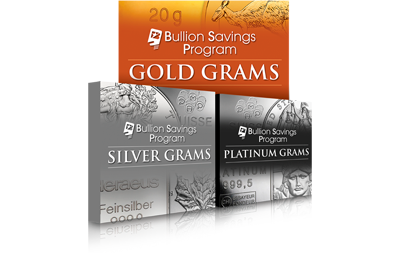
BullionStar’s approach is built the other way round. Gold bought through the Bullion Savings Programme is physically allocated from the outset, backed by physical precious metals from BullionStar’s stock inventory. The metal backing BSP is published daily, not just claimed.
Once your holding reaches 100 grams, converting to a physical bar costs nothing. UOB requires the same 100-gram minimum for GSA conversions, but charges a premium it sets at its own discretion, on the day you ask. Same threshold, different price: one is free, the other isn’t fixed at all.
Converted BSP grams can be shipped internationally, collected from the Bullion Center in Singapore, or stored in Le Freeport, BullionStar’s high-security vault storage facility in Singapore.
Gold Savings Accounts vs Owning Physical Gold
UOB isn’t unique. The same basic idea, a gold balance, managed through an account, without necessarily owning specific metal, shows up under different names worldwide.
Other Names, Same Pattern
Some banks and dealers call it a gold accumulation plan: a recurring purchase plan that builds up a gold balance over time, common in parts of Asia. The mechanics look a lot like a GSA. The underlying question is the same one: is that balance allocated to you, or just a claim?
Funds add another layer again. The Nippon India Gold Savings Fund, a popular gold product in India, is a good example. It doesn’t hold physical gold directly. It holds units of a gold ETF instead. So the chain runs: you own fund units, the fund owns ETF units, and the ETF owns the gold. Three steps between you and the metal, not one.
What Owning Physical Gold Actually Means
Owning physical gold properly is simple to define: it’s specific, identifiable metal that’s yours, from the moment you buy it. No extra step is needed to make it real. No conversion process. No fund, or ETF, or bank sitting between you and it.
Every product in this category, gold savings accounts, gold accumulation plans, gold savings funds, adds some version of that extra layer. Sometimes it’s thin, a real conversion path exists, just gated by minimums and fees, as with UOB’s GSA. Sometimes it’s thick, a fund of a fund of an ETF. Either way, it isn’t the same as holding the metal directly, or having it allocated to you from day one. Learn more about why physical gold beats paper gold.
The Bullion Savings Programme Compared
Put every product from this page side by side, and the pattern is easy to see.
| UOB Gold Savings Account | Other Bank Gold Accounts & Funds | BullionStar BSP | |
|---|---|---|---|
| Allocation | Not described as allocated to specific bars | Typically pooled or fund-based; rarely allocated | Allocated from the outset; backing published daily |
| Redemption | Possible, in 100g increments, non-CPF funds only, in person at the Gold Counter | Often limited or unavailable (fund units, not gold) | Free, once your holding reaches 100g (gold), 15kg (silver), or 1kg (platinum) |
| Storage / admin fee | 0.25% p.a. of highest monthly balance, plus GST | Varies; sometimes bundled into a fund’s expense ratio | 0.09% p.a. (gold); 0.19% p.a. (silver & platinum) |
| Minimum | 5 grams to open and maintain | Varies by provider | 1 gram |
| Buy-back spread | Not separately published; built into the quoted price | Varies; sometimes layered with fund fees on top | Shown live on every product page — price premium and spread displayed explicitly, updated in real time |
Three rows are worth pausing on. Storage costs three times as much through UOB as through BSP, at 0.25% versus 0.09% a year for gold. Redemption isn’t free anywhere except BSP, UOB charges an undisclosed, bank-set premium, and most fund-based products don’t offer physical redemption at all. And where UOB’s spread sits somewhere inside a price it sets at its own discretion, BSP publishes its price premium and spread live on every product page, for gold, silver, and platinum alike.
None of this requires a lump sum to get started. BullionStar’s AutoInvest turns BSP into a regular purchase plan: set an amount and a frequency, and it buys automatically from there. Combining the two allows you to steadily build your holding over time, without having to time the market.
Frequently Asked Questions
What is a gold savings account?
A gold savings account is a bank account that tracks the gold price and lets you buy, hold, and sell a balance in grams, all through your regular banking app or branch. It’s convenient, but it isn’t automatically the same as owning specific, physical gold.
Is a UOB gold savings account allocated or unallocated?
UOB’s own account terms don’t describe GSA holdings as allocated. Converting to physical gold requires a separate, gated process, rather than simply withdrawing metal you already hold outright. A GSA balance isn’t the same thing as holding identifiable, allocated gold from day one.
Can I convert a gold savings account into physical gold?
With UOB’s GSA, yes, but with conditions: 100-gram increments, non-CPF funds only, completed in person at the Gold Counter, at a premium UOB sets at its own discretion. Many similar products elsewhere, gold accumulation plans and gold savings funds among them, don’t offer physical redemption at all.
What fees does a gold savings account charge?
UOB’s GSA charges 0.25% per annum on the highest monthly balance, plus GST, on top of a buy-sell spread built into the price you’re quoted rather than shown separately. Other providers vary, and fund-based products can add a fund expense ratio on top of that again.
Is a gold savings account safe if the bank fails?
Gold savings account balances typically aren’t covered by deposit insurance schemes like Singapore’s SDIC, since they aren’t currency deposits. If a holding isn’t allocated to specific metal, it would likely be treated as a general claim in an insolvency, one among many, rather than protected as property that’s already yours.
What is the minimum to open a gold savings plan?
It varies by provider. UOB’s GSA requires 5 grams to open and to maintain. BullionStar’s BSP starts from 1 gram, with AutoInvest able to build on that with regular purchases from there.
Open a Bullion Savings Programme Account
Everything on this page comes down to two differentiators. Your gold is physically allocated from the outset, not a claim sitting inside someone else’s balance sheet. And redemption is free, once you reach the minimum weight, not gated behind an undisclosed premium you only find out about when you ask.
Opening a BSP account takes a few minutes, and you can start from a single gram. Pair it with AutoInvest to build a regular purchase habit, the same way you might set up a standing order into a savings account, except what’s accumulating is metal you actually own. You can check live pricing, including the premium and spread, on the gold, silver, and platinum product pages before you start.
Popular Blog Posts by Gold & Silver 101
 An Introduction to Gold & Silver Investing
 Should I Invest in Gold, Silver, or Platinum Bullion?
 Gold Coins vs Gold Bars: Which Is Better?
 How Is Gold Taxed in Singapore? The IPM GST Exemption Explained
 Storing Precious Metals, Gold, and Silver Bullion
 Gold & Silver Bullion Investing FAQs
 Karat vs Carat: What’s the Difference?
 Gold Purity: The Complete Guide
 How Much Gold Is There in the World?
 Junk Silver: What It Is and What It’s Worth