 Contact
 Help
Help







How to Invest in Silver: A Complete Guide
 Gold & Silver 101



Once you’ve decided silver deserves a place in your portfolio, the next question is where to actually start. A quick search returns a daunting number of options. Physical bars, physical coins, vaulted storage, ETFs, mining stocks, even futures, each with its own costs, risks, and trade-offs that aren’t always obvious upfront.
BullionStar has been helping customers buy and store physical silver since 2012. This guide walks through the different ways to invest in silver, what each one actually gives you, the risks involved, when timing is worth thinking about, and how to buy at the lowest realistic cost compared to the silver spot price.
If you’re still weighing whether silver belongs in your portfolio at all, rather than how to buy it, our Silver Investment: Complete Guide covers that case in full.
Please note that BullionStar does not provide investment or financial advice. The information below is for informational purposes only. Your individual circumstances and goals will always be the most important factors in any investment decision.
The Best Ways to Invest in Silver, Compared
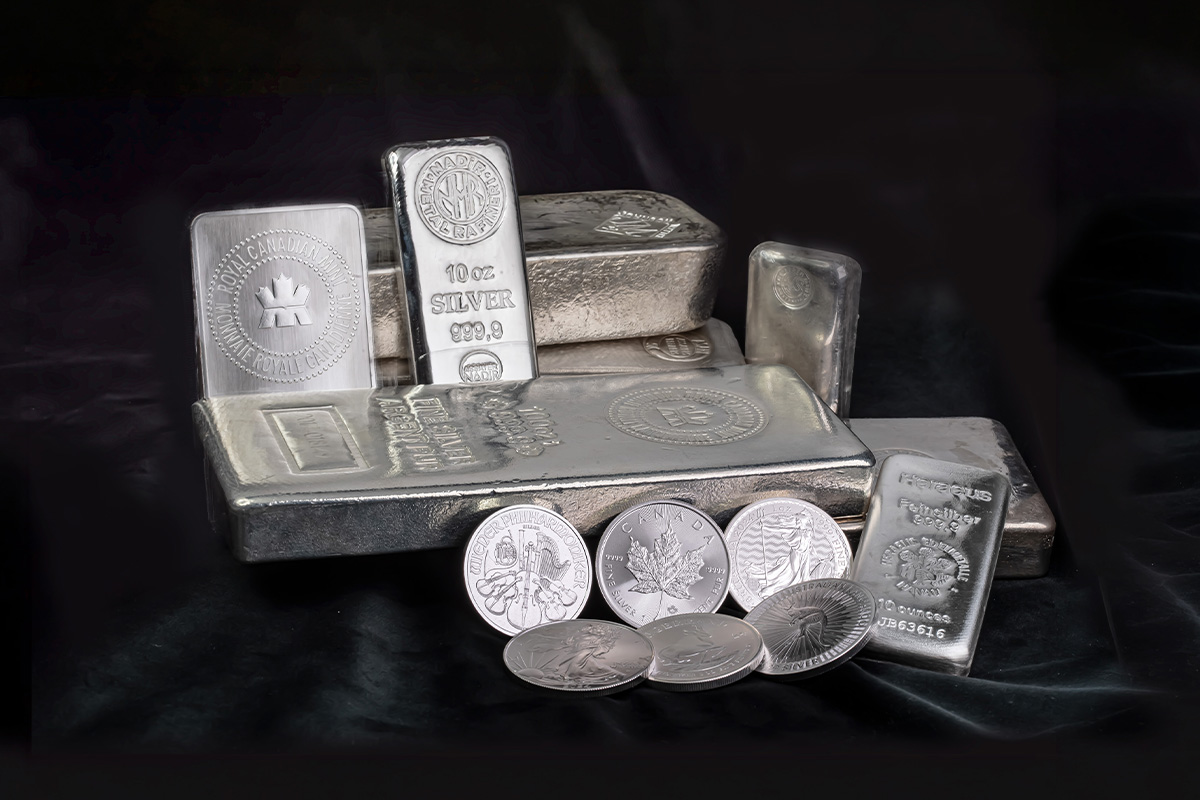
There are six realistic routes into silver: physical bars, physical coins, vaulted/allocated storage, ETFs, mining stocks, and futures. They aren’t equally good starting points, and which is “best" depends heavily on what you’re actually optimising for, cost, safety, or liquidity rarely all point in the same direction at once. Here’s how they stack up before we go into any of them in detail.
| Cost | Counterparty Risk | Liquidity | Storage | |
|---|---|---|---|---|
| Physical bars | Lowest premium of any route | None | High via buy-back, though selling in small amounts means selling the whole bar | Self-storage or paid vault storage |
| Physical coins | Higher premium than bars | None | High; easy to sell in small increments | Self-storage or paid vault storage |
| Vaulted / allocated | Bar-level premium plus a storage fee | None, if genuinely allocated | Very high; sell without arranging to move physical metal | Included, professionally managed |
| Silver ETFs | Ongoing expense ratio plus brokerage fees | Fund and custodian risk | Very high; trades like a stock | None needed, and none available; you don’t hold the metal |
| Mining stocks | Brokerage fees only | High: company risk, operations, management, jurisdiction | Very high | None needed |
| Futures | Margin, roll costs, contract fees | High: exchange and leverage risk | Very high for active contracts | None needed; requires active margin management |
The pattern worth noticing: the three physical routes are the only ones with no counterparty risk, and the three paper routes are the only ones with no storage to arrange. Nothing here is free of trade-offs; the honest answer to the best way to invest in silver is “best for your priorities." We believe physical silver offers the best way for most investors, but the next two sections cover both sides properly before we get to that recommendation.
Physical Silver: Bars vs Coins vs Vaulted
Within physical silver, there are really three decisions layered on top of each other: bars or coins, which size, and whether you store it yourself or pay someone else to.
Whichever you choose, verify what you’re buying. Investment-grade silver should be at least 999 fine (99.9% pure), and should come from a recognised sovereign mint or an LBMA-listed refiner, with a maker’s mark and, on bars, a serial number you can check against the product. It’s a five-minute check that rules out most of what goes wrong with silver bought outside a reputable dealer.
Silver Bars
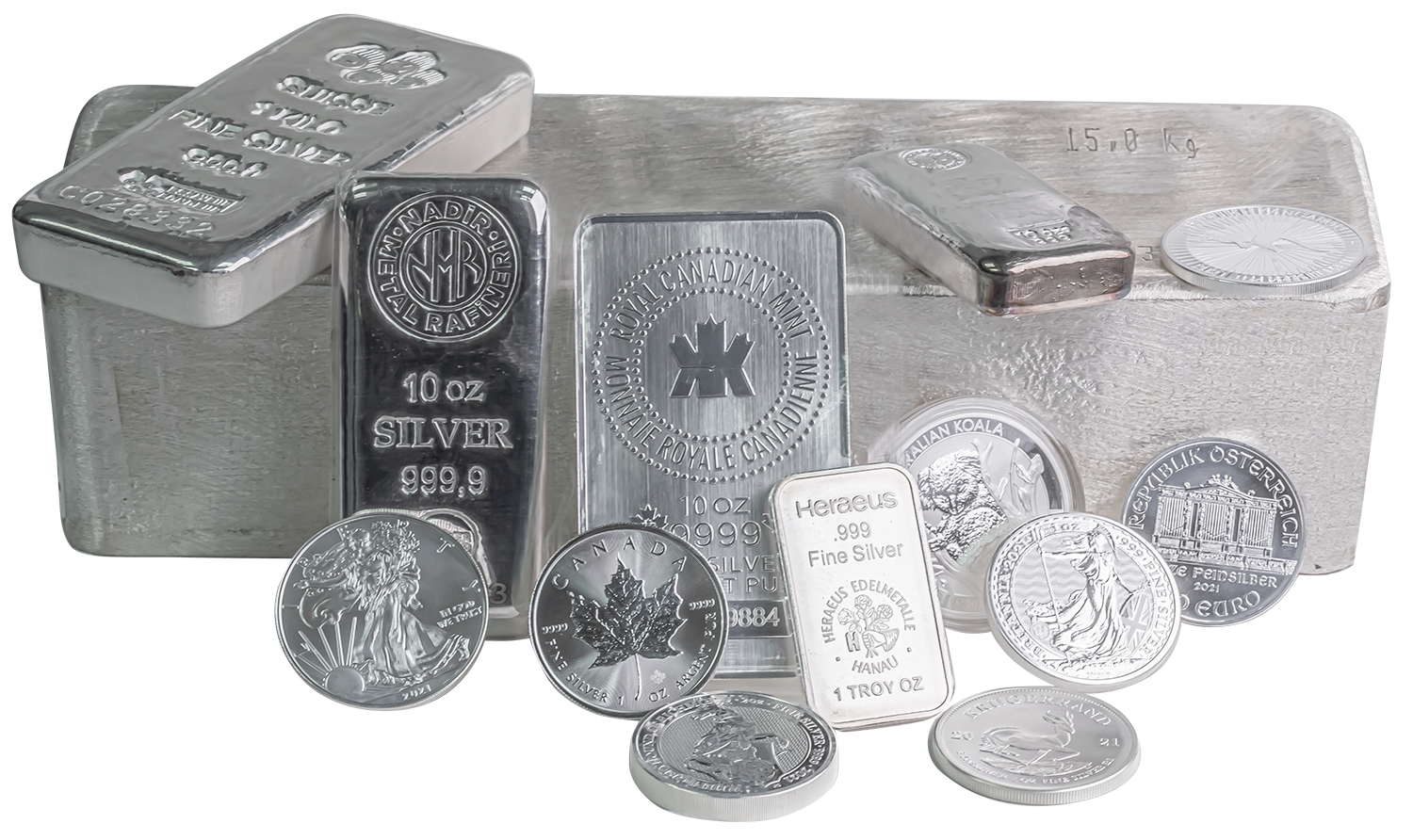
Bars are the most cost-efficient way to own a given amount of silver, and the premium drops as size goes up. Small 1 oz bars typically carry a 10–15% premium over spot; 100 oz bars run closer to 3–6%; and 1,000 oz Good Delivery bars can get as low as 1–3%.
BullionStar’s silver bars range from 5g up to 1000 oz (31.104 kg), sourced from refiners including Heraeus, PAMP, Metalor, and Argor-Heraeus. If minimising cost per ounce is the priority and you’re comfortable holding a fixed unit rather than something you can peel off in smaller pieces, bars are the answer. For anyone specifically chasing the lowest possible entry cost, our 1kg No-Spread Silver Bar goes a step further: for orders of 100 bars or more, the buy and sell price are identical, removing the spread on top of an already-low bar premium.
Silver Coins
Coins can cost more, typically 7–20% over spot depending on the mint and design, but that premium buys real flexibility. Coins sell in small, standard increments, and well-known designs are instantly recognisable to any dealer or private buyer, which matters if you ever need to sell somewhere other than where you bought.
BullionStar’s silver coins range covers the major sovereign mints, including the Canadian Silver Maple Leaf, Australian Silver Kangaroo, UK Silver Britannia, Austrian Silver Philharmonic, American Silver Eagle, and Chinese Silver Panda. Coins are often legal tender, which can also offer tax benefits depending on where you live. If you prefer flexibility, or want something easier to gift or trade informally, coins are worth the extra premium.
For the full breakdown of when bars make more sense than coins and vice versa, see our guide on Should I Invest in Precious Metals Bars or Coins?
Vaulted and Allocated Storage
While the ability to take direct ownership and control of your investment is one of the major benefits of physical silver, it’s not suitable for everyone. Fortunately, buying silver bars or coins doesn’t mean you have to store them yourself.
BullionStar’s Singapore vault storage keeps your silver in Le Freeport, allocated to you specifically rather than pooled, for 0.59% per annum. It’s worth considering by default rather than as an afterthought. Silver’s bulk makes secure self-storage a genuinely bigger undertaking than it is for gold, covered in detail in our Silver Investment: Complete Guide. For anyone who’d rather build a position gradually than buy a whole bar or coin at once, the Bullion Savings Programme lets you buy silver by the gram. Both options can be augmented with AutoInvest, turning them into a recurring purchase.
Of the three, this is the route we’d point most people toward: a bar or a mix of bars and coins, held in professional vault storage rather than at home, gives you full ownership with none of the practical burden of storing a genuinely bulky metal yourself. For those who’d still like to have some of their silver in their possession, a mix of personal and professional storage can give you the best of both worlds.
Paper Silver: ETFs, Mining Stocks and Futures
None of what follows involves owning physical silver. That’s not a criticism, these are legitimate, widely used ways to get exposure to the silver price, just a distinction worth being clear about before comparing them.
Silver ETFs
Silver ETFs trade on a stock exchange like any share, bought and sold through a regular brokerage account. The largest, iShares Silver Trust (SLV), holds around $36 billion in assets with a 0.50% annual expense ratio, with its silver held in vaults operated by JPMorgan Chase.
Most silver ETFs, SLV included, don’t allow retail investors to redeem shares for physical metal; you own a claim on a fund’s holdings, not identifiable silver you could ask to be handed over. A smaller number of funds, notably Sprott’s, are structured differently and do allow physical redemption, though typically only above large minimum holding sizes well beyond most individual investors. Either way, you’re relying on the fund and its custodian, not holding the metal yourself.
There’s also a privacy dimension worth naming: an ETF or brokerage holding is visible to your broker and, by extension, regulators, while a physical holding in your own name or possession isn’t reported anywhere.
Silver Mining Stocks
Buying shares in a silver mining company (names like Pan American Silver, Hecla Mining, First Majestic Silver, or Fresnillo come up often in this space), works through a normal brokerage account the same way any stock purchase does. It’s worth being clear about what you’re actually buying: shares of a company, not silver.
Mining stocks are leveraged to the silver price, so they can rise or fall by more than silver itself, but that leverage runs in both directions, and comes with risks that have nothing to do with the metal: operational setbacks, management decisions, labour disputes, and jurisdictional or political risk in wherever the company operates.
Silver Futures
Silver futures contracts let you take a leveraged position on the future price of silver through a margin account, typically on exchanges like COMEX. They’re the most technical route on this page, and aren’t recommended for most investors. Profits and losses are amplified by leverage, contracts expire and need to be rolled forward if you want to maintain a position, and margin calls can force you to add funds or close a position at a significant loss. This is a route built for experienced, active traders, not something we’d point a first-time silver buyer toward.
Physical silver offers something none of these three can: tangible wealth that doesn’t depend on anyone else’s promise to pay. Our guide on why physical gold and silver beats paper covers that argument in full.
When to Buy Silver
“Should I buy silver" can mean two different questions: whether silver belongs in your portfolio at all, or whether now specifically is a good moment. This section is about the second one; for the first, see Is Silver a Good Investment?
The honest answer to “is now a good time to buy silver" is that nobody, including us, can reliably call the bottom or top of the silver market. Silver’s own recent history makes the point: it ran to an all-time high near $123 an ounce in early 2026, then pulled back by roughly 44% within months. Anyone claiming they knew that top or that bottom in advance is telling you after the fact, not before.
What’s more useful than trying to time silver in isolation is the gold-silver ratio, how many ounces of silver it takes to buy one ounce of gold, as a framework for relative rather than absolute timing. At a ratio above its long-run average, currently around 67.6 against a roughly 60.5 average since 1971, silver looks cheap relative to gold by historical standards.
This is one of the reasons some investors weight new purchases toward silver over gold at levels like this. It’s a lens, not a guarantee, and our full Gold Silver Ratio guide covers how to use it and where it’s led investors wrong.
For most people, the more reliable answer to “when" isn’t a single date at all. The best time to buy silver is consistently, rather than perfectly. Buying on a fixed schedule rather than trying to pick a moment, the same dollar-cost averaging approach covered earlier with BSP and AutoInvest, removes the need to get the timing right in the first place.
Buying Silver at the Lowest Cost
Four separate costs stack on top of the spot price when you buy silver: the premium, the buy-sell spread, storage, and tax. Our Silver Investment: Complete Guide covers all four in detail; here’s the short version, and where BullionStar specifically addresses each.
- Premium. Larger bars carry a lower premium than coins or small bars. BullionStar’s silver bars range from 5 grams up to 100kg, so you can choose the size that fits your budget, but for cost-conscious investors larger bars offer the lowest premiums.
- Spread. The 1kg No-Spread Silver Bar eliminates the buy-sell spread entirely for orders of 100 bars or more.
- Tax. Silver meeting the Investment Precious Metals (IPM) purity standard is GST-exempt in Singapore, unlike in the UK or EU, where investment gold is VAT-exempt but silver typically isn’t. See our guide on precious metal GST exemption for the full detail.
- Storage. Keeping silver in Singapore vault storage, rather than importing it home, avoids the import VAT or duty that can otherwise erase whatever you saved on premium and spread in the first place.
BullionStar also runs periodic promotions letting customers buy specific silver products directly at spot price, with no premium at all. Put together, and combined with buying in Singapore specifically, this is about as close to genuinely low-cost silver ownership as the market gets for a retail buyer.

Frequently Asked Questions
What is the best way to invest in silver?
For most people, physical silver, bars or coins, held in professional vault storage rather than at home, offers full ownership with no counterparty risk and none of the practical burden of storing a bulky metal yourself.
Is physical silver better than a silver ETF?
Neither is universally better; they serve different purposes. Physical silver carries no counterparty risk and is fully yours to hold, while a silver ETF offers convenient, exchange-traded exposure without arranging storage, at the cost of fund and custodian risk, and typically without the ability to redeem for physical metal.
How much silver should a beginner buy?
There’s no fixed minimum, and starting small is a reasonable way to get comfortable with the process. A single small coin or bar, or a BSP gram balance from as little as 1 gram all let you start modestly rather than committing to a large purchase upfront. How much silver overall belongs in your portfolio is a separate question, covered in our Silver Investment: Complete Guide.
Should I buy silver bars or silver coins?
It depends on your priorities. Bars typically carry a lower premium and are more cost-efficient for a given amount of silver. Coins can cost more but sell in smaller increments and can have additional tax benefits in some countries. Our full Should I Invest in Precious Metals Bars or Coins? comparison covers both metals.
Is now a good time to buy silver?
Nobody can reliably call a market top or bottom, including us. Silver has pulled back roughly 44% from its 2026 high, which is why some investors see current levels as more attractive than earlier this year. Rather than trying to time a single purchase, most investors either use the gold-silver ratio as a relative-value framework or buy on a fixed schedule through dollar-cost averaging.
What is the cheapest way to buy silver?
Combine a larger bar size to minimise the premium, BullionStar’s No-Spread 1kg bar to eliminate the buy-sell spread, IPM-exempt purity to avoid GST, and Singapore vault storage to avoid import tax on the way home. One or all of these methods offer a cheap way to buy silver.
Choose Your Route Into Silver
Of everything covered in this guide, physical silver, held in allocated vault storage rather than at home, is the route we’d point most people toward: full ownership, no counterparty risk, and none of the practical burden of storing a genuinely bulky metal yourself. ETFs, mining stocks, and futures all have their place, but none of them hand you the metal itself.
Browse our full range of silver bullion, including silver bars for the lowest cost per ounce and silver coins for smaller, more flexible increments, or start gradually with the Bullion Savings Programme, buying by the gram and pairing it with AutoInvest to build a position on a schedule rather than trying to time it.
Store what you buy securely and tax-efficiently in Singapore with vault storage, and when you’re ready to sell, BullionStar’s buy-back service means you’re never left trying to find your own buyer. Have questions? Get in touch with our team at support@bullionstar.com, who will be happy to assist.
Popular Blog Posts by Gold & Silver 101
 An Introduction to Gold & Silver Investing
 Should I Invest in Gold, Silver, or Platinum Bullion?
 Gold Coins vs Gold Bars: Which Is Better?
 How Is Gold Taxed in Singapore? The IPM GST Exemption Explained
 Storing Precious Metals, Gold, and Silver Bullion
 Gold & Silver Bullion Investing FAQs
 How Much Gold Is There in the World?
 Junk Silver: What It Is and What It’s Worth
 999 Fine Silver: Investment-Grade Silver Explained
 Gold Savings Account vs Bullion Savings