 Contact
 Help
Help






Junk Silver: What It Is and What It’s Worth
 Gold & Silver 101



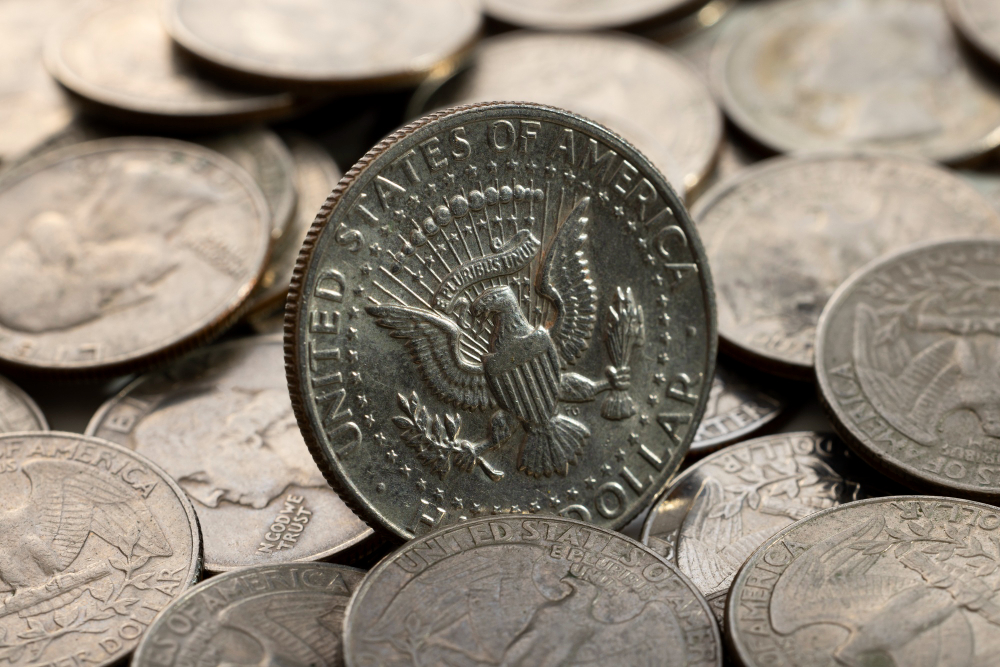
Junk silver is an American term, and a misleading one. It refers to pre-1965 United States circulating coinage. The dimes, quarters and half dollars that were struck in 90% silver before the Coinage Act of 1965 ended silver dimes and quarters, and cut the half dollar to 40%. The word “junk" describes the absence of any collector premium, not the quality of the metal.
The combination of small denominations and a known silver content is why junk silver has a following, particularly in the United States, where it’s long been treated as an alternative route into silver coins. It divides into small, recognisable units, and was designed to circulate, which appeals to anyone thinking about silver in terms of barter and self-reliance as much as a portfolio allocation.
It also comes with trade-offs that are less obvious than they look, and they aren’t the ones people expect. Junk silver is often competitively priced to buy, sometimes at or below melt value. Where it costs you is on the way out, because the refining chain that turns coins back into metal would rather handle 999 fine silver, and dealers price that reality into what they’ll pay you.
BullionStar doesn’t stock junk silver coins, and doesn’t buy any silver items below 925 sterling silver purity. For readers in Singapore in particular, it’s worth knowing that 90% silver coins fall below the 99.9% purity threshold for the Investment Precious Metals GST exemption, so they attract 9% GST where a 999 silver bullion coin carries none.
This guide covers which coins actually contain silver and in what quantity, how to work out what a given amount of junk silver is worth today, and an honest assessment of whether it’s worth buying at all compared with the 999 bullion alternatives.
Please note that BullionStar does not provide investment, financial or tax advice. The information below is for informational purposes only. Your individual circumstances and goals will always be the most important factors in any investment decision.
What Is Junk Silver?
Junk silver refers to US circulating coinage that contains real silver but carries no collector value beyond the metal itself. In practice that means three groups:
- Pre-1965 dimes, quarters and half dollars struck in 90% silver
- Half dollars minted between 1965 and 1970 at 40% silver
- 35% silver “war nickels" produced from 1942 to 1945
Why It’s Called Junk
The name has nothing to do with condition or quality. It describes how the coins are priced.
Coins are bought for one of two reasons. Some are bought for what they are, as collectibles, where date, mint mark, rarity and condition set the price. Others are bought for what they contain, where the price is simply the metal content multiplied by the spot price. Junk silver sits firmly in the second category. A worn 1943 quarter has no scarcity, no story and no grading value, so nobody pays a collector premium for it, and it trades purely on the 0.17875 troy ounces of silver inside it.
That’s also the cleanest way to draw the boundary of what counts. Composition alone doesn’t decide it. Morgan and Peace silver dollars are 90% silver, the same as a pre-1965 quarter, but even common, heavily worn examples usually trade above their melt value because there’s a collector market underneath them. That makes them silver coins rather than junk silver, and it’s why bags sold as junk silver rarely contain them. If a coin’s price is set by anything other than its metal, it has left the category.
Junk Silver and “Constitutional Silver"
You’ll also see junk silver called constitutional silver, and the two terms mean the same thing. The alternative name comes from Article I, Section 10 of the US Constitution, which provides that no state shall “make any Thing but gold and silver Coin a Tender in Payment of Debts."
That phrasing matters to a particular kind of buyer. These coins were the last money in general American circulation that was actually made of precious metal. That gives them a significance beyond their silver content for anyone interested in sound money, monetary history, or the idea of holding something that once functioned as legal tender in its own right rather than as a token.
Who Buys It, and Why
Junk silver has a settled place in the American bullion market as an alternative route into silver coins, and its appeal comes down to three practical qualities.
It’s genuinely divisible. A single 90% dime holds about a fourteenth of a troy ounce, which is a far smaller unit of silver than any bullion coin offers, and a mixed bag lets you sell or trade in small increments rather than a full ounce at a time.
It’s recognisable without paperwork. A bullion bar relies on its assay card and refiner’s hallmark to prove what it is. A pre-1965 quarter proves itself by being a US quarter with a date before 1965, which anyone can check in seconds without any specialist knowledge.
Lastly, it was designed to circulate, which is why junk silver features so heavily in discussions of preparedness and barter. Coins that spent decades passing hand to hand as money have an obvious appeal to anyone thinking about silver in terms of everyday exchangeability rather than portfolio weighting.
None of that translates especially well outside the United States, which is why the term is so much less understood elsewhere. Other countries had their own pre-debasement silver coinage, and their own dates at which silver left circulation, but they don’t share the recognisability that makes US coinage work this way, and no equivalent secondary market has developed at anything like the same scale.
Which raises the practical question: which coins actually contain silver, and how much?
Junk Silver Coins: Which Ones Contain Silver
For dimes and quarters, the date does all the work. Anything dated 1964 or earlier is 90% silver. Anything dated 1965 or later contains none. Half dollars are the exception that catches people out, and nickels are the exception nobody expects.
| Coin | Years | Composition | Silver per coin | Silver per $1 face value |
|---|---|---|---|---|
| Dime (Mercury, Roosevelt) | 1964 and earlier | 90% silver | 0.0723 ozt (2.25 g) | 0.7234 ozt |
| Quarter (Standing Liberty, Washington) | 1964 and earlier | 90% silver | 0.1808 ozt (5.63 g) | 0.7234 ozt |
| Half dollar (Walking Liberty, Franklin, Kennedy 1964) | 1964 and earlier | 90% silver | 0.3617 ozt (11.25 g) | 0.7234 ozt |
| Half dollar (Kennedy) | 1965–1970 | 40% silver | 0.1479 ozt (4.60 g) | 0.2958 ozt |
| Nickel (“war nickel") | 1942–1945 | 35% silver | 0.0563 ozt (1.75 g) | 1.1253 ozt |
| Silver dollar (Morgan, Peace) | 1878–1935 | 90% silver | 0.7734 ozt (24.06 g) | 0.7734 ozt |
| Dimes, quarters, halves | 1971 onwards | Copper-nickel clad | None | None |
Those figures are mint specifications, as the coins left the press. For pricing the 90% group, dealers work from 0.715 troy ounces per dollar of face value rather than 0.7234, to allow for circulation wear.
The Four Things People Get Wrong
The 1965 cut-off doesn’t apply to half dollars. Dimes and quarters lost their silver completely in 1965, but the Kennedy half dollar kept 40% silver through to 1970. A 1967 half dollar is worth holding. A 1967 quarter isn’t.
War nickels hold more silver per dollar of face value than 90% coins do. A dollar of war nickels contains 1.1253 troy ounces against 0.7234 for a dollar of dimes, because a nickel is a physically large coin for a five-cent denomination. Twenty of them hold more silver than four silver quarters. They’re also the easiest silver coins to find by accident, since they circulated for decades afterwards and few people check nickels. To spot one, look for an unusually large mint mark above the Monticello dome on the reverse. Those years are the only time a P mint mark appeared on a nickel, so a P above Monticello is a guaranteed 35% silver coin.
Silver dollars aren’t on the same standard. A Morgan or Peace dollar holds 0.7734 troy ounces, not 0.7234, so including them in a face-value calculation understates the total. As covered above, they usually trade above melt anyway, which puts them outside junk silver in practice.
Post-1970 silver coins do exist, but they aren’t circulating coinage. The US Mint has produced silver proof and collector issues since, including 40% silver Eisenhower dollars and Bicentennial sets, and modern 90% and 999 silver proof sets. Those are collector products sold at a premium, not junk silver, and they’re rarely found loose.
Where Junk Silver Is Bought and Sold
Junk silver trades almost entirely within the United States, through coin shops, established bullion dealers and marketplace listings, and it’s sold in a way that’s unfamiliar if you’re used to buying bullion by weight.
It’s priced by face value, not by ounce. You’ll see it offered as $1, $10, $100 or $1,000 face value lots, or quoted as a multiple of face. A price of “48x face" means $48 for every dollar of face value. Converting that to a premium takes one step: work out melt value at 0.715 troy ounces per dollar of face, then compare.
That’s worth doing, because the spread between sellers of an identical product is remarkably wide. Comparing dealer listings for $1 face value 90% coins at the time of writing, prices ranged from roughly 6% below melt value to more than 13% above it, against a spread of only a couple of percentage points across dealers for a 1 oz American Silver Eagle. With bullion, shopping around saves you a little. With junk silver, it can be the difference between a good buy and a poor one.
BullionStar doesn’t stock junk silver and doesn’t buy silver below 925 purity, so this isn’t a market we participate in. For readers in Singapore, the more practical comparison is against 999 silver bullion, which qualifies for the IPM GST exemption where 90% coin does not.
What Is Junk Silver Worth Today?
Junk silver has no fixed price. It’s worth its silver content multiplied by the current silver price, which moves continuously through every trading day. What doesn’t change is the calculation, and it’s a single multiplication once you know which coins you’re holding.
The Face Value Multiplier Method
Every coin type converts face value into silver at a fixed rate. Find your coin type, multiply your face value by the figure below, then multiply the result by the live silver price.
| What you’re holding | Troy ounces of silver per $1 of face value |
|---|---|
| 90% dimes, quarters and half dollars (1964 and earlier) | 0.715 |
| 40% Kennedy half dollars (1965–1970) | 0.2958 |
| War nickels (1942–1945) | 1.1253 |
| Morgan and Peace silver dollars | 0.7734 per coin |
The 0.715 figure for 90% coin is the worn trade standard rather than the mint specification of 0.7234, because these coins circulated for decades and lost a little metal doing it. It’s the number dealers and refiners price from, so it’s the number to use. The 40% and war nickel figures are mint specifications, as no equivalent worn convention is in general use for them.
A worked example. Say a jar contains 40 silver quarters, 30 silver dimes, 10 silver half dollars, six Kennedy halves from 1968, and 20 war nickels. Sort by type, total the face value of each, and multiply:
| Coins | Face value | Multiplier | Silver |
|---|---|---|---|
| 40 silver quarters | $10.00 | 0.715 | 7.1500 ozt |
| 30 silver dimes | $3.00 | 0.715 | 2.1450 ozt |
| 10 silver half dollars | $5.00 | 0.715 | 3.5750 ozt |
| 6 Kennedy halves (40%) | $3.00 | 0.2958 | 0.8874 ozt |
| 20 war nickels | $1.00 | 1.1253 | 1.1253 ozt |
| Total | $22.00 | 14.8827 ozt |
At an illustrative silver price of $60 per troy ounce, that jar holds just under $893 of silver. $22 of face value, and roughly forty times that in metal.
You can check the current figure on our live silver price chart, which updates through the trading day.
Melt Value Isn’t the Price You’ll Get
The number you’ve just worked out is melt value, the theoretical worth of the metal inside the coins. It isn’t a bid and it isn’t an offer. It’s the midpoint that both sides of a real transaction price away from.
If you’re buying, you’ll usually pay above melt. How far above varies enormously between sellers. Comparing dealer listings for $1 face value of 90% coin while drafting this guide, prices ran from around 6% below melt value at the cheapest end to more than 13% above it at the dearest, on an identical product.
If you’re selling, expect to receive at or below melt. That isn’t dealers being difficult, it’s a bottleneck further down the chain. Refiners turn coin back into metal, and they’d rather process 999 bullion, which runs through faster and more efficiently than 90% and 40% silver.
When silver prices spike and selling surges, refining capacity fills up, and refiners limit or halt purchases of junk silver and quote payment delays of weeks. A dealer waiting two months to be paid prices that delay into what they’ll offer you today.
The other option is to try and sell privately. You might get a price slightly higher than a dealer’s offer, but the process will be much more hands-on, with additional security implications. For those who prefer the simplicity of buying and selling silver through a professional dealer, 999 fine silver remains the better choice.
Is Junk Silver Worth Buying?
It depends entirely on what you want the silver to do, and the answer is different for an American buyer than for one in Singapore.
The Case For
Divisibility is real. A silver dime holds roughly a fourteenth of a troy ounce. Very little in the bullion market divides that finely, especially at low premiums. If the appeal of silver is being able to part with small amounts at a time, junk silver does something no 1 oz coin or 100 g bar can.
It authenticates itself. A pre-1965 US quarter proves itself by being a US quarter dated before 1965, and needs little specialist knowledge to verify.
The buy price is often competitive. Junk silver isn’t necessarily expensive to acquire. At the cheaper end of the market it can be bought at or even below melt value, which is better than many minted bullion products will offer.
And it was money. For buyers whose interest in silver is bound up with monetary history or preparedness, coins that genuinely circulated as legal tender carry a significance that a modern bullion round doesn’t.
The Case Against
Exiting is the problem, not entering. As covered above, the refining chain would rather handle 999 material, and when selling volumes spike, refiners limit purchases of 90% and 40% coin and quote payment delays of weeks. Dealers price that into their bids. You can find yourself buying near melt and selling below it.
You don’t know precisely what you’re getting. Wear varies from coin to coin, which is why the trade uses 0.715 rather than the mint’s 0.7234. A heavily circulated bag holds slightly less silver than a lightly circulated one, and you’re unlikely to know which you’ve bought until it’s weighed.
Handling is a genuine burden at scale. A $1,000 face value bag weighs about 25 kg and contains 4,000 quarters, or 10,000 dimes. It holds around 715 troy ounces of silver, which is roughly 22 kg of actual metal, so the weight penalty over bars is modest. The counting, sorting, storing and verifying of several thousand individual coins is not.
Outside the US, the market thins dramatically. Recognisability is the whole point of junk silver, and it depends on the buyer recognising the coins. A US quarter that any American dealer will price instantly is a much harder sell elsewhere in the world, and the pool of buyers who’ll compete for it is small, leading to even lower offers.
Junk Silver vs 999 Silver in Singapore
For a Singapore-based buyer, one factor settles it before any of the above.
| 90% junk silver | 999 silver bullion | |
|---|---|---|
| GST | 9%, as it fails the IPM purity test | None, as qualifying IPM |
| Silver content | Varies with wear | Certified and exact |
| Local resale market | Thin | Established |
Junk silver’s central appeal is a low cost of acquisition. In Singapore, 9% GST removes that appeal at the point of purchase, and it applies to the full price. A 999 silver bullion coin bought here carries no GST at all. Even where junk silver could be sourced locally at a keen price, the tax treatment alone would need a discount of 9% just to reach parity, before considering the thinner resale market.
That’s why, for readers in Singapore and many other countries, junk silver is better understood as an interesting piece of American monetary history than as a practical route into silver.
Frequently Asked Questions
What years are junk silver coins from?
Dimes and quarters dated 1964 and earlier are 90% silver. Half dollars are 90% silver up to 1964, and 40% silver from 1965 – 1970. Nickels minted from 1942 – 1945 are 35% silver. No US circulating coin dated 1971 or later contains silver.
How much silver is in a junk silver dime?
A pre-1965 US dime contains 2.25 grams of silver, or 0.0723 troy ounces as minted. The trade prices worn dimes at 0.0715 troy ounces, roughly a fourteenth of an ounce. Ten dimes, being $1 of face value, hold 0.715 troy ounces between them.
How do I calculate junk silver melt value?
Multiply the face value by 0.715 to get troy ounces of silver, then multiply by the current silver price. So $10 of face value in 90% coins holds 7.15 troy ounces. Use 0.2958 for 40% half dollars and 1.1253 for war nickels.
Is junk silver worth more than its face value?
Far more. The silver content is worth many multiples of the denomination stamped on the coin. At a silver price of $60 per troy ounce, $1 of face value in 90% coins holds about $43 of silver, roughly forty-three times its face value, which is why these coins stopped circulating.
Is junk silver GST-free in Singapore?
No. Junk silver is 90% or 40% silver, well below the 99.9% purity required for Singapore’s Investment Precious Metals GST exemption, so it attracts GST at 9%. Only qualifying 999 silver bullion bars and listed coins are exempt.
Is junk silver a good investment?
Junk silver is a popular alternate way of buying silver in the US. It tracks the silver price, and offers small units of silver in an established form. Junk silver has a much thinner market outside of the US however, and lacks the tax benefits of many modern silver bullion coins.
Where can I sell junk silver?
Coin shops and bullion dealers buy it, principally in the United States where the coins are instantly recognised. Expect bids at or slightly below melt value, since refiners prioritise 999 material. Get more than one quote, as spreads between buyers are wide. BullionStar does not buy silver below 925 purity.
Buying and Selling Junk Silver
Junk silver is a genuinely interesting corner of the silver market, and for an American buyer it can make sense. It divides more finely than any bullion product, it authenticates itself without paperwork, and at the right dealer it can be bought at close to the value of the metal inside it.
The caution is on the way out rather than the way in. Bids sit at or below melt value, refiners would rather process 999 material than coin, and the spread between one dealer and the next is wide enough to change the outcome. If you do buy, work out melt value first at 0.715 troy ounces per dollar of face value, and treat that figure as the reference point for every quote you’re given, on both sides of the trade.
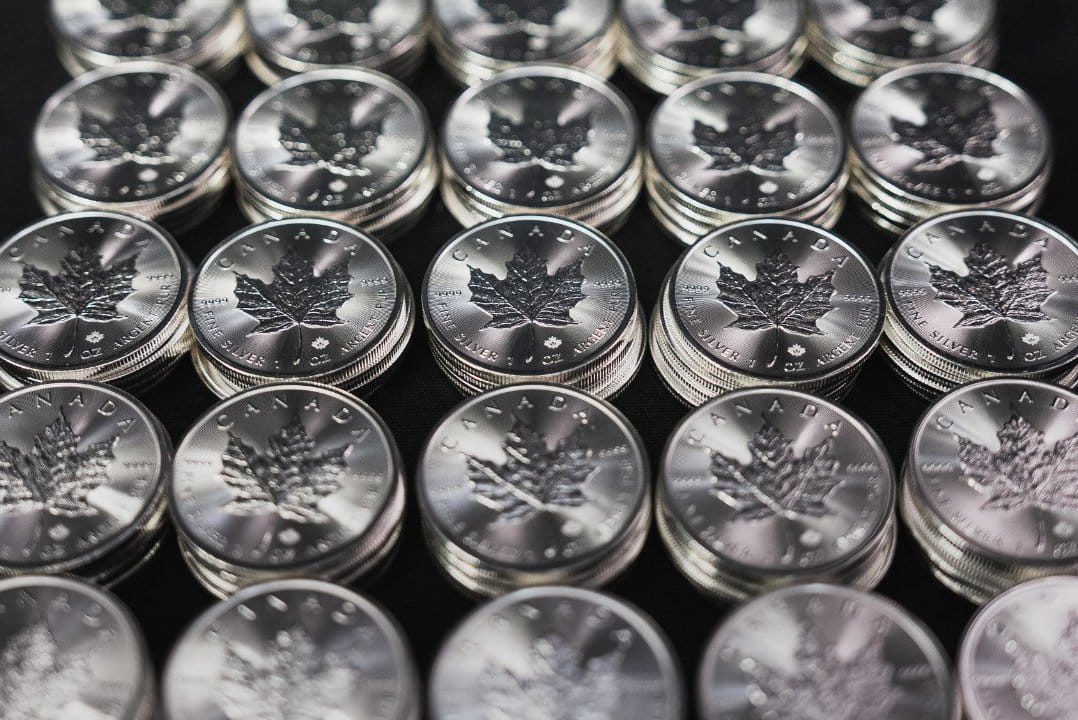
If what you’re after is silver rather than a piece of American monetary history, the practical route is 999 bullion. Browse our silver bars and silver coins, all sold GST-exempt as qualifying Investment Precious Metals, with live buy-back prices published on our sell page so you can see both sides of the spread before committing. If you’d rather handle the metal first, you’re welcome at our Bullion Center at 45 New Bridge Road.
Popular Blog Posts by Gold & Silver 101
 An Introduction to Gold & Silver Investing
 Should I Invest in Gold, Silver, or Platinum Bullion?
 Gold Coins vs Gold Bars: Which Is Better?
 How Is Gold Taxed in Singapore? The IPM GST Exemption Explained
 Storing Precious Metals, Gold, and Silver Bullion
 Gold & Silver Bullion Investing FAQs
 Karat vs Carat: What’s the Difference?
 Gold Purity: The Complete Guide
 How Much Gold Is There in the World?
 Junk Silver: What It Is and What It’s Worth