 Contact
 Help
Help







Gold Price Forecast 2027
 Gold & Silver 101



Gold hit a record high above US$5,500 per ounce in early 2026, following its strongest annual performance since 1979, and the question now is how far the rally can extend. This guide sets out the gold price forecast for 2027, drawing on predictions from major banks and institutional analysts including J.P. Morgan, Goldman Sachs, and UBS. Current forecasts range from US$5,000 to US$5,600 per ounce, with some longer-range projections reaching significantly higher.
Forming a view on the 2027 gold price means understanding what drives it. Analyst predictions are a useful input, but so is an awareness of the key macro factors — interest rates, dollar strength, inflation, and central bank demand — that will shape the market through the year. We cover both in this guide.
No forecast is guaranteed. Gold is sensitive to geopolitical events and macroeconomic shifts that can move prices quickly and without warning, as 2026 demonstrated. What follows is an informed assessment of where analysts expect the gold price to go in 2027, and the factors most likely to determine whether those targets are met.
2027 Gold Price Forecast
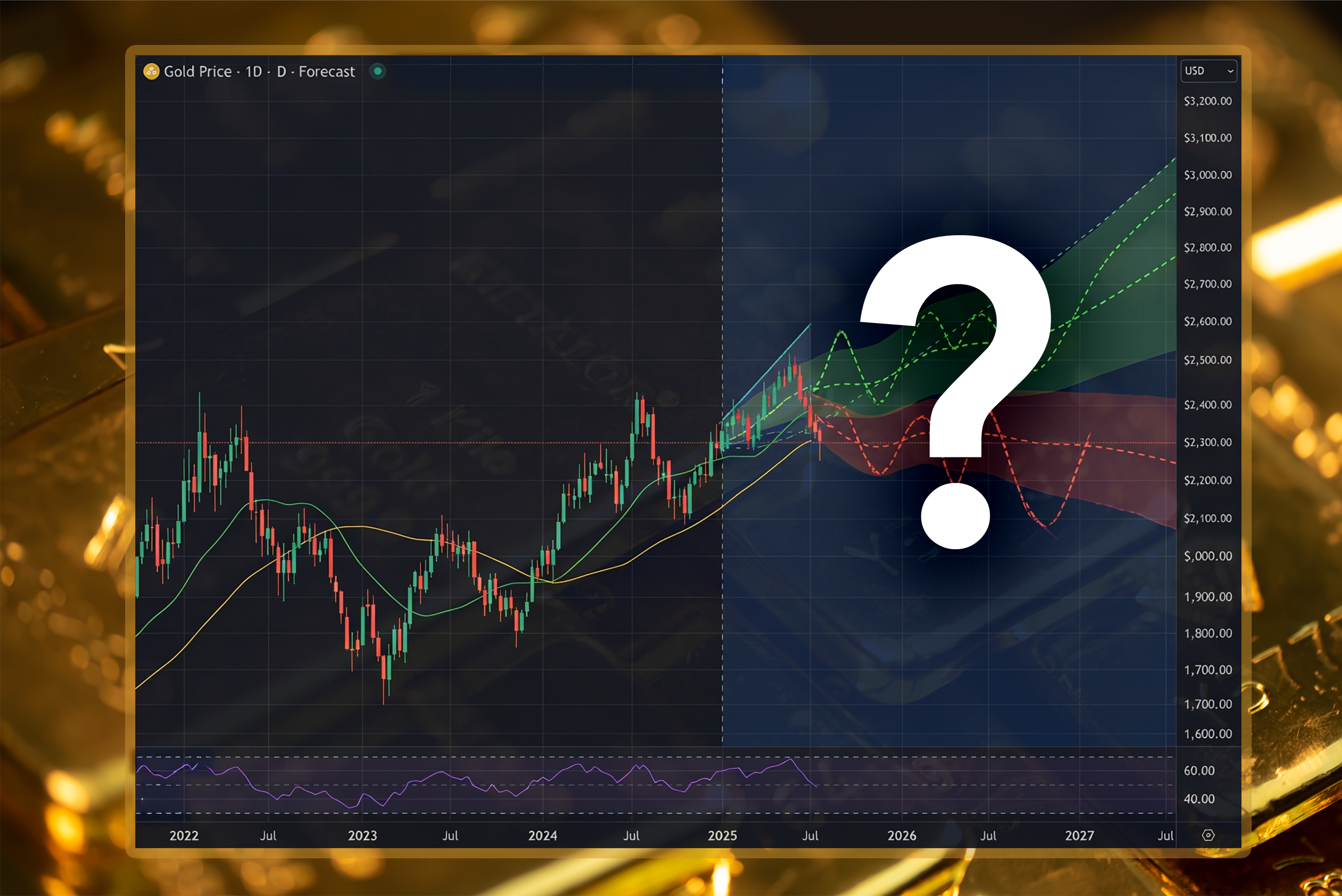
Gold set a new all-time high above $5,500 per ounce in January 2026, and the outlook for 2027 remains broadly bullish. Expectations have moderated however in recent months as markets now price in US interest rate hikes rather than cuts, driven largely by inflationary pressure from the Iran conflict.
Among mainstream institutional forecasts, the 2027 gold price range sits between $5,000 and $5,600 per troy ounce. J.P. Morgan and UBS both target $5,400/oz by year-end 2027, Goldman Sachs forecasts $5,400–$5,600, and Westpac sits at the more cautious end with a $5,000 peak in Q1. Morgan Stanley has not published a specific 2027 year-end figure, but their Q4 2026 base case of $4,800 represents the most conservative anchor in the institutional range. At the upper end, Bank of America includes an extreme demand scenario reaching $8,000, well outside the mainstream consensus.
Gold Price Predictions For 2027
The table below shows some of the main gold price predictions for 2027 from key analysts and financial institutions.
| Institution | 2027 Price Target (USD) | Key Rationale |
| J.P. Morgan | $5,400/oz (end of year) | Central bank demand ~585 tonnes/quarter; ~$5,055 avg in Q4 2026 |
| Goldman Sachs | $5,400–$5,600/oz | De-dollarisation, ~60t/month central bank buying, ETF inflows, debasement trade |
| UBS | $5,400/oz (peak $5,900) | Peak scenario tied to US midterm elections |
| Citi Research | ~$5,000/oz (near-term) | No detailed 2027 breakdown published |
| Westpac | $5,000/oz (Q1 peak) | Expects consolidation after Q1 2027 peak |
| Morgan Stanley | ~$4,800/oz (Q4 2026 base) | Fed rate cuts in Jan/Mar 2027 as further tailwind; no specific 2027 year-end figure |
| Deutsche Bank / Yardeni / Schiff | ~$6,000/oz | Aligned on $6,000 milestone |
| Bank of America | $8,000/oz (extreme scenario) | Extreme demand scenario only |
| InvestingHaven | $6,500/oz | Secular bull market; 50-year chart pattern confirmation |
Goldman Sachs Gold Forecast 2027
Goldman Sachs is among the most bullish of the major banks on gold heading into 2027, with analysts Daan Struyven and Lina Thomas setting a price target of $5,400–$5,600 per troy ounce. The bank raised its forecast from $4,900 to $5,400 in January 2026, and has held firm since.
The Goldman thesis rests on three reinforcing pillars: sustained central bank reserve diversification running at approximately 60 tonnes per month, renewed inflows into gold-backed ETFs, and what the bank calls the “debasement trade" — investor demand for gold as a hedge against dollar weakness and sovereign debt concerns.
Goldman also points to the structural inelasticity of central bank demand as a key differentiator in this cycle. Unlike retail or institutional investors, central banks have shown limited price sensitivity, meaning demand is unlikely to taper significantly even as prices push to new highs.
JP Morgan Gold Forecast 2027
J.P. Morgan Global Research forecasts gold prices to average $5,055/oz in Q4 2026, rising to $5,400/oz by the end of 2027, and flags $6,000/oz as a realistic longer-term target.
Central bank buying is expected to total around 755 tonnes in 2026, below the 1,000+ tonne peaks of 2022–2025, but still well above the pre-2022 average of 400–500 tonnes. J.P. Morgan attributes the step-down not to waning appetite, but to mechanics: at $4,000+/oz, central banks require fewer tonnes to hit their target gold allocation. ETF inflows are projected at around 250 tonnes for 2026, while bar and coin demand is forecast to exceed 1,200 tonnes.
On the upside scenario, Shearer notes that if just 0.5% of foreign-held US assets were redirected into gold, the demand generated would be sufficient to push prices to $6,000/oz — “much quicker than expected."
World Gold Council Outlook 2027
The World Gold Council doesn’t publish a specific price target for 2027. Instead, its analysts use a scenario-based framework, and the balance of those scenarios leans bullish.
In its Gold Outlook 2026 report, the WGC identifies three upside scenarios — a shallow economic slowdown, a deeper “doom loop" recession, and a continuation of the macro status quo — against a single bearish case (stronger US growth and reflation). Under the two most likely upside paths, gold is expected to rise 5–30% from late-2025 levels, with central bank buying and ETF inflows cited as the primary structural supports carrying into 2027.
What’s Driving the Gold Price in 2026 and 2027?
The key drivers of the gold price in 2026 and into 2027 are inflation, US interest rates, US dollar strength, and central bank demand. Each of these factors has played a role in gold’s recent record-breaking run, and each will influence where the price goes in 2027.
Inflation in 2027
Inflation proved difficult to contain following the Covid-19 pandemic, but had been falling steadily through 2024 and 2025. Markets expected that trend to continue into 2026, despite the introduction of global trade tariffs under the Trump administration. The US-Israel conflict with Iran has sharply reversed those expectations.
The closure of the Strait of Hormuz has disrupted global shipping and caused oil prices to spike, feeding through to broader price pressures across supply chains. Inflation is now expected to remain above the Federal Reserve’s 2% target in 2027, with the persistence of elevated oil prices the key variable to watch.
Higher inflation is broadly bullish for gold, which is widely held as an inflation hedge. As discussed in the next section, however, sustained inflation also puts upward pressure on US interest rates, and that acts as a countervailing headwind.
US Interest Rates in 2027
Markets entered 2026 expecting the Federal Reserve to continue cutting rates, supported by falling inflation and a perceived dovish lean from new Fed Chairman Kevin Warsh. Higher inflation expectations, however, have seen the rate cut cycle come to a halt, and rate hikes are now being priced in.
The current US target rate sits at 3.50–3.75%, and the CME FedWatch Tool indicates markets expect a rate hike by late-2026. President Trump has publicly pressed for rate cuts, but if inflation continues to climb on the back of the Iran conflict, the Fed may have little choice but to tighten further.
Higher US interest rates increase the opportunity cost of holding non-yielding gold and typically strengthen the US dollar, both headwinds for the gold price. If, however, inflation proves less persistent than feared and the Fed is able to pivot, it could provide a significant tailwind for gold going into 2027.
US Dollar in 2027
As a dollar-denominated asset, gold has an inverse relationship with the US dollar. A weaker dollar makes gold cheaper for international buyers, supporting demand and price. The DXY index, which measures the dollar against a basket of major currencies, was trading at approximately 99.2 at the time of writing, having dropped in 2025 following the announcement of US trade tariffs before partially recovering.
Consensus forecasts project the DXY falling to around 92.87 by end-2027 — a decline of approximately 6.4% from current levels. If realised, that would represent a meaningful tailwind for gold, making it more affordable globally and adding further support to an already bullish demand picture.
The longer-term dollar outlook is also shaped by structural de-dollarisation. The US dollar’s share of global FX reserves has already fallen from 66% in 2006 to 57% in 2026, as emerging market central banks in particular have sought to diversify away from dollar dependency. If that trend continues, the dollar could face more sustained weakness through 2027 and beyond.
Central Bank Gold Demand in 2027
Central bank buying has been one of the most consequential gold price drivers of the past four years. Gold reserves annual purchases exceeded 1,000 tonnes in each of the three years from 2022 to 2024, compared with a pre-2022 average of around 400–500 tonnes per year. 2025 saw a slight pullback to 863 tonnes (still among the highest years on record) and 2026 has continued at an elevated pace, with an estimated 244 tonnes purchased in Q1 alone.
The World Gold Council forecasts full-year 2026 central bank buying of 700–900 tonnes, and the trend is broadening: Guatemala, Indonesia, and Malaysia all made purchases in recent months, suggesting new entrants are joining established buyers rather than the trend plateauing.
Looking into 2027, there is little in the data to suggest central bank appetite is structurally waning. The World Gold Council’s 2025 survey found that 95% of central banks expect global gold reserves to rise, with not a single respondent forecasting a decline. That sustained institutional demand remains one of the most reliable structural supports for the gold price heading into 2027.
Long-term Gold Price Forecast
Any gold price long term forecast beyond 2027 carries significant uncertainty, and it’s worth being clear about the difference between institutional research and algorithmic price modelling. What major banks provide for 2028–2030 is typically scenario-based rather than a firm price target, and should be read as such.
That said, for investors looking at the gold price forecast for the next 5 years, the structural picture from the most credible sources is consistent: the forces driving gold higher are not cyclical. They are structural.
Gold in 2028–2030: Where Institutional Forecasts Point
J.P. Morgan has indicated that gold could reach $8,000/oz by the end of this decade, but only in a scenario where private investors meaningfully increase their gold allocations. That is an upside case, not a base case. Goldman Sachs is more measured, projecting gold in the $6,000–$6,200 range by 2030, grounded in continued de-dollarisation and sustained central bank accumulation. Westpac takes a more cautious view, forecasting a period of consolidation after an anticipated Q1 2027 peak, with prices drifting toward $4,380 by mid-2028 before recovering to around $4,970 by 2030.
The wide spread between these projections (roughly $4,400-$8,000) reflects genuine disagreement about how quickly private investor demand, particularly via ETFs, will catch up with the pace set by central banks in recent years.
The Structural Case
What most forecasters agree on is the underlying thesis. Central bank reserve diversification away from the US dollar has been running above 1,000 tonnes per year and, while expected to moderate, shows no signs of reversing. Gold’s share of total investor AUM (Assets Under Management) sits at around 2.8%, well below the 4–5% level J.P. Morgan considers to be achievable. Mine supply is structurally inelastic and slow to respond to price. Together, these factors suggest the long-term demand picture supports prices remaining elevated, even during periods of consolidation.

One of the most comprehensive long-term gold price frameworks comes from the annual In Gold We Trust report, co-authored by Ronald-Peter Stöferle and Mark J. Valek of Incrementum. The 2026 edition is notable for the authors formally upgrading their price track: their 2020 base-case target of $4,800/oz by 2030 was hit in early 2026, five years ahead of schedule. They have now adopted their previously labelled “alternative inflationary scenario" as their working forecast: $8,900/oz by the end of 2030.
Underpinning these projections is a simple demand argument: private gold allocation currently sits at just 2.7% of global financial assets, against a 1980 peak of 8.3%, and 72% of family offices carry zero gold exposure. Even a moderate rebalancing toward historical norms implies demand multiples of what the market currently absorbs. For a full breakdown of the report’s key findings, see our In Gold We Trust 2026: Key Takeaways for Gold Investors.
For investors with a multi-year horizon, the consensus view is not that gold will rise in a straight line, but that the floor has been meaningfully repriced higher.
Frequently Asked Questions
Is gold going to crash in 2027?
A significant crash in 2027 is considered unlikely by most major institutions. The structural drivers behind gold’s rise (central bank reserve diversification, ETF inflows, and dollar weakness) remain intact. While short-term corrections are always possible (gold fell 27% in March 2026 before recovering), the long-term demand thesis is broadly unchanged.
Will gold reach $5,000 per ounce?
Gold has already surpassed $5,000 per ounce in January 2026. The more relevant question for 2027 is whether gold can sustain levels above $5,000, and the institutional consensus, with targets ranging from $5,400 to $5,600, suggests it can.
Is gold a good investment in 2027?
The broad analyst consensus points to continued support for gold in 2027, driven by central bank buying, geopolitical uncertainty, and ongoing dollar weakness. The In Gold We Trust 2026 report notes that private gold allocation remains well below historical peaks, suggesting significant room for further demand growth. As with any asset, individual circumstances, time horizon, and portfolio diversification should inform any investment decision.
What are analysts predicting for gold prices?
Major bank forecasts for gold in 2027 cluster between $5,000 and $5,600 per ounce. J.P. Morgan and UBS both target $5,400/oz by end-2027, Goldman Sachs forecasts $5,400–$5,600, while Westpac sits more cautiously at $5,000. Bank of America has an extreme upside scenario of $8,000, though this is not a base case. The In Gold We Trust 2026 report targets $8,900/oz by 2030.
Why is the gold price rising?
Gold’s rise is driven by several reinforcing factors. Central banks have been buying gold at historically elevated levels as countries diversify reserves away from the US dollar. Geopolitical instability and concerns about sovereign debt and fiat currency debasement have pushed both institutional and private investors toward gold as a store of value. At the same time, the US dollar’s share of global FX reserves has fallen, reflecting a broader structural shift that continues to benefit gold.
What factors affect the gold price?
Gold is influenced by a combination of macro and market-specific factors. The most significant are: US interest rates and real yields; US dollar strength; central bank demand; geopolitical risk and financial market uncertainty; inflation expectations; and investor demand via ETFs, bars, and coins. Mine supply also plays a role, though it is slow to respond to price changes, which limits its impact over shorter timeframes.
Conclusion
The gold price forecast for 2027 is broadly bullish, though not without risk. Mainstream institutional targets cluster between $5,000 and $5,600 per ounce, underpinned by structural demand from central banks, continued reserve diversification away from the US dollar, and growing investor allocations to gold as a hedge against monetary and geopolitical uncertainty.
The key variables to watch are the trajectory of US interest rates and inflation, both of which have shifted meaningfully in 2026 and could move in either direction through 2027.
What the longer-range forecasts make clear is that the forces driving gold are not short-term in nature. Whether the In Gold We Trust target of $8,900 by 2030 proves accurate or not, the structural case for gold as a portfolio asset — finite supply, zero counterparty risk, and a broadening base of institutional and sovereign demand — remains as relevant as it has ever been.
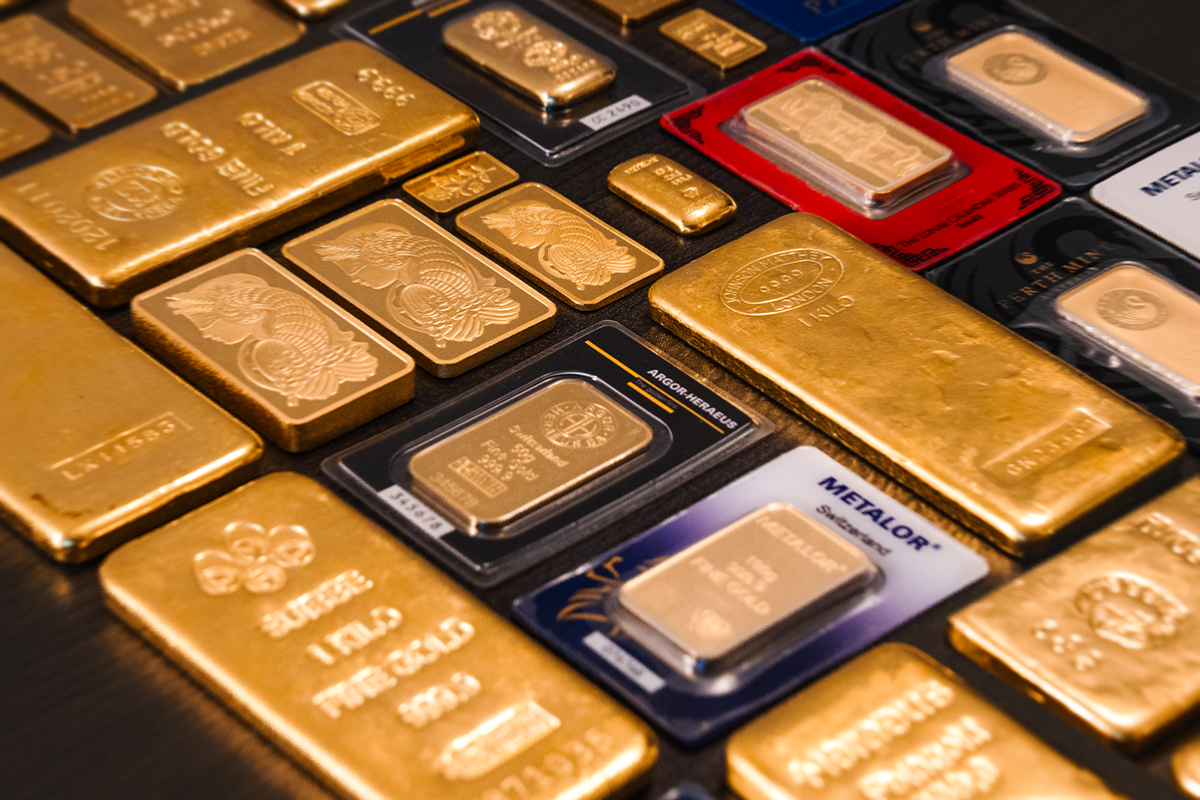
For investors looking to act on that thesis, BullionStar offers a straightforward way to buy and store physical gold, with no spread between the buy and sell price on BullionStar branded bars, and fully audited vault storage in Singapore, the United States, and New Zealand. Browse our gold products or learn more about vault storage.
Popular Blog Posts by Gold & Silver 101
 An Introduction to Gold & Silver Investing
 Should I Invest in Gold, Silver, or Platinum Bullion?
 Gold Coins vs Gold Bars: Which Is Better?
 How Is Gold Taxed in Singapore? The IPM GST Exemption Explained
 Storing Precious Metals, Gold, and Silver Bullion
 Gold & Silver Bullion Investing FAQs
 How Much Gold Is There in the World?
 Junk Silver: What It Is and What It’s Worth
 999 Fine Silver: Investment-Grade Silver Explained
 Gold Savings Account vs Bullion Savings