 Contact
 Help
Help







Gold & Silver Portfolio Allocation: How Much Should You Hold?
 Gold & Silver 101



Deciding how much of your portfolio to allocate to gold and silver, and how to split between the two metals, is one of the most important decisions you will make as a precious metals investor. This guide walks through the leading allocation frameworks, how to weight gold against silver, when to rebalance, and which metal tends to perform better in different market conditions.
Please note that BullionStar does not provide investment or financial advice. The information below is for informational purposes only. Your individual circumstances and goals will always be the most important factors in any investment decision.
Strategic Gold and Silver Portfolio Allocation
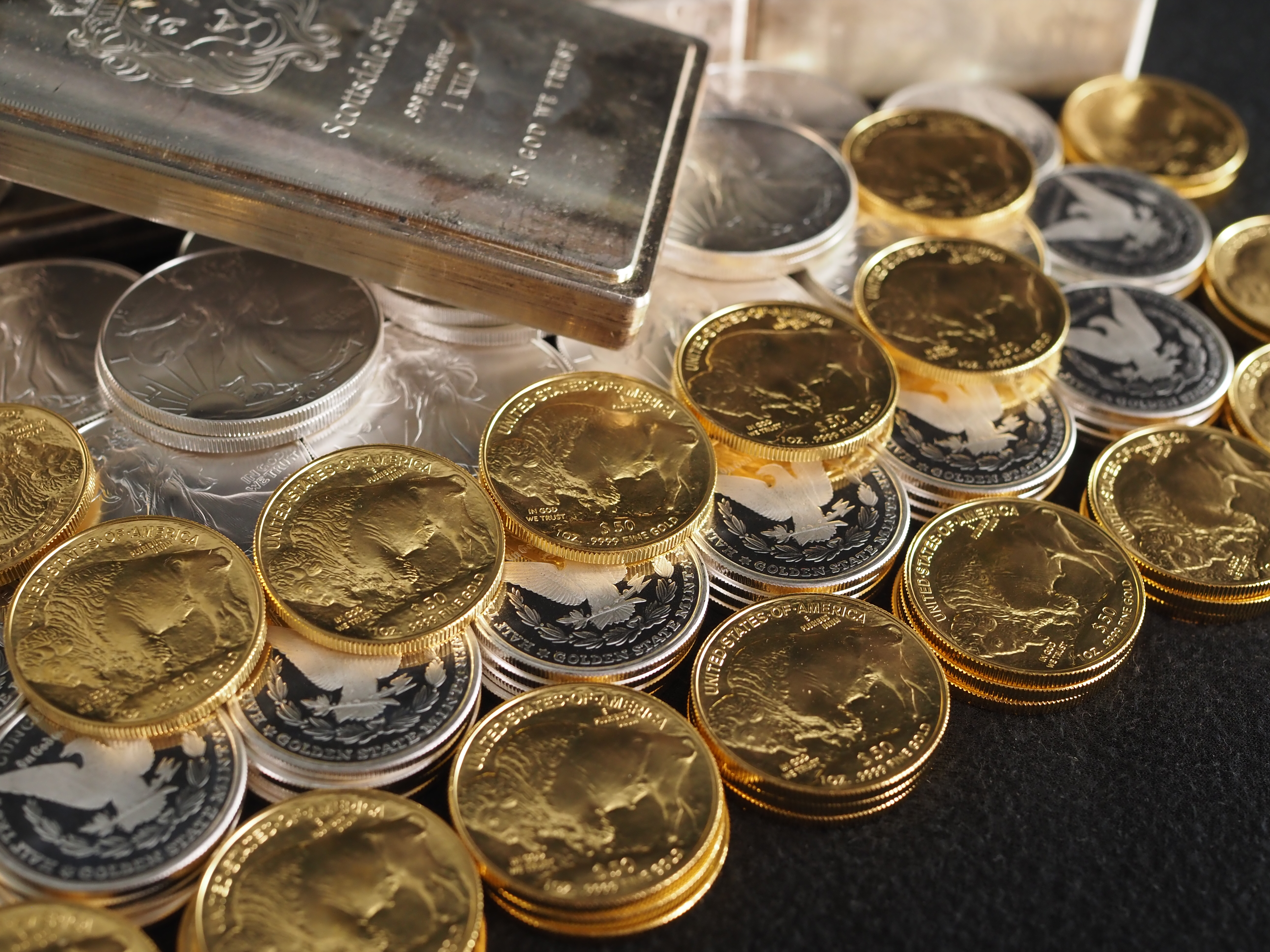
While gold and silver typically serve as safe-haven assets, their roles can differ based on economic conditions. Having a diverse portfolio is one of the most widely endorsed strategies for managing investment risk. The principle of not putting all your eggs in one basket applies just as much to precious metals as it does to equities or bonds.
Here are the key allocation strategies to consider:
- Defensive Positioning: Holding 5–10% in gold during economic downturns can hedge against inflation and market volatility.
- Growth Strategy: Investors seeking higher potential returns may allocate 10–15% in silver within a broader precious metals allocation, due to silver’s industrial demand and higher price volatility.
- Dynamic Rebalancing: Adjust your allocation based on macroeconomic indicators such as interest rate trends and inflation expectations.
How Much Gold and Silver Should You Allocate?
Most investors are recommended to allocate 5–10% of their portfolio to gold and silver, with some advanced investors going as high as 20% depending on their financial goals and risk tolerance.
Conservative investors looking to preserve wealth with a passive asset might sit at the lower end of 5–10%. Moderate investors who see potential for gains would typically target 10–15%. More aggressive investors who are actively positioning around macro conditions might hold up to 20% or beyond in precious metals.
Famous Allocation Models: Ray Dalio’s All Weather and the Browne Permanent Portfolio
Two of the most widely discussed portfolio frameworks that include gold are the All Weather Portfolio and the Permanent Portfolio. Both take very different approaches to gold allocation.
Ray Dalio All Weather Portfolio
Ray Dalio is an American billionaire and hedge fund manager who founded Bridgewater Associates, one of the largest hedge funds in the world. The All Weather portfolio is designed to perform reasonably well across all economic environments — growth, recession, inflation, and deflation.
| Asset | Allocation |
|---|---|
| US Stocks | 30% |
| Long-Term Treasury Bonds | 40% |
| Intermediate-Term Treasury Bonds | 15% |
| Commodities | 7.5% |
| Gold | 7.5% |
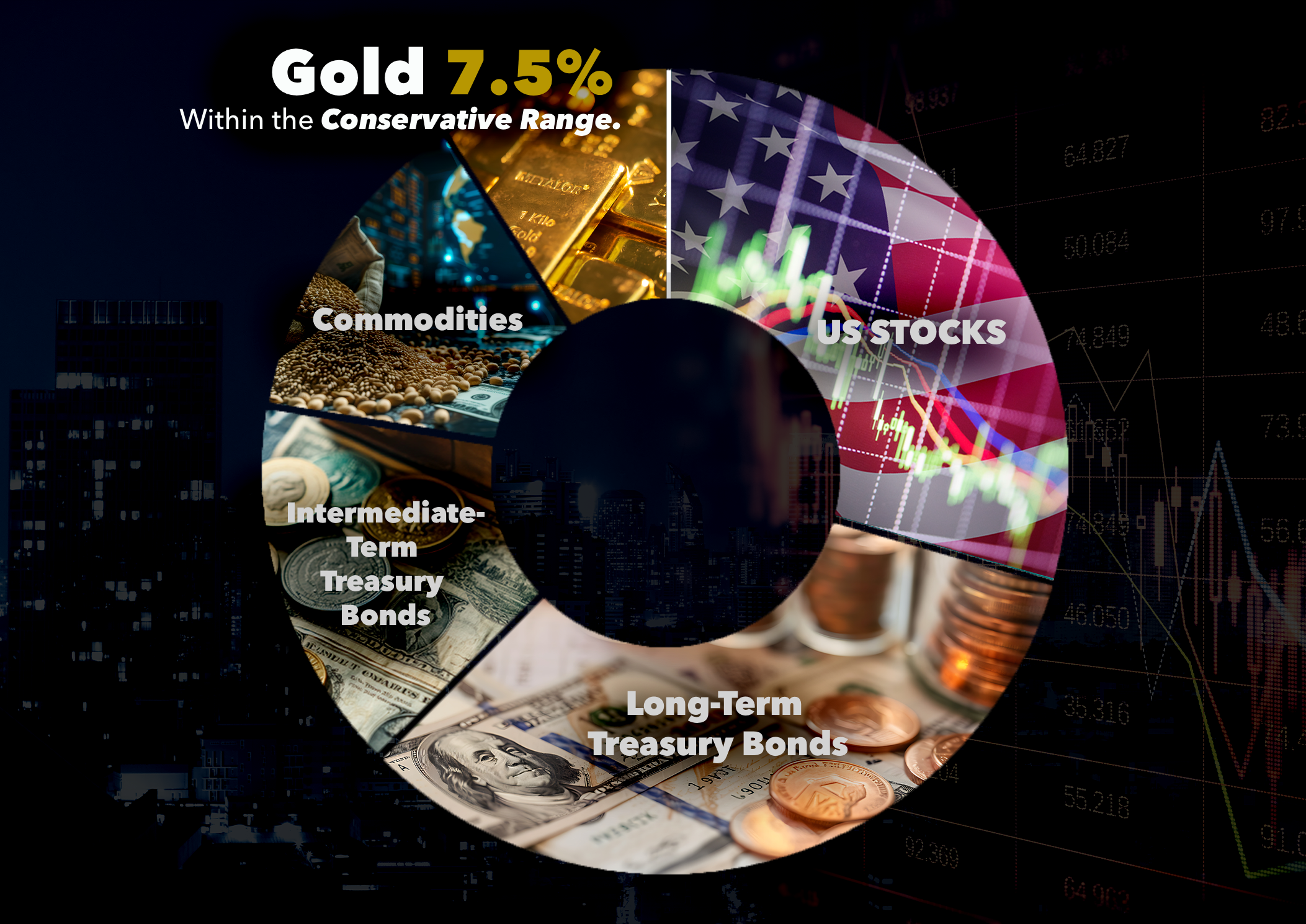
The gold allocation in the All Weather portfolio is 7.5%, firmly within the conservative range and suited to investors whose primary goal is wealth preservation rather than outperformance.
Browne Permanent Portfolio
The Permanent Portfolio, sometimes called the 25/25/25/25 portfolio, was created by investment advisor Harry Browne. It takes a deliberately simple approach: four equal allocations across four asset types, designed to hold up in any economic environment.
| Asset | Allocation |
|---|---|
| Total US Stock Market | 25% |
| Long-Term Bonds | 25% |
| Cash | 25% |
| Gold | 25% |
The Permanent Portfolio holds 25% in gold, placing it at the aggressive end of the traditional allocation scale. This reflects Browne’s conviction that gold is essential protection against both inflation and financial crisis.

Gold vs. Silver Split: How to Weight the Two Metals
While the allocation models above focus on gold specifically, many investors hold both gold and silver within their precious metals allocation. A common gold-to-silver split is 80:20 or 75:25, with gold carrying the larger weighting.
Gold acts as the traditional safe-haven asset — a stable, lower-volatility store of value well suited to wealth preservation. Silver is a complementary metal: riskier, more volatile, but with higher potential for gains. Holding both allows investors to benefit from gold’s stability while using silver as a more dynamic, higher-upside position.
The gold-silver ratio is a useful tool when deciding how to weight the two metals. When the ratio sits well above its long-term average, silver looks cheap relative to gold and may warrant a higher weighting; when the ratio is low, gold may be the better value.
Rebalancing Your Precious Metals Allocation
The balance of your portfolio should be reviewed periodically to ensure no single asset has grown too large or shrunk to too small a share of the total. Rebalancing your precious metals allocation may be necessary following a strong run-up in gold or silver prices, or after significant movements in the gold-silver ratio.
In general, reviewing your allocation once a year is sufficient for most investors. If there has been exceptional price movement, such as gold hitting a new all-time high, or the gold-silver ratio moving to an extreme, a review mid-cycle may be warranted.
Gold vs. Silver: Which Performs Better in Bull, Bear and Inflationary Markets?
Silver typically outperforms gold in bull markets and during economic expansion, thanks to its industrial demand and higher volatility. Gold tends to outperform during bear markets, recessions and periods of elevated financial stress. Understanding how each metal behaves in different environments helps investors position appropriately.
Gold vs. Silver in Bull Markets: Why Silver Tends to Outperform
Silver is considered a high-beta asset compared to gold. It is more volatile, and tends to react more sharply to both positive and negative market conditions. Two structural factors drive this:
- Silver has dual demand from both investment and industrial buyers, amplifying price moves when sentiment turns positive.
- Silver’s total market capitalisation is far smaller than gold’s (roughly US$4.2 trillion versus gold’s approximately US$30.8 trillion) meaning a smaller capital inflow can produce a proportionally larger price move.
This dynamic means silver typically outperforms gold when both metals are rising. As an example, silver’s performance in 2024–2025 substantially exceeded gold’s percentage gains during the same bull market phase.
Gold vs. Silver in Bear Markets and Recessions: Gold’s Defensive Edge
During a bear market or recession, gold’s defensive qualities take centre stage. Recessions typically reduce industrial activity, which softens silver’s industrial demand and puts downward pressure on its price. Meanwhile, investors seeking safety tend to rotate into gold as the traditional safe-haven asset.
In early 2020, as Covid-19 lockdowns took hold globally, silver fell from around US$18.77 to a low of $12 per ounce in approximately two weeks, a drop of roughly 36%. Gold dipped by only around 15% over the same period, and by August 2020 it was hitting all-time highs. This divergence illustrates why gold is typically the preferred choice in defensive positioning.
Gold vs. Silver in Inflationary Environments
Gold has a long and well-established record as an inflation hedge, rising at or above the rate of inflation over long timeframes. Over the past 50 years, gold has risen approximately 3,500% while the US dollar has lost around 83% of its purchasing power, making gold one of the most effective long-run stores of value.
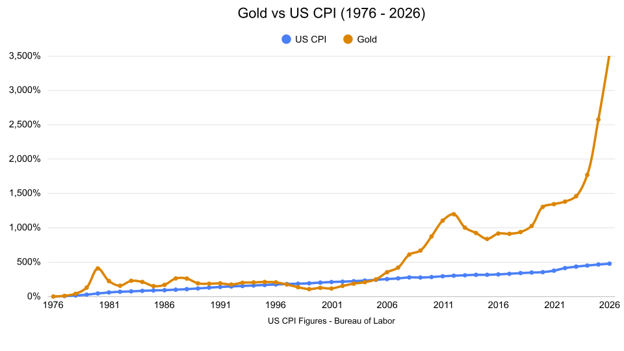
Silver’s behaviour during inflation is more mixed. Its performance is partly tied to industrial activity, which does not always correlate cleanly with inflation. That said, silver scored new all-time highs in 2025 and 2026 during a period of persistent inflation, reigniting interest in silver as an inflation hedge. Gold’s inflation-hedge role is purely monetary; silver’s is complicated by the industrial half of its demand.
Silver’s Industrial Demand: Solar, EVs and Electronics
Silver is the best conductor of electricity and the most reflective element, properties that drive strong and growing industrial demand. Solar panels, electric vehicles, and consumer electronics all use silver in meaningful quantities, and demand from these sectors has risen sharply in recent years.
According to the Silver Institute’s World Silver Survey, 2026 marks the sixth consecutive year of structural supply deficit, with mining supply unable to keep pace with demand. This persistent shortfall is a structural tailwind for silver prices that has no direct equivalent in the gold market.
Gold vs. Silver: A Decision Framework
Most balanced portfolios hold both metals, with the weighting adjusted based on market conditions and individual goals. The table below summarises the key differences to help you think through your own positioning.
| Factor | Gold | Silver |
|---|---|---|
| Volatility | Low | High |
| Industrial Demand | Low | High |
| Inflation Hedge | Strong | Moderate |
| Market Liquidity | High | Moderate |
| Storage Cost | Low | High (bulkier) |
| Entry Price | Higher | Lower |
| Bear Market | Outperforms | Underperforms |
| Bull Market | Solid gains | Typically outperforms |
On timing: silver is often best added during the early stages of a bull market, when industrial activity is expanding and the gold-silver ratio is elevated. Gold makes the strongest case when macro conditions are deteriorating — recession risk is rising, inflation is elevated, or geopolitical uncertainty is high.
For Singapore investors specifically, both gold and silver qualifying for Investment Precious Metals (IPM) status means the GST exemption applies equally to both metals and does not favour one over the other. The choice comes down to risk appetite, storage practicality (silver’s bulk is a real consideration for large holdings), and your read on the economic cycle.
Frequently Asked Questions
How much of your portfolio should be in gold and silver?
Most investors are recommended to allocate 5–10% of their portfolio to gold and silver, though advanced investors may go as high as 20% depending on financial goals and risk tolerance. A common starting split between the two metals is 75–80% gold and 20–25% silver.
Should I invest in gold or silver?
Most balanced portfolios hold both. Gold is the lower-volatility, traditional safe-haven choice, and tends to outperform during recessions, financial crises, and periods of elevated inflation. Silver is more volatile but offers higher upside in bull markets and benefits from strong structural industrial demand. The gold-silver ratio can help guide the relative weighting between the two.
Is silver a good investment for Singapore investors?
Yes. Investment-grade silver (at least 99.9% pure) qualifies for Investment Precious Metals (IPM) status in Singapore and is therefore exempt from GST. Silver’s higher volatility offers greater upside potential compared to gold, though it also carries more downside risk. Storage is an important practical consideration: silver is far bulkier than gold for the same dollar value, making professional vault storage the preferred option for larger holdings.
How often should I rebalance my precious metals portfolio?
Once a year is sufficient for most investors. If there has been significant price movement, such as gold reaching a new all-time high, a sharp move in the gold-silver ratio, or a major change in the macro environment — a review mid-cycle may be worthwhile.
Invest in Gold and Silver in Singapore with BullionStar
Singapore is structurally one of the world’s best jurisdictions for holding physical bullion. The GST exemption on qualifying Investment Precious Metals, combined with world-class private vault facilities and political stability, makes it an attractive location for both local and international investors.
BullionStar offers GST-free gold and silver in Singapore, with options for home delivery or allocated vault storage within our vaults at our Bullion Centre and at Le Freeport near Changi Airport. Whether you are building a new precious metals allocation or rebalancing an existing one, our team can help you access the right products.
Popular Blog Posts by Gold & Silver 101
 An Introduction to Gold & Silver Investing
 Should I Invest in Gold, Silver, or Platinum Bullion?
 Gold Coins vs Gold Bars: Which Is Better?
 How Is Gold Taxed in Singapore? The IPM GST Exemption Explained
 Storing Precious Metals, Gold, and Silver Bullion
 Gold & Silver Bullion Investing FAQs
 How Much Gold Is There in the World?
 Junk Silver: What It Is and What It’s Worth
 999 Fine Silver: Investment-Grade Silver Explained
 Gold Savings Account vs Bullion Savings