 Contact
 Help









London Gold Market: How the World’s Largest Gold Market Works


London is the centre of the global gold market. More gold changes hands there than anywhere else in the world. In 2026, trading in London averaged more than US$200 billion a day. The city’s vaults hold almost 10,000 tonnes of gold, more than at any time since records began, much of it in the vaults of the Bank of England. The prices used to value gold around the world, from mining contracts to central bank reserves, are set in London twice a day.
Most of this activity is invisible to the public. The London gold market has no exchange floor and no central trading screen. It is a wholesale, over-the-counter market in which banks, refiners, central banks and large investors trade directly with one another, usually in large 400 ounce bars and often without the gold ever leaving the vault. The industry’s standards are set by the London Bullion Market Association (LBMA). Trades are settled through a small group of clearing banks, mostly in “unallocated” gold, a form of ownership that differs significantly from holding specific bars.
This guide explains how the London gold market works: who trades in it, how gold is cleared and stored, and the difference between allocated and unallocated gold. It also covers how the London gold price developed from the historic London Gold Fix into today’s LBMA Gold Price, and London’s long history as the world’s gold centre, from the London Gold Pool of the 1960s to today.
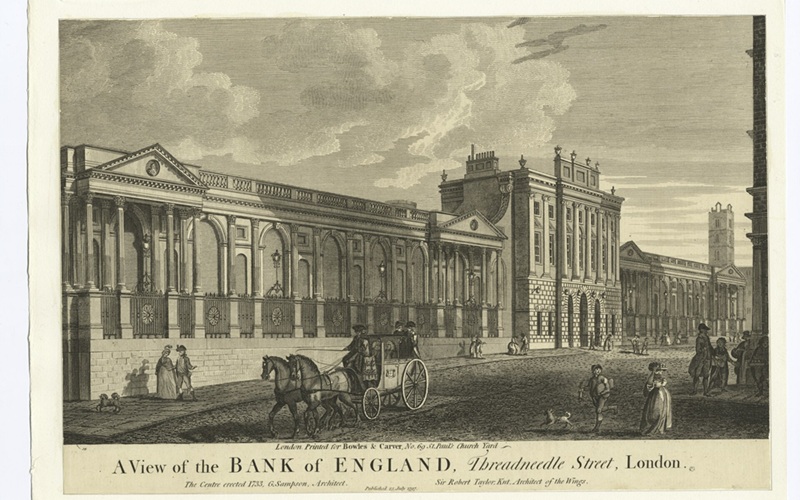
The Bank of England building on Threadneedle Street is central to the London Gold Market.
Highlights
- London is the world’s largest gold market, with more than US$200 billion traded on average each day in 2026.
- Trading is over the counter between banks and dealers, settled loco London and mostly in unallocated accounts.
- The standard bar is the London Good Delivery bar of about 400 oz (12.5 kg) and at least 99.5% purity.
- London’s vaults held a record 9,821 tonnes of gold at the end of September 2026, about 5,800 tonnes of it at the Bank of England.
- The LBMA Gold Price is set at 10:30 and 15:00 London time and replaced the London Gold Fix, which ran from 1919 to 2015.
London Gold Market at a Glance
| Market type | Wholesale over-the-counter (OTC) market, traded directly between participants |
| Industry body | London Bullion Market Association (LBMA), founded 1987 |
| Standard bar | London Good Delivery bar of 350–430 troy ounces, typically about 400 oz (12.5 kg), at least 99.5% pure |
| Settlement | “Loco London”, meaning gold held in and delivered in London, mostly as unallocated gold |
| Clearing banks | London Precious Metals Clearing Limited (LPMCL): Citi, HSBC, ICBC Standard Bank, JP Morgan and UBS |
| Trading volume | About US$212 billion a day (2026, January–September average) |
| Net clearing | About US$76 billion of gold a day (September 2026) |
| Gold in London vaults | 9,821 tonnes, worth about US$1.3 trillion (end of September 2026) |
| Largest vault | Bank of England, holding about 5,800 tonnes (September 2026) |
| Price benchmark | LBMA Gold Price, set by auction at 10:30 and 15:00 London time and administered by ICE Benchmark Administration |
| Historic benchmark | The London Gold Fix, 1919–2015 |
How the London Gold Market Works
London’s gold market is not an exchange. There is no trading floor, no order book and no single price screen. Instead, it is an over-the-counter (OTC) market, a network of banks and other firms that trade gold directly with each other, each acting as principal in its own trades. Deals are agreed by phone or electronic platforms and settled between the two parties. Trades are usually documented under industry-standard agreements, such as the International Bullion Master Agreement (IBMA) and the ISDA Bullion Definitions.
Together with New York, where gold futures trade on COMEX, London dominates global gold price discovery. The Chinese gold market, centred on the Shanghai Gold Exchange, trades the largest volume of physical gold.
At the heart of the market are the LBMA’s market-making members, a small group of large international banks that commit to quoting buy and sell prices to other participants throughout the London trading day. Around them are other bullion banks, brokers and trading firms, along with the market’s customers: central banks, refiners, mining companies, jewellery manufacturers, gold exchange-traded funds (ETFs), hedge funds and other institutional investors. The LBMA sets standards and accredits refiners. Individual firms in the market are regulated in the UK by the Financial Conduct Authority.
Loco London and the Good Delivery Bar
The basic unit of the London market is gold held “loco London”, meaning gold located in, and deliverable in, London. When banks quote a spot gold price, it is for loco London gold, usually for settlement two business days later. Prices are quoted in US dollars per troy ounce. Alongside spot trading, the market also deals in forwards, options and gold lending, in which banks and central banks lend gold for a fee. Banks once published their gold lending rates as GOFO (the gold forward offered rate), but the LBMA stopped publishing it in January 2015 after contributors withdrew.
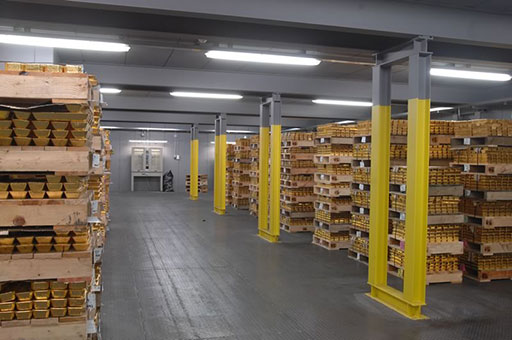
The physical gold behind the market is the London Good Delivery bar. These large bars must weigh between 350 and 430 troy ounces, typically about 400 ounces or 12.5 kilograms. They must be at least 99.5% pure and be made by a refiner on the LBMA’s Good Delivery List. Each bar is stamped with its refiner, serial number, year of manufacture and fineness. They are the bars central banks hold in their reserves and the standard unit for large trades worldwide. For more on these bars, see our guide to the 400 oz gold bar.
Allocated and Unallocated Gold
Gold in the London market is held in one of two ways, and the difference matters a great deal.
Allocated gold means specific, identified bars held for the owner. The custodian keeps a list of the bars, with each bar’s refiner, serial number and weight, and the owner has full legal title to them. The custodian can’t lend or sell the gold, and if the custodian fails, the gold still belongs to the owner. Allocated accounts carry storage fees.
Unallocated gold is a claim on a bank for a quantity of gold, not ownership of particular bars. The account holder is an unsecured creditor of the bank, much like a depositor in a bank account. The bank is free to use the gold, for example by lending it out, and it does not have to hold one ounce of physical gold for every ounce owed to customers. Unallocated accounts are cheaper and easier to trade, which is why most trading in the London market is in unallocated gold. The holder, though, is exposed to the bank’s credit risk.
Customers can usually convert unallocated gold into allocated bars, and vice versa. We explain how the system works in more detail in our guide to bullion banking mechanics.
Clearing
When two firms trade loco London gold, the trade is settled through London Precious Metals Clearing Limited (LPMCL), a company owned by the market’s clearing banks. Since 2001 LPMCL has run the clearing system, now called AURUM. There are currently five clearing members: Citi, HSBC, ICBC Standard Bank, JP Morgan and UBS. The membership has changed over the years, with banks such as Deutsche Bank leaving and others joining.
Clearing works by moving balances between the clearing banks’ unallocated gold accounts with each other, not by moving physical bars. Each client trade is settled across the books of the client’s bank, and at the end of each day the clearing banks settle their net positions with each other. Unlike most modern exchanges, there is no central counterparty standing between buyers and sellers. Because most trades offset each other, the amount of gold actually cleared is much smaller than the amount traded. In September 2026, clearing averaged about US$76 billion a day, against trading of more than US$200 billion a day.
London’s Gold Vaults
London holds more gold than any other financial centre in the world. At the end of September 2026, London’s vaults held a combined total of 9,821 tonnes of gold, worth about US$1.3 trillion, according to the LBMA. That is the highest total since the LBMA began publishing vault data in 2016, and equivalent to roughly 790,000 Good Delivery bars.
The largest share is held by the Bank of England, which stores gold for the UK government, foreign central banks and a small number of commercial firms in its vaults beneath its Threadneedle Street headquarters. Its vault is one of the two largest gold vaults in the world, second only to the Federal Reserve Bank of New York, which holds gold mainly for foreign central banks.
Analysis of Bank of England data suggests it held about 5,800 tonnes in September 2026, almost 60% of the gold in London. Its role as custodian for other central banks is a major reason for London’s importance. Many countries keep at least part of their gold reserves there, close to the market where it can be traded or lent if needed. For more, see our guide to the Bank of England gold vaults.
The rest is held in commercial vaults run by the clearing banks and by specialist security firms. Several of the clearing banks, including JP Morgan and HSBC, run their own vaults in London. Firms such as Brink’s, Loomis, Malca-Amit and G4S operate others. Much of this gold backs gold exchange-traded funds. London is the custody location for many of the world’s largest gold ETFs, including SPDR Gold Shares, which is held in HSBC’s London vault.

Gold Moving In and Out of London
The amount of gold in London changes with demand elsewhere. In early 2025, fears that the United States might impose tariffs on gold imports pushed New York gold futures prices above London prices. Banks raced to fly bars from London to New York to take advantage, and so much gold was withdrawn from the Bank of England that customers faced waits of several weeks to collect their bars.
The episode showed how heavily the London market depends on gold that physically sits in a few vaults. It also showed that gold can’t always be moved quickly when it is needed. We looked at the episode as it unfolded in LBMA’s Gold Shortage Exposed: Spreads Widen as Paper Market Crumbles.
Since then, gold has flowed back to London. The Bank of England’s holdings have risen every month since late 2025. Central banks have also chosen London as a storage location. In 2026, the Netherlands’ central bank moved around 86 tonnes of gold from New York and Ottawa to the Bank of England. It described London as the place where gold is “regarded as the world’s most easily tradable”, a move covered on our Netherlands gold reserves page.
From the London Gold Fix to the LBMA Gold Price
For almost a century, the world’s reference price for gold was agreed by a small group of bullion firms meeting in London. The London Gold Fix, also called the London gold fixing, set a single price at which the member firms could match their clients’ buy and sell orders. Producers, central banks, refiners and jewellers around the world used that price to settle contracts. Since March 2015 an electronic auction has done the same job, under the name LBMA Gold Price.
The Fixing Room at N M Rothschild (1919–2004)
The first fixing took place on 12 September 1919 at the offices of N M Rothschild & Sons in St Swithin’s Lane in the City of London. Five firms took part: N M Rothschild, Mocatta & Goldsmid, Pixley & Abell, Samuel Montagu and Sharps Wilkins. Rothschild chaired the meeting. The members met in person in what became known as the fixing room. Each representative had a small Union Jack flag on their desk and raised it to pause the process while they checked orders with their dealing rooms. The price was fixed once the members’ buying and selling interest balanced.
For its first five decades the fix was a single daily price, quoted in sterling. It was suspended between 1939 and 1954 during and after the Second World War. When the London market reopened in April 1968, after the collapse of the London Gold Pool, two changes followed. The price was now quoted in US dollars, and a second, afternoon fix was added to overlap with trading hours in New York. The AM and PM fixes then continued in this form for almost four decades.
In 2004 Rothschild withdrew from the gold market. The fixing room closed and the fix moved to a telephone conference call between the remaining members. By then these were Barclays, Deutsche Bank, HSBC, Scotia-Mocatta and Société Générale. Ronan Manly has written about the fixing’s history, including the Bank of England’s role in the London gold fixing in the 1980s and the closure of the fixing company’s website.
The End of the Fix
During and after the LIBOR scandal, regulators began examining financial benchmarks that were set by small groups of banks, and the gold fix came under the same scrutiny. In May 2014 the Financial Conduct Authority fined Barclays £26 million for failing to manage conflicts of interest around the fix. A Barclays trader had placed orders during the afternoon fix on 28 June 2012 to push the price below a level that would have triggered a payout to a client. The trader was fined and banned from the industry. Deutsche Bank had already announced it would leave the fixing earlier in 2014.
The fixing members then handed the benchmark over. The LBMA selected ICE Benchmark Administration (IBA) to run a new electronic process, and the final London Gold Fix took place on 19 March 2015. The LBMA Gold Price launched the following day, on 20 March 2015.
The LBMA Gold Price Today
The LBMA Gold Price is set twice each London business day, at 10:30 and 15:00 London time. IBA’s electronic auction runs in rounds. It starts at a price close to the current spot price, and participants enter how much gold they want to buy or sell at that price. If the imbalance between buying and selling is larger than a set tolerance, the price is adjusted and a new round begins. Once the market balances, that price is published as the benchmark in US dollars per troy ounce, along with conversions into other currencies. The auction is open to more participants than the old fix, and IBA is regulated by the FCA as a benchmark administrator. Our page on the London Bullion Market Association explains how participants are accredited and how the auction works in more detail.
Many people still search for the “London fix” when they want today’s gold price. The benchmark is published only twice a day, but gold trades around the clock. For a live view, use BullionStar’s gold price chart, which shows the spot price per ounce and per gram in several currencies, along with the recent LBMA Gold Prices, published with a one-day delay.

A Short History of the London Gold Market
London’s place at the centre of the gold trade goes back more than three centuries. Its history explains why the market works the way it does today, including why it trades over the counter and why most of its gold sits in London vaults.
London’s Rise as the Centre of the Gold Trade
Bullion dealing in London grew out of the goldsmiths of the City in the 17th century. Moses Mocatta began trading precious metals in London in 1671, and his firm, later Mocatta & Goldsmid, went on to be one of the original members of the London Gold Fix. The Bank of England was founded in 1694 and became the place where the government, and later other central banks, kept their gold.
In 1717 Sir Isaac Newton, then Master of the Royal Mint, set the mint price of gold at £3 17s 10½d per troy ounce. That price stayed largely unchanged for two centuries, and Britain formally adopted the gold standard in the early 19th century.
As sterling became the main currency of world trade, London became the natural market for gold. After the discovery of the Witwatersrand goldfields in South Africa in 1886, most of the world’s newly mined gold was shipped to London to be refined and sold. Much of it passed through the Royal Mint Refinery, which N M Rothschild & Sons ran from 1852 until it closed in 1968.
The London Gold Pool (1961–1968)
After the Second World War, the Bretton Woods system fixed the US dollar to gold at US$35 per ounce, and other currencies were pegged to the dollar. When the London market reopened in 1954, its free-market price could move away from that official rate. In October 1960 the London price briefly rose above US$40, which put the dollar’s gold link under pressure.
In response, the United States and seven European central banks formed the London Gold Pool in 1961. The members were the US, the United Kingdom, West Germany, France, Italy, Belgium, the Netherlands and Switzerland. They pooled gold and sold it on the London market whenever the price rose above US$35.20, so the market price stayed close to the official one. The Bank of England carried out the trades for the pool. The US supplied half of the pool’s gold.
The arrangement worked for several years but became harder to sustain as demand for gold grew through the 1960s. France withdrew from the pool in 1967, and the devaluation of sterling in November 1967 led to heavy buying. In March 1968 the pool lost hundreds of tonnes of gold in a matter of days. On 15 March 1968 the London gold market was closed at the request of the US government, and it stayed shut for two weeks.
The Two-Tier Market
When the pool collapsed, it was replaced by a two-tier system. Central banks continued to settle with each other at the official price of US$35, while gold on the private market was left free to find its own price. The London market reopened on 1 April 1968, now pricing gold in US dollars and with the added afternoon fix.
The closure had a lasting effect. While London was shut, the major Swiss banks set up their own gold pool in Zurich, and South Africa began selling much of its output there. Zurich became a serious rival to London for physical gold through the 1970s and 1980s. The two-tier system itself lasted only until August 1971, when the United States stopped converting dollars into gold for foreign central banks. Ronan Manly looks at the period’s central bank gold dealings in The New Gold Pool at the BIS.
The Modern Market and the LBMA
London kept its position as the main wholesale market through its banking, clearing and vaulting infrastructure. The London Bullion Market Association was formed in 1987, in the wake of the Financial Services Act 1986, and took over the market standards and the Good Delivery List. Today the London market sets the standard for large gold bars worldwide. Vault holdings are at record levels, and trading volumes are higher than on any other gold market.
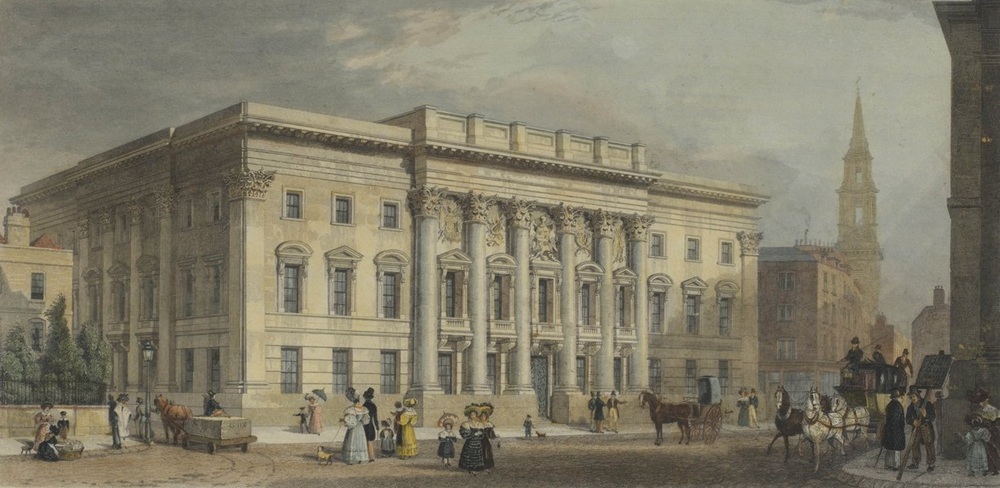
Goldsmiths’ Hall is an assay office, and the headquarters of the Worshipful Company of Goldsmiths in London.
Frequently Asked Questions
What is the London gold market?
The London gold market is the world’s largest wholesale market for gold. It is an over-the-counter (OTC) market: banks, dealers, refiners and central banks trade directly with each other rather than on an exchange. Trades are settled in gold held in London vaults, known as loco London, and most of that gold is held in unallocated accounts.
What does loco London mean?
Loco London means that gold is held, and delivered, in London. A loco London trade is settled in gold in a London vault, usually by a book entry between the clearing banks rather than by moving bars. Loco London prices are quoted in US dollars per troy ounce and assume London Good Delivery bars.
How much gold is stored in London?
At the end of September 2026, London’s vaults held 9,821 tonnes of gold, worth about US$1.3 trillion. That is the highest level since records began in 2016, and it is more than any other financial centre. The Bank of England holds about 5,800 tonnes of the total. The rest is held in commercial vaults run by banks and security companies.
Who sets the London gold price?
The benchmark London gold price is the LBMA Gold Price. ICE Benchmark Administration sets it in an electronic auction twice each London business day, at 10:30 and 15:00 London time. It replaced the London Gold Fix on 20 March 2015. Gold trades continuously between auctions, so the live spot price can differ from the benchmark during the day.
What was the London Gold Fix?
The London Gold Fix was the price-setting process that ran from 12 September 1919 to 19 March 2015. The member firms met, first at N M Rothschild & Sons and later by telephone, to agree a price at which buy and sell orders were balanced. It was replaced by the electronic LBMA Gold Price after regulators raised concerns about how the fix was run.
What was the London Gold Pool?
The London Gold Pool was set up in 1961 by the United States and seven European central banks. Its aim was to keep the London gold price close to the official rate of US$35 per ounce by selling gold on the market. The pool collapsed in March 1968, when demand for gold outstripped the members’ sales. It was replaced by a two-tier market with separate official and private prices.
What is a London Good Delivery bar?
A London Good Delivery bar is the standard gold bar of the London market. It weighs between 350 and 430 troy ounces, usually about 400 oz or 12.5 kg, and is at least 99.5% pure. It must come from a refiner on the LBMA’s Good Delivery List. These bars are the form in which central banks, ETFs and wholesale traders hold gold in London.
Can individuals buy gold on the London market?
Individuals do not usually trade on the London market directly, since it is a wholesale market between banks, dealers and other institutions. Private investors take part through banks, ETFs or bullion dealers. Many products, such as unallocated accounts, give only a claim on gold. Buying bars and coins outright, or holding allocated gold in a vault, gives direct ownership.
Is gold in London allocated or unallocated?
Most gold traded in London is unallocated. An unallocated holder owns a claim on the bank rather than specific bars, and ranks as an unsecured creditor if the bank fails. Allocated gold is held as specific, numbered bars that belong to the client. Central banks and ETFs generally hold allocated gold.
Owning Allocated Gold Outside London
The London market sets the global gold price and holds more gold than any other financial centre. Yet most of what changes hands there is unallocated, which means a claim on a bank rather than ownership of specific bars. For institutions that trade large volumes every day, that arrangement suits their needs. For a private investor who wants gold as protection against the financial system, a paper claim on a bank in that system is a weaker form of ownership.
BullionStar offers a more direct alternative from Singapore. Customers can buy gold bars and gold coins, from 1 gram bars up to full 400 oz Good Delivery bars. Investment-grade gold is exempt from GST in Singapore. Customers who want their gold stored can use BullionStar’s vault in Singapore, where every bar and coin is fully allocated in the customer’s name. Holdings are fully insured and independently audited.
Customers can also collect their purchases at the Bullion Center in Singapore or have them shipped to many countries. When it is time to sell, BullionStar buys back bullion at transparent, published prices. Buyers should make sure they follow the foreign exchange, customs and tax rules of the country where they live.
Subscribe to Gold University Articles
Copyright Information: BullionStar permits you to copy and publicize articles or information from the BullionStar Gold University provided that a link to the article's URL or to https://bullionstar.com is included in your introduction of the article or blog post together with the name BullionStar. The link must be target="_blank" without re="nofollow". All other rights are reserved. BullionStar reserves the right to withdraw the permission to copy content for any or all websites at any time.