 Contact
 Help
Help








Gold Is No One’s Liability – The Asset No One Can Print, Freeze or Default On

 Ronan Manly
 0 Comments



The modern financial system is built on an assumption so deeply accepted that it is rarely tested: that the institutions and infrastructure standing behind financial assets will remain trustworthy.
That assumption holds only in a world where the institutions holding the financial system together act the same way today and tomorrow as they acted yesterday.
While the system tells you that banks will honour deposits, governments will repay bonds, central banks will preserve the value of their currencies, payment systems will stay open, and that the international financial infrastructure will remain politically neutral, these are not facts. They are behaviours, and behaviours can change.
When confidence is high, this assumption is almost invisible, and financial claims are traded without anyone asking what stands behind them. But when institutional trust begins to weaken, the distinction between an asset and a claim on an asset becomes much more important.
Because a bank deposit is not cash held by the depositor. It is a liability of the bank. A bond is a contractual claim on a borrower. A reserve balance held through a foreign financial system may be an asset on a central bank’s balance sheet, but it can also be frozen, sanctioned or made inaccessible.
That distinction was made real in February 2022 when a coordinated move by the United States, the EU, UK, Canada and Japan, immobilised roughly $300 billion of the Russian central bank’s foreign exchange reserves, split between $207 billion in euro assets, $67 billion in US dollars and $37 billion in sterling, with the largest single concentration at Euroclear in Belgium. Several Russian banks were also removed from SWIFT. The only major Russian reserves to escape the freeze were those held as renminbi in China, or as physical gold in Russian vaults.
But the episode did not affect Russia alone. It also shattered the global financial system’s illusion of trust. As Zoltan Pozsar observed, “what had previously been thought of as risk-free became risk-free no more as non-existent credit risk was instantly substituted for very real confiscation risk."
While renminbi reserves escaped for geopolitical reasons (they were beyond the reach of Western sanctions), physical gold escaped for structural reasons, because there was no entity to enforce it against. That’s because gold is not issued by a government, central bank or corporation, and so physical gold is not somebody else’s promise to pay. It has no maturity date, no debtor and no requirement that another institution remain solvent. Nor has physical gold any counterparty risk, because it has no counterparty.
That makes gold more than an inflation hedge. It makes gold a neutral asset in a world where trust in institutions, currencies and geopolitical arrangements is becoming increasingly less certain.
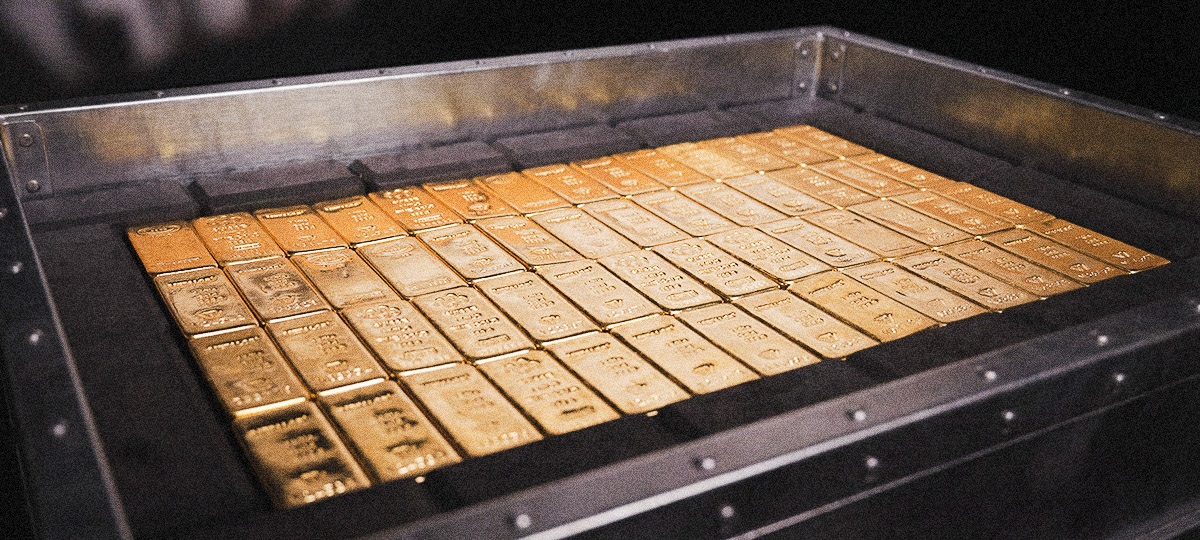
Most Financial Assets Are Claims
The modern financial system is built predominantly around claims, contracts and institutional promises. A government bond is a claim on the government that issued it. Its value depends on the issuer’s willingness and ability to pay. A corporate bond depends on the company’s financial position. A bank deposit is actually a claim on a commercial bank, even though most depositors treat their deposit as immediately available money.
This reliance on third-party performance extends to every layer of the global monetary system. Digital payment balances depend on the uninterrupted operation of commercial banks, clearing houses, and payment rails. Securities accounts rely on the legal integrity and operational solvency of custodians, central securities depositories, and brokers. Sovereign foreign exchange reserves held abroad are subject to the legal, regulatory, and political whims of the foreign jurisdiction in which they are held.
None of this means that financial assets lack value, or that all non-gold assets are simply credit. Real estate has utility and economic value. Land has productive and economic value. Operating businesses hold tangible assets and generate cash flows. Oil, agricultural commodities and industrial metals have uses beyond their financial characteristics.
However, the core reality is that modern financial wealth is almost entirely mediated through claims controlled by intermediaries. While this architecture allows for rapid, efficient capital allocation in normal conditions when confidence is strong, it inherently creates counterparty risk and concentrates control in a small number of institutions.
These counterparty risks remain hidden until a period of systemic stress exposes them. Bondholders face bail-ins or restructuring when sovereign or corporate solvency fails. Depositors face capital controls, withdrawal limits, or bank bail-ins when bank runs hit the banking sector. Central banks holding FX reserves face outright asset freezes, confiscation, or sanctions when geopolitical fault lines rupture. Payment users face account de-banking or network exclusion when political decisions dictate who can access settlement infrastructure.
Ultimately, assessing an asset requires looking beyond its stated market value. It requires asking: Who holds legal title? Who controls physical custody? Who bears the underlying liability? And what happens when the institution behind the claim changes the rules?
If an asset is another party’s liability, it is ultimately subject to that party’s control. The only asset that escapes that structure is one with no counterparty at all, held in unencumbered, physical assets held outside the financial clearing system with zero counterparty risk.

Gold’s Neutrality
Gold and silver were used as money for thousands of years, long before central banks, commercial banking and electronic payment networks existed. Both worked as money because they had the right physical properties. Gold is durable, portable, divisible and difficult to counterfeit. It does not rust or decay. It can be weighed, tested and refined to high purity. Its supply cannot be expanded at will.
Over time, monetary systems moved from gold and silver towards bank-issued credit, fiat currencies and increasingly financialised forms of money. This made the system more flexible and scalable, but it also increased dependence on issuers, intermediaries and institutional confidence.
The Banca d’Italia put the difference plainly in 2013: “Gold is unique among assets, in that it is not issued by any government or central bank, which means that its value is not influenced by political decisions or the solvency of one institution or another." The same document noted that gold “supports the independence of central banks in their ability to act as the ultimate guarantor of national financial stability."
Alan Greenspan put it more simply: “Gold has always been accepted without reference to any other guarantee."
Gold has no issuer. A central bank can create more currency. A government can issue more debt. A commercial bank can expand its balance sheet. A corporation can issue more shares. No institution can create more physical gold by entering a number into a ledger. Gold has no debtor. A gold bar is not a promise by another party to pay. It does not mature. It does not need to be rolled over. It does not depend on an issuer remaining solvent.
This matters most when financial assets are being used as instruments of geopolitical policy. A currency can be widely accepted and still have its payment networks, reserves and settlement channels closed off by political decision. A sovereign bond can be creditworthy and still be frozen, restricted or rendered inaccessible to its holder.
Gold has no political allegiance. It is not American gold, Chinese gold, Russian gold or European gold in any intrinsic sense. Once legally owned and physically held, it is an asset that exists independently of the monetary policy of any particular state.
This does not make gold immune from all risks. Gold can be stolen, confiscated, restricted or held in a jurisdiction where access becomes difficult. But those are risks surrounding gold, not the risk that gold itself will fail to honour a promise. Gold is not someone else’s promise to pay. Gold is the asset.
One caveat to remember though: Gold itself may be neutral. But the institutions that trade it, price it, store it and settle it are not necessarily neutral. That distinction is examined below.

Stock and Flow: Why Gold Is a Neutral Asset
Gold’s large stock relative to annual mine production helps explain not only its role as a store of value, inflation hedge and safe haven, but also why physical gold is a neutral asset.
BullionStar articles, including Annual Mine Supply of Gold: Does it Matter?, explain this stock-to-flow concept.
According to data from the World Gold Council, approximately 222,600 tonnes of gold have been mined throughout history, while annual mine production currently runs at roughly 3,600 tonnes per year. This gives gold a total stock-to-flow ratio of roughly 60 to 1, meaning that annual mining output represents a mere 1.6% addition to the accumulated global stock. Unlike oil, wheat or industrial commodities that are consumed and destroyed upon use, physical gold is an accumulative monetary metal; virtually all the gold ever mined still exists in some form.
Therefore, global gold supply is affected, not just by annual gold mining output, but by the existence of this vast above-ground stock of gold. This huge above-ground stock makes gold’s supply much broader than annual mine production. Existing gold can be mobilised into the wholesale market, through the recycling of jewellery, private vault sales, or shifts in central bank allocations, when prices incentivise holders to sell. This makes gold less dependent on current mining output or economic and business cycles, helping explain its distinctive store-of-value, wealth-preservation and safe-haven characteristics.
Stockpiles: the Key to Gold as a Store of Value & Safe Haven provides a broader explanation of the same mechanism, emphasising that annual mine production represents only a small addition to the accumulated stock, and that the existing stock can enter the market through selling, recycling, and mobilisation when price incentives make this worthwhile.
This stock-and-flow structure helps explain three of gold’s defining characteristics:
- Store of value: Gold’s large above-ground stock can be mobilised through price incentives irrespective of the economic cycle. Its value is therefore less dependent on current industrial consumption, manufacturing activity or annual mine production than that of most commodities.
- Inflation hedge: Because physical gold cannot be debased, the gold price captures and reflects the purchasing power of all fiat currencies, and acts as an inflation hedge and a stable store of value. The price is set at the margin, but the repricing applies to the stock. When currencies are expanded or debased, a relatively small amount of marginal trading reprices the entire global above-ground valuation accordingly.
- Safe haven: The dominant pool of gold already exists in private, institutional and sovereign hands. No single central bank, government or mining company can create the stock at will or dilute existing holders through unlimited issuance. Physical gold has no issuer, no debtor and no counterparty whose solvency must be relied upon. That is why it is universally treated as carrying no counterparty or default risk.
And now we can add a fourth of gold’s defining characteristics: gold’s neutrality.
Gold’s neutrality ultimately stems from having no issuer and no debtor. Because the dominant pool of world gold already exists above ground, no sovereign state, central bank or financial institution controls its total supply or can dilute existing holders through new issuance.
Physical gold operates outside the credit system: it is an unencumbered asset that requires no counterparty performance and carries no default risk. Unlike a financial claim, it cannot be cancelled or frozen by an issuer’s political decree, although access to particular holdings can still be restricted by custody, jurisdictional or state-imposed controls.
Its extraordinary stock-to-flow characteristics reinforce that independence, helping explain why physical gold can function simultaneously as a store of value, inflation hedge, safe haven and neutral asset.

A Neutral Asset Priced Through Non-Neutral Markets
While physical gold is neutral, the financial venues through which its price is discovered are not.
The marginal price of gold is not set by the miners, recyclers, jewellers and long-term investors who deal in physical metal. It is set in London’s OTC market and on COMEX, where trading is concentrated, financialised, and conducted largely through unallocated accounts, leverage and derivatives. Because price is established at the margin and applied to the entire global stock, influence over paper pricing exerts an outsized effect on the valuation of physical metal worldwide.
Central bank attempts to manage the gold price are well-documented throughout monetary history. Between 1961 and 1968, eight Western central banks openly pooled physical reserves under the London Gold Pool to cap the market price at $35 per ounce. A decade later, during the acute inflationary stress of 1979–1981, central bankers meeting secretly at the Bank for International Settlements (BIS) in Basel discussed and coordinated renewed physical interventions to suppress surging gold prices. See BullionStar’s The Basel Gold Pool of 1979-1981 (Part 1 and Part 2).
In modern financialised markets, institutional intervention has shifted from physical pools to paper derivative venues and bullion banks. In January 2018, the CFTC filed and settled spoofing charges against Deutsche Bank, UBS and HSBC over manipulation in precious metals futures on COMEX, with penalties of $30 million, $15 million and $1.6 million respectively. In 2020, JPMorgan paid $920 million to settle CFTC and DOJ charges over spoofing in precious metals and Treasury futures, which was the largest such penalty on record. Several of its traders were later convicted, including Gregg Smith, Michael Nowak and Christopher Jordan. Coupled with the forced overhaul of bank-administered London benchmark fixings following regulatory scrutiny, the historical record demonstrates that paper pricing mechanisms remain distinctly vulnerable to institutional distortion.
This creates regulatory paradox. Under capital rules governing solvency, regulators acknowledge physical gold as a zero-risk-weight asset because it carries no counterparty or default risk. Yet under funding rules governing liquidity and paper trading, they penalise unallocated paper gold positions, treating synthetic claims like volatile commodities that require expensive, long-term funding.
The regulators are therefore caught in a dilemma. The system accepts that physical gold is a neutral, unencumbered asset, but recognises that paper gold is simply leveraged credit. While gold itself remains nobody’s liability, its price continues to be discovered in paper markets that are far from neutral.

Gold as the Neutral Reserve Asset for a Multipolar World
These risks are becoming critical as financial infrastructure is increasingly weaponised as an instrument of geopolitical leverage. The result is an accelerating flight toward reserve assets that minimise reliance on any single foreign issuer, clearing network, or political bloc.
The 18th BRICS Summit, held in New Delhi on 12–13 September 2026, made this structural concern explicit. In the New Delhi Declaration, the bloc condemned “unilateral coercive measures“, specifically targeting “unilateral economic sanctions and secondary sanctions“as contrary to international law.
While the declaration avoided naming Washington directly, the trigger was obvious: President Trump’s explicit threat to hit the grouping with 100% tariffs if they sought to displace the U.S. dollar. Framing this dynamic ahead of the summit, economist Jeffrey Sachs noted to CNBC-TV18 that the United States had made a “grave mistake" in weaponising its currency, adding: “If ever there was an invitation to complete the non-dollar payments, it’s really Donald Trump’s threat."
This shift fits squarely into Zoltan Pozsar’s monetary framework. The era of Bretton Woods II was built on “inside money“, ledger entries, foreign-currency deposits, and sovereign claims that can be frozen, restricted, or deleted at the stroke of a pen. Bretton Woods III, ushered in by the seizure of Russia’s foreign exchange reserves, marks the return of “outside money“: unencumbered physical assets, led by gold, that carry no counterparty liability and cannot be cancelled by an issuer.
The measurable shift is visible in continued central-bank accumulation. According to the World Gold Council, central banks purchased approximately 1,136 tonnes of gold in 2022, 1,051 tonnes in 2023, 1,045 tonnes in 2024 and approximately 863 tonnes in 2025. In Q2 2026, they purchased a further 289 tonnes, the highest second-quarter total on record and 62% higher than Q2 2025. This relentless accumulation confirms that central banks are not merely reacting to transitory geopolitical shocks; they are systematically shifting balance sheets toward an asset that does not depend on another sovereign’s promise to pay.
Gold therefore offers a reserve asset with no foreign issuer, no repayment promise and no dependence on a particular currency bloc. It does not need to replace existing currencies, nor is it immune from geopolitical restrictions. Its key advantage is more precise in that gold reduces dependence on any choke points of a single issuer, institution or political bloc. This is the underlying monetary and geopolitical logic driving gold’s re-emergence as the definitive neutral reserve asset of a multipolar world.

There Is Gold, and Then There Are Claims on Gold
You can have exposure to gold without owning any gold. An investor may gain price exposure through exchange-traded funds (ETFs), futures contracts, options, forwards, swaps, or unallocated bullion accounts. While these paper instruments provide short-term liquidity, leverage, and convenience, they are financial claims, not physical metal.
The structural distinctions dictate the level of risk:
Allocated Physical Gold: Represents outright legal title to specific, identifiable gold bars. The documentation details exact bar numbers, weights, fineness, and ownership. It sits on no bank balance sheet and carries zero credit risk.
Unallocated gold is different. An unallocated account represents a general unsecured debt obligation of the financial institution maintaining it. The client owns no specific metal. They are a general creditor owed a quantity of gold or its cash equivalent under the account’s contractual terms. The LBMA itself describes unallocated accounts as analogous to a bank current account held for a currency, where the holder has a contractual claim against the institution rather than title to any particular bar.
Gold-backed ETFs offer an interest in a financial vehicle, not direct ownership of metal. As BullionStar has noted, “Gold-backed ETFs only provide exposure to the gold price and not to gold. Unit holders of gold-backed ETFs are shareholders, not gold holders." Even where the fund holds physical bars, the metal is typically held through a custodian bank, which adds another layer between the investor and the metal.
Futures, options, forwards and swaps provide contractual or derivative exposure. They are rarely settled in physical delivery, and most participants roll or close their positions before settlement.
Pooled products offer exposure to a pool rather than to identifiable, segregated metal.
And so you can see that while gold is an asset, unallocated gold, and ETFs are liabilities, while a futures contract is not an asset you own; it’s a contractual position that creates counterparty exposure to the clearing system.
The point is not that paper products are useless. They serve a purpose for short-term speculation and price hedging. Rather, paper instruments insert multiple intermediaries between the investor and the metal, and so introduce counterparty, contractual, custodian, settlement, and operational risks.
In benign market conditions, these layers of counterparty risk remain hidden and appear remote. In a period of stress such as a severe systemic or geopolitical crisis, they become more visible, and paper claims dilute, default or settle in paper currency, while physical gold remains intact in the vault.
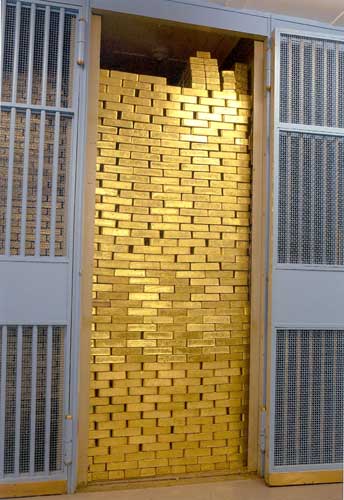
When the Claim and the Asset Diverge
In normal conditions, a paper promise to deliver gold easily passes for gold itself. Markets stay liquid, bullion banks settle paper balances, and market participants operate under the illusion that credit risk is nonexistent. But systemic stress instantly exposes the farce of fractional-reserve paper claims.
Mainstream commentators will object that physical gold remains subject to sovereign control and banking friction. They point to March 2022, when the London Bullion Market Association (LBMA) and CME Group suspended Russian gold refiners from their Good Delivery lists, or to OFAC sanctions targeting Venezuelan and Nicaraguan bullion. They note that gold moving through commercial banks must pass through the same compliance and clearing choke points as any fiat transaction.
But this objection completely misses the point, and in fact, it proves it.
What the LBMA, COMEX, and Western banks restrict is paper access within their own cartel-controlled financial architecture. Gold trapped inside the banking system is not physical property; it is an unallocated debt claim subject to correspondent banks, clearing house delays, and political confiscation.
True allocated physical gold, titled directly to the owner, fully segregated off the vault operator’s balance sheet, and held outside the commercial banking net, is not a claim on a bank. It is private property. It requires no SWIFT message to clear, no LBMA cartel approval to exist, and no solvent counterparty to retain its full monetary value.
When the paper gold regime unravels, the question isn’t “What is my paper claim worth?" It is “Do I actually own physical metal, or do I own an IOU from a bank?"
The answer depends on four operational tests: whether you hold direct legal title to specific, serial-numbered bars or sit as an unsecured creditor, whether the metal is strictly segregated off the custodian’s balance sheet or rehypothecated, whether the vault is in a safe, non-aligned jurisdiction or tied to the Western banking web, and whether you can take direct physical delivery or face forced cash settlement in depreciating fiat currency.
An unallocated claim, a leveraged futures contract, or an ETF unit are not alternative forms of exposure. They are synthetic paper liabilities designed to syphon investor capital into the banking system rather than the physical vault. In a systemic collapse, paper claims will be cash-settled or defaulted on, while physical metal in hand will remain completely unencumbered.
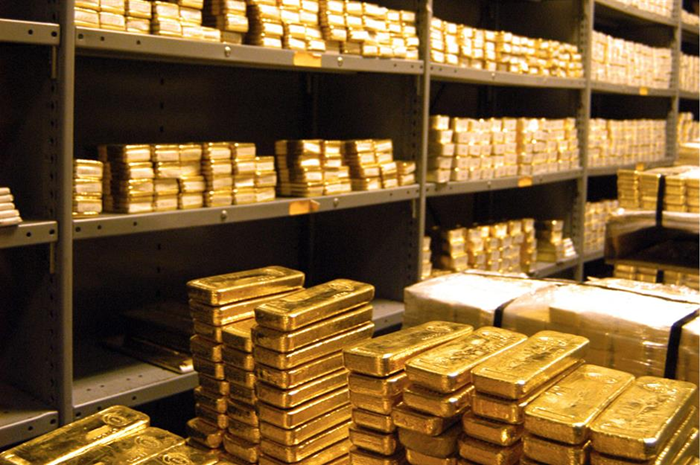
Conclusion: When Trust Diminishes, Gold Becomes Modern Again
Gold’s importance in the current environment is not limited to its ability to preserve purchasing power. Its deeper value is that it sits outside the liability structure that governs every other financial asset.
Gold has no central bank that can create more of it by decree. No government promises to repay it. No corporation stands behind it as a debtor. It has no maturity date and no political allegiance. The price is set at the margin, but the repricing applies to the stock.
Yet gold’s neutrality should not be confused with neutrality in the markets surrounding it. Price discovery is concentrated in financial markets that are vulnerable to leverage, institutional influence and manipulation. Gold itself is neutral, while the institutions that price it are not. Nor should gold exposure be confused with gold ownership.
There is gold, and then there are claims on gold. In normal conditions, the difference may appear unimportant. In a serious crisis, title, allocation, custody, location, jurisdiction, auditability and access can become decisive. The investor must therefore distinguish gold from a claim on gold, and the neutral asset from the institutions that price, store and settle it.
When trust is abundant, gold can look old-fashioned. When trust dies, gold becomes modern again.
Popular Blog Posts by Ronan Manly
 How Many Silver Bars Are in the LBMA's London Vaults?
 German Government Escalates War On Gold
 Polish Central Bank Airlifts 8,000 Gold Bars From London
 Quantum Leap as ABN AMRO Questions Gold Price Discovery
 How Militaries Use Gold Coins as Emergency Money
 JP Morgan's Nowak Charged With Rigging Precious Metals
 Hungary Announces 10-Fold Jump in Gold Reserves
 Planned in Advance by Central Banks: a 2020 System Reset
 Gold Is No One’s Liability – The Asset No One Can Print, Freeze or Default On